
How 3D Printing Created 142,000 Faces for Wildwood
3D Printing Applications · Stop-Motion Filmmaking
Imagine an actor who needs a completely different physical face for every tiny change of expression. A raised eyebrow? Replace the face. A smile beginning to form? Replace it again. That is remarkably close to how some of the performances in the animated film Wildwood were made.
Released in U.S. theaters on October 23, 2026, LAIKA's stop-motion fantasy Wildwood required 142,030 3D-printed replacement faces. These were not full-size human heads or AI-generated face swaps. They were real, miniature facial components made to fit physical puppets.
In one especially demanding shot, the production used 1,124 individual facial replacements. For some performances, the team prepared as many as 24 different faces for a single second of footage. Behind what looks like an effortless smile on screen was a carefully coordinated manufacturing and animation process.
1. Why Would One Animated Film Need More Than 142,000 Faces?
Directed by Travis Knight and adapted from Colin Meloy's novel, Wildwood follows Prue, a teenager who enters a mysterious forest outside Portland to rescue her kidnapped younger brother. She encounters talking animals, bandits, and a magical world of danger and wonder.
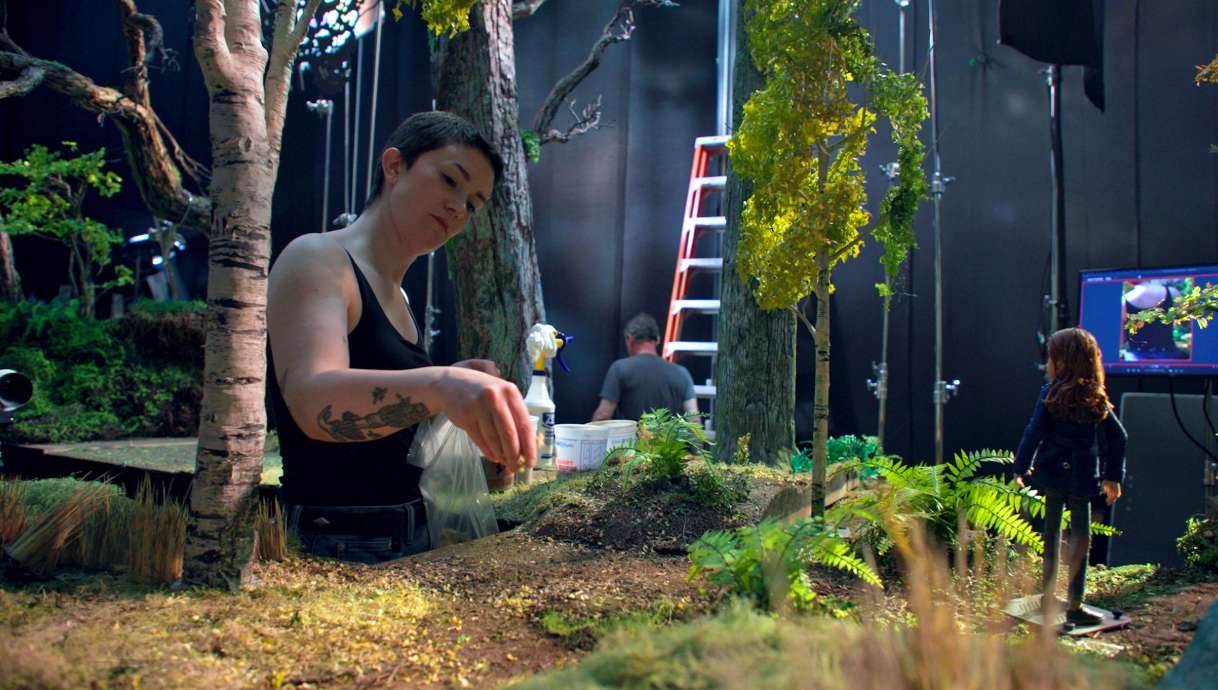
The characters might look like computer-generated animation at first glance, but much of the film was made with physical puppets, miniature sets, practical lighting, and traditional stop-motion techniques. An animator positions a puppet, photographs a frame, adjusts it slightly, and photographs the next. Play those frames in sequence, and the puppet appears to move.
Movement is difficult enough. Facial acting presents another challenge. Real people can shift from anger to surprise to a faint smile through dozens of nearly imperceptible movements around the eyes, cheeks, and mouth. A rigid puppet face cannot naturally make all of those changes.
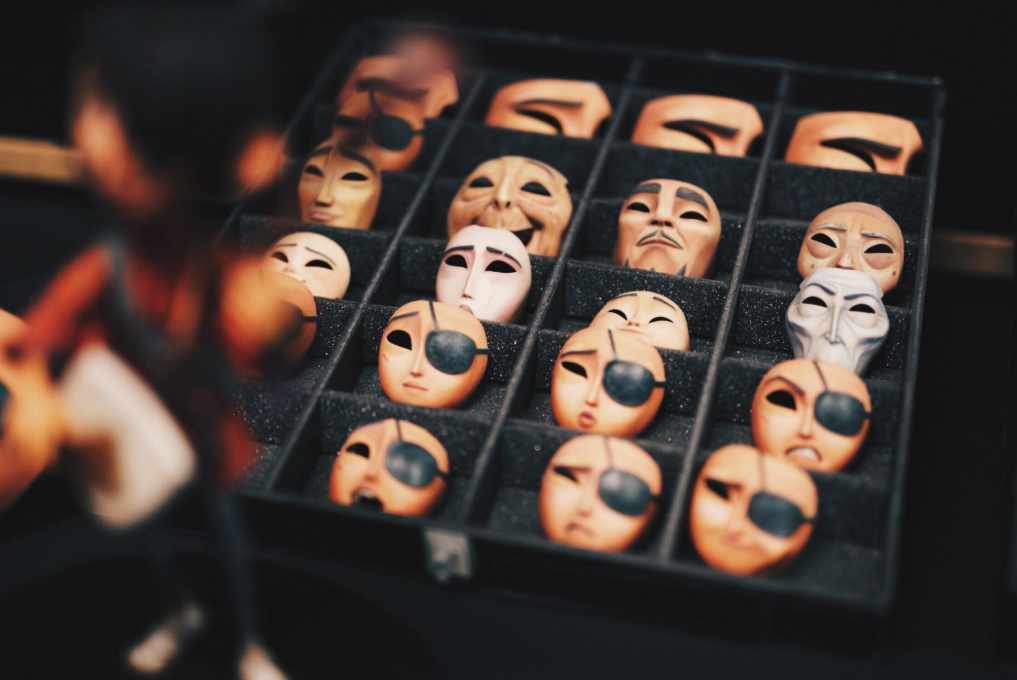
LAIKA's solution is called replacement animation. Rather than sculpting a new expression during every frame of shooting, artists create a library of interchangeable facial components in advance. Each part represents a particular moment in the character's performance.
For Wildwood, those tiny changes added up to 142,030 printed faces. During a studio interview, LAIKA's team said the faces were made specifically for their performances, with none reused. The scale of that effort is easier to understand when you remember that they are making individual parts for a character only a fraction of human size.
2. One Shot Used 1,124 Different Faces
At the VIEW Conference in Turin in October 2026, LAIKA visual effects supervisor Steve Emerson revealed that one Wildwood shot required 1,124 facial replacements. He described it as a stop-motion record.
Film playback commonly runs at 24 frames per second. For certain Wildwood sequences, LAIKA prepared a different face for every frame: up to 24 individual faces in one second. That does not mean every shot in the film used 24 new faces per second. A particular expression may stay on the puppet for several frames if the performance calls for it.
Even with that distinction, the workload is extraordinary. In a studio visit reported by Cartoon Brew, LAIKA's animation team described an average output of about 20 frames per animator per day—less than one second of finished footage at 24 frames per second.
And the faces cannot merely be the right shape. The mouth, eyebrow position, skin tones, and surface finish must flow convincingly from one frame to the next. Otherwise, the audience could notice distracting flicker or changes in the character's appearance rather than the emotion being performed.
3. How Were So Many Faces Actually 3D Printed?
The process begins well before a printer starts running. LAIKA's rapid prototyping department, described as a team of roughly 70 people, develops facial performances digitally and prepares the components that make replacement animation possible.
Artists model, texture, rig, and animate faces on computers. Other specialists engineer the internal structures and interfaces that let those faces attach to, and detach from, a puppet's head. Only after the expression and part design are ready does the work move into physical production.
Design the character's facial performance digitally, in sync with the scene.
Prepare face geometry, color information, and the attachment structure.
Convert the model into print-ready data for full-color material jetting.
Produce and inspect the physical replacement faces.
Label, organize, and deliver the faces in shooting order.
Install each face, pose the puppet, and photograph the required frames.
Why color consistency matters as much as geometry
Early 3D-printed replacement faces often needed extensive manual painting. That could work at a limited scale, but painting thousands of slightly different facial parts creates a difficult consistency problem. Tiny differences in color may become noticeable when consecutive frames are played together.
For Wildwood, the studio used full-color material-jetting 3D printing. In this process, very small droplets of photopolymer material are deposited to construct a part, allowing color and material distribution to be controlled in three dimensions. It is a different printing process from the LCD and DLP vat-photopolymerization methods used in many resin 3D printers.
LAIKA's director of rapid prototyping, Brian McLean, described the color structure in terms of tiny three-dimensional pixels, or voxels. In a studio interview, he illustrated the density of the process with a figure of about 330 million voxels in one cubic inch. He described the appearance of different colored droplets under magnification as being similar to pointillist painting.
Those microscopic patterns help create subtle skin tones and levels of translucency. For a miniature face viewed under film lighting, color distribution is not simply decoration—it contributes to how believable the character looks from shot to shot.
Another essential component came from Germany's Fraunhofer Institute for Computer Graphics Research IGD. Its full-color 3D printing software processed the digital models, textures, and color information to generate optimized print data. According to Fraunhofer IGD, the collaboration has continued for roughly a decade, with additional software development supporting Wildwood's demanding production requirements.
The manufacturing challenge was not just making a detailed face once. It was producing thousands of tiny, visually consistent parts that could perform together across moving images.
4. What Does a Warehouse of Facial Expressions Look Like?
Making more than 142,000 faces creates a logistics problem. Imagine opening a tray containing hundreds of faces that appear almost identical. One has a slightly higher eyebrow; another has a mouth that is only beginning to open. How can an animator tell which part belongs in which frame?
LAIKA developed a detailed organization system. Faces carry identifying codes on the back to show the intended frame and how long the expression should be held. Dedicated staff, known as facial librarians, prepare the replacement parts in the correct sequence and deliver them to the animators in trays.
The animator can then concentrate on the actual performance: fit the next face, adjust the puppet, check the framing, take the photograph, and repeat.
On screen, someone simply smiles. On the set, that smile is a sequence of precisely organized physical components, each used at the right moment.
5. Does a Printed Face Go Straight from the Printer to the Camera?
No. Physical printing is only one stage of the production pipeline. The faces are inspected for consistency, and artists may add small finishing details such as the appearance of tears or a sheen on the lips.
Replacement parts can also leave visible seams at their connection points. Digital post-production helps remove those seams from the finished images. And while Wildwood relies on practical puppets and sets, it does not reject digital visual effects.
For example, the production used digital compositing to combine some separately animated puppet performances. High-resolution scans of physical sets helped build digital extensions, while certain supernatural visual elements were created digitally using movement experiments and physical references.
The finished film is therefore a collaboration among character designers, mechanical fabricators, 3D printing specialists, animators, cinematographers, and visual effects artists. No single printer or software package performs all of those tasks on its own.
6. What Can Manufacturers Learn from a Stop-Motion Film?
At first, producing more than 142,000 miniature faces for one movie sounds like an unusually elaborate way to make animation. But the case highlights a broader idea in additive manufacturing: the value of a printed part is determined by how reliably it performs in the complete workflow.
For LAIKA, success depends on geometry, surface appearance, color consistency, attachment design, identification, and the exact order in which parts are used. The digital file alone is not the finished result, and a successful print is not the end of the process.
Yidimu works with resin-based photopolymer 3D printing for professional manufacturing and model-making applications. Its LCD/DLP printing technologies are not the same as the full-color material-jetting process used for Wildwood's faces, and they should not be assumed to produce the same color effects.
Still, engineers working with dental models, detailed prototypes, or small functional components face some related questions: Can fine geometry be reproduced clearly? Are repeated parts consistent? Does the selected material suit the intended use? And do cleaning, post-curing, inspection, and handling preserve the required characteristics?
These are questions to validate with representative printed parts and a controlled process, rather than answer from a printer's nominal specification alone.
More than 142,000 faces were created not to portray 142,000 different people, but to let individual characters express emotions with remarkable subtlety. The machines turned digital designs into physical parts. The animators turned those parts into performances.
That combination of precise manufacturing and human craft is what makes the story of Wildwood so compelling.
References
Fraunhofer IGD (October 22, 2026). How Full-Color 3D Printing Brings LAIKA's Wildwood Characters to Life.
Cartoon Brew (October 14, 2026). More Than 220 Puppets, 142,000 Replacement Faces, and 2,776 Shots: The Astonishing Figures Behind LAIKA's Wildwood.
Cartoon Brew (October 22, 2026). Take a Trip Inside LAIKA's Studio, Where Hundreds of Artists Brought Wildwood to Life.
Fathom Entertainment / LAIKA (September 16, 2026). Tickets for LAIKA's Epic Fantasy Wildwood Now on Sale.