
Flex G2
Evaluate Flex G2 against the dimensions and geometry of your flexible part, then confirm material and workflow compatibility for the intended application.
View Flex G2
Flexible Additive Manufacturing
Move complex lattices, cushioning structures and flexible components from digital design to representative physical parts with a workflow that considers geometry, resin, printing and post-processing together.
Flexible Part Applications
Flexible resin printing is useful when the design itself contributes to how a part bends, cushions, protects or interfaces with another component. Representative applications include the following areas.
Geometry Matters

Finished behavior can change with lattice topology, wall thickness, transitions, local stiffness, part orientation and the way supports are planned and removed. For that reason, material selection should be evaluated with the actual geometry rather than from a single hardness label alone.
Current Flexible Systems
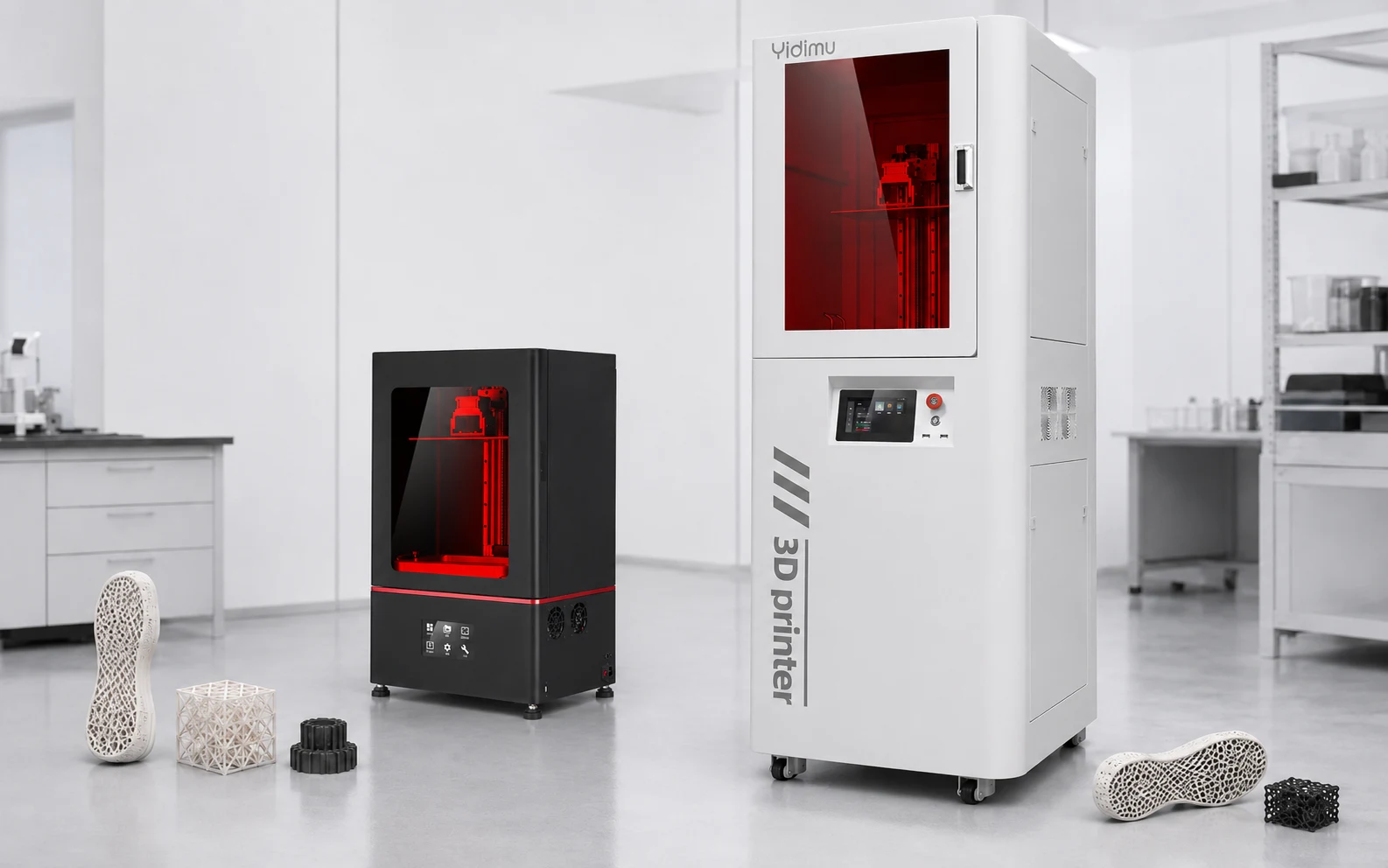
Flex G2 and Flex Pro are part of YIDIMU's flexible and elastomer printing offering. The practical choice should be based on the part envelope, geometry, material requirements, build quantity and the complete post-processing plan. Current product details should be reviewed for the exact configuration being considered.
Evaluate Flex G2 against the dimensions and geometry of your flexible part, then confirm material and workflow compatibility for the intended application.
View Flex G2Evaluate Flex Pro using the same part-first approach, including build requirements, resin selection, post-processing and finished-part inspection.
View Flex Pro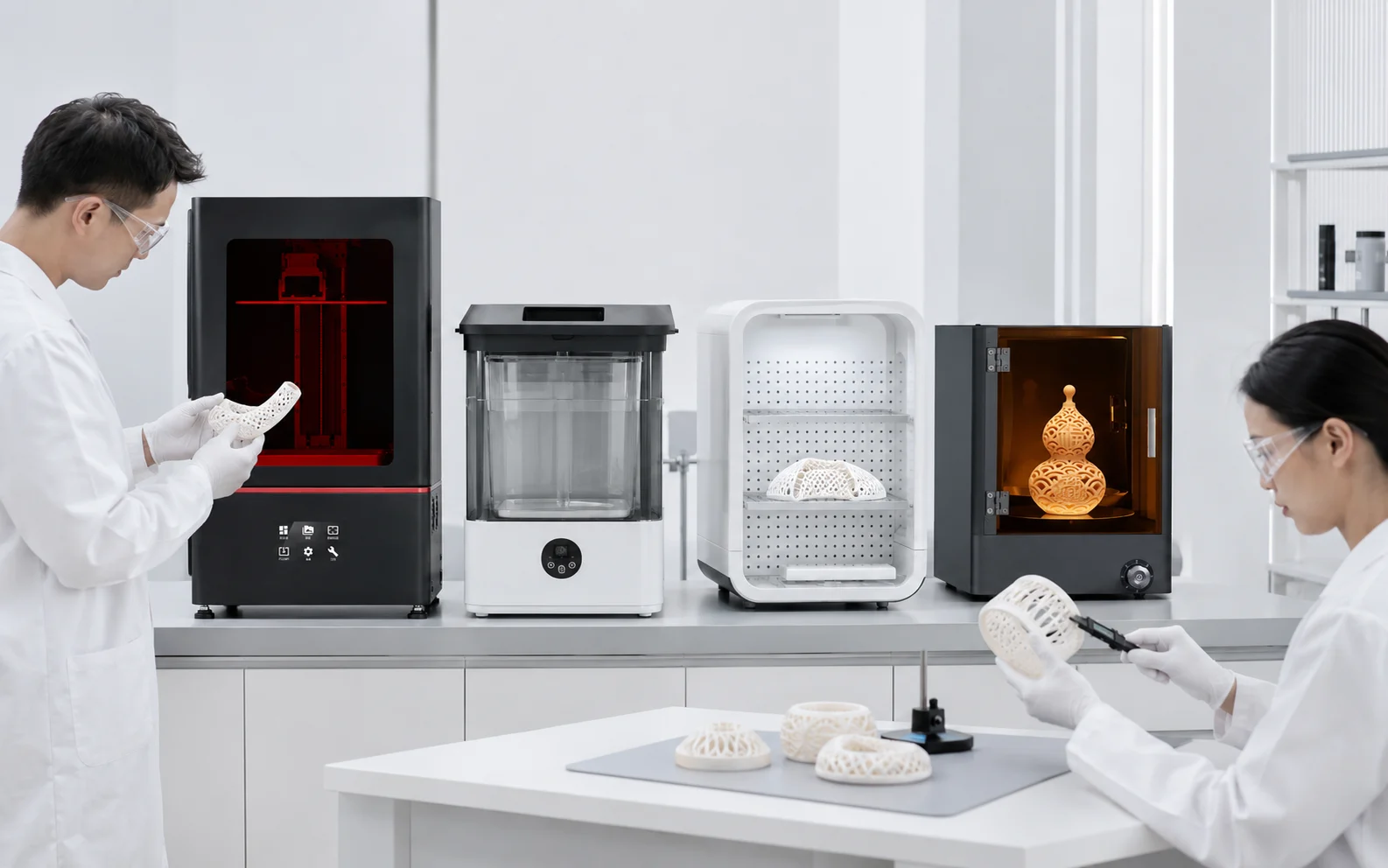
Complete Workflow
Geometry, resin, orientation, support strategy, printer choice, washing, complete drying, UV post-curing and final inspection all contribute to the condition of the finished part. A representative workflow should therefore be defined before evaluating results.
Material Selection
Target softness or hardness is only one input. A useful material discussion also includes how the part is shaped, how it will be supported, how it will be post-processed and what finished behavior needs to be checked.
Sample Validation
A sample review gives the discussion a concrete starting point: the actual model, dimensions, flexible zones, critical features, quantity and intended application.
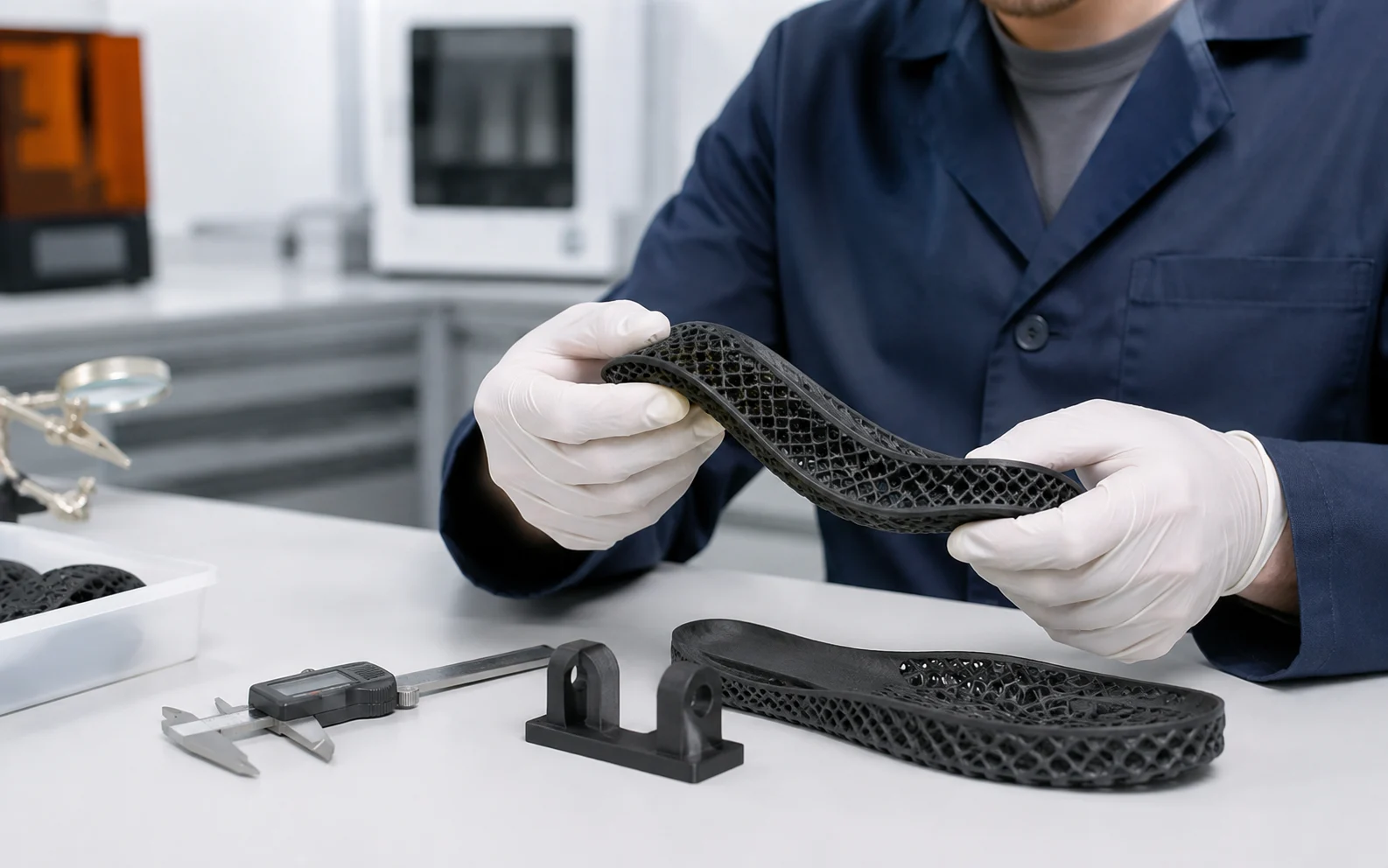
Finished-Part Review
Final evaluation should focus on the characteristics that matter to the part and application. The exact inspection plan can be adjusted to the geometry and the intended use of the sample.
FAQ
Both are YIDIMU flexible and elastomer printing systems. The appropriate choice depends on the current product configuration and your part size, geometry, material requirements, build quantity and post-processing workflow. Review each current product page or submit the model for a part-based comparison.
Yes. Submit the model together with dimensions, intended application, target material behavior, quantity and any critical features so the part can be reviewed in context.
Hardness should not be considered by itself. Geometry, wall thickness, lattice design, intended deformation, support strategy and the complete post-processing workflow can all affect how the finished part behaves.
Flexible lattice structures are a supported application direction. Printability still depends on the specific lattice geometry, feature size, orientation, support plan, resin and the selected printer, so representative-model review is recommended.
UV post-curing is part of the resin-printing workflow and should be completed according to the relevant material process before the finished part is evaluated. Washing and complete drying should also be treated as part of the process.
Send the 3D model, overall dimensions, target material behavior, application, quantity and critical features such as lattices, thin walls, holes, interfaces or areas that must flex or fit.
Start with Your Model
Share the information needed to review the part in context. YIDIMU can use the model and application requirements as the starting point for printer, material and process discussion.