
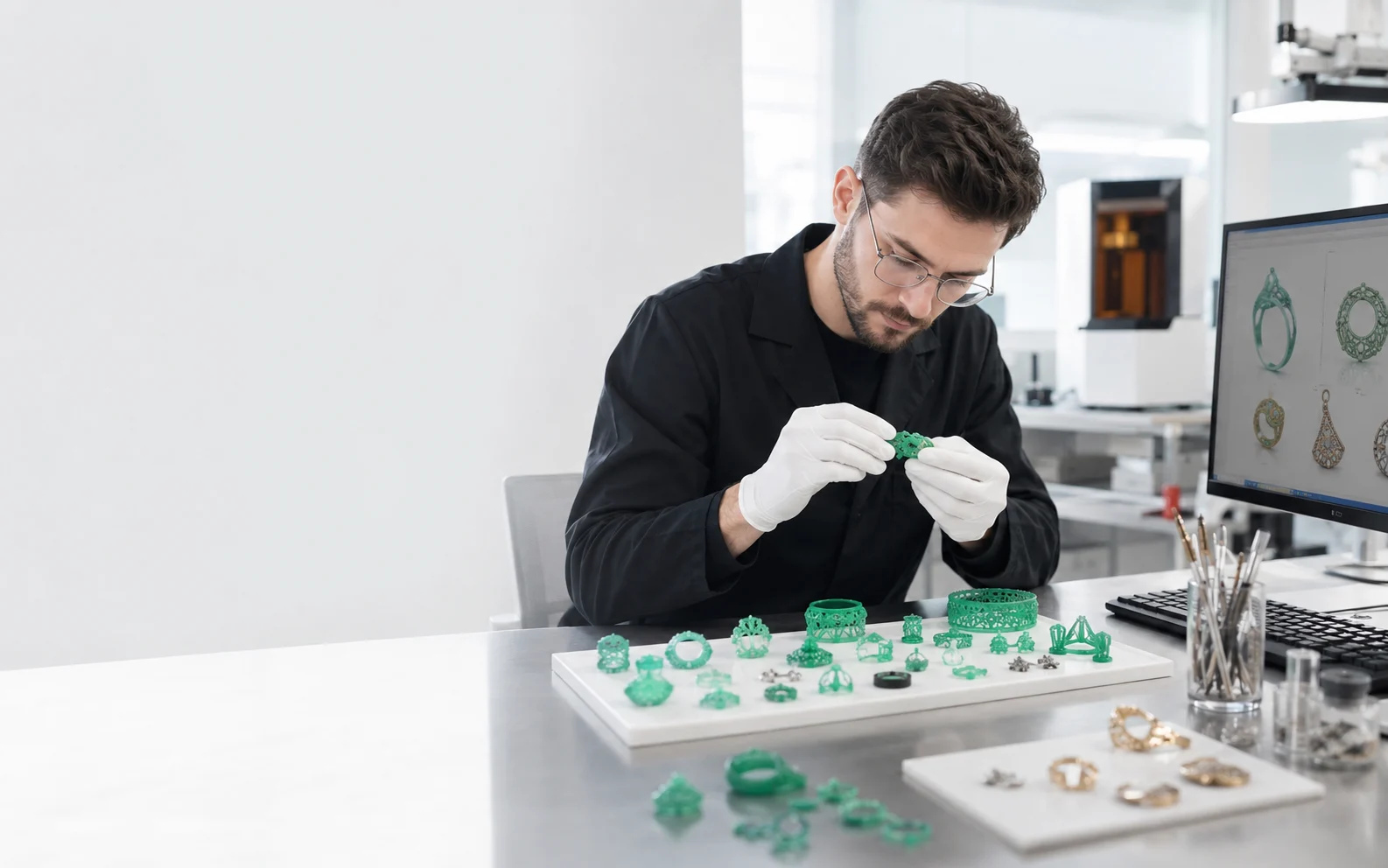
Design review
Inspect overall form, visual balance, proportions and decorative composition before committing to downstream work.
Jewelry Application Solution
Turn jewelry CAD into detailed resin models for design review, pattern inspection and casting-preparation evaluation. Match the printer, resin, supports and downstream process to the intended use before production.
Application boundary: a design/review model and a castable pattern are not the same material use. Jewelry casting patterns require a casting-compatible material and a validated investment-casting workflow; the printed resin pattern is not the final metal jewelry.
From CAD to a Physical Model
Resin 3D printing turns rings, pendants, ornamental geometry, settings, relief and repeating patterns into physical parts that can be handled, inspected and compared with the digital design.
For design teams, the immediate value is a tangible model for shape, proportion, detail and presentation review. For casting-oriented work, the printed pattern becomes only one element of a broader process that must also account for the selected material and the workshop’s investment, burnout and casting procedure.
Inspect overall form, visual balance, proportions and decorative composition before committing to downstream work.
Check relief, engraving, thin edges, repeating features and other geometry at a practical viewing scale.
Plan orientation, supports and accessible finishing zones with critical visible surfaces in mind.
Use a representative model to evaluate printer, resin and post-processing before scaling a repeated job.
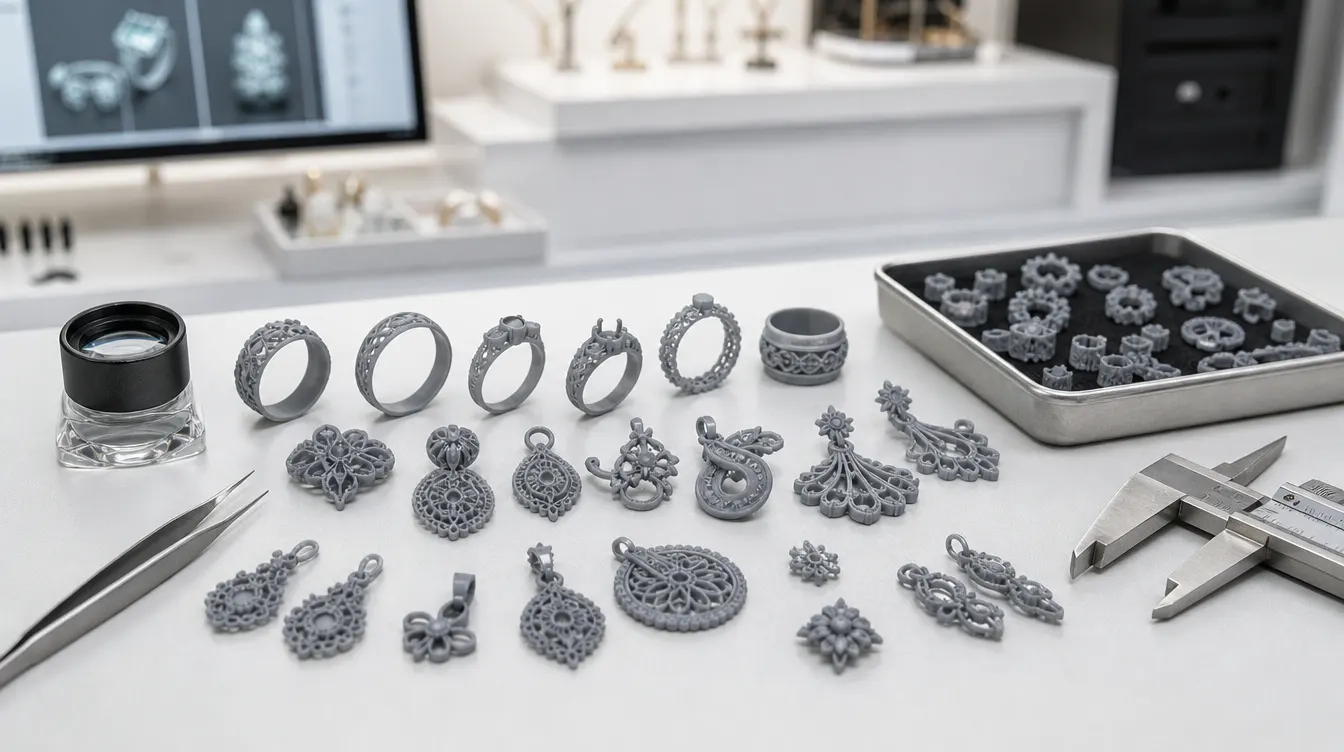
Typical Jewelry Models
Model requirements vary with geometry, size, intended finish and downstream process. A useful application review starts with the actual CAD and the surfaces that matter most.
Ornamental bands, setting concepts, engraved geometry and decorative forms.
Fine relief, layered patterns, ornamental forms and lettering where geometry permits.
Symmetrical pairs, decorative elements and fine repeatable geometry.
Motifs, charms, miniature forms and master-model concepts for review.
Evaluate only with a compatible casting material and a validated downstream workflow.
Physical resin models for design approval, handling, photography or internal review.
Practical Detail Reproduction
A higher display-resolution label does not by itself define final jewelry-model accuracy or casting quality. Practical output is the result of the entire imaging, material and processing chain.
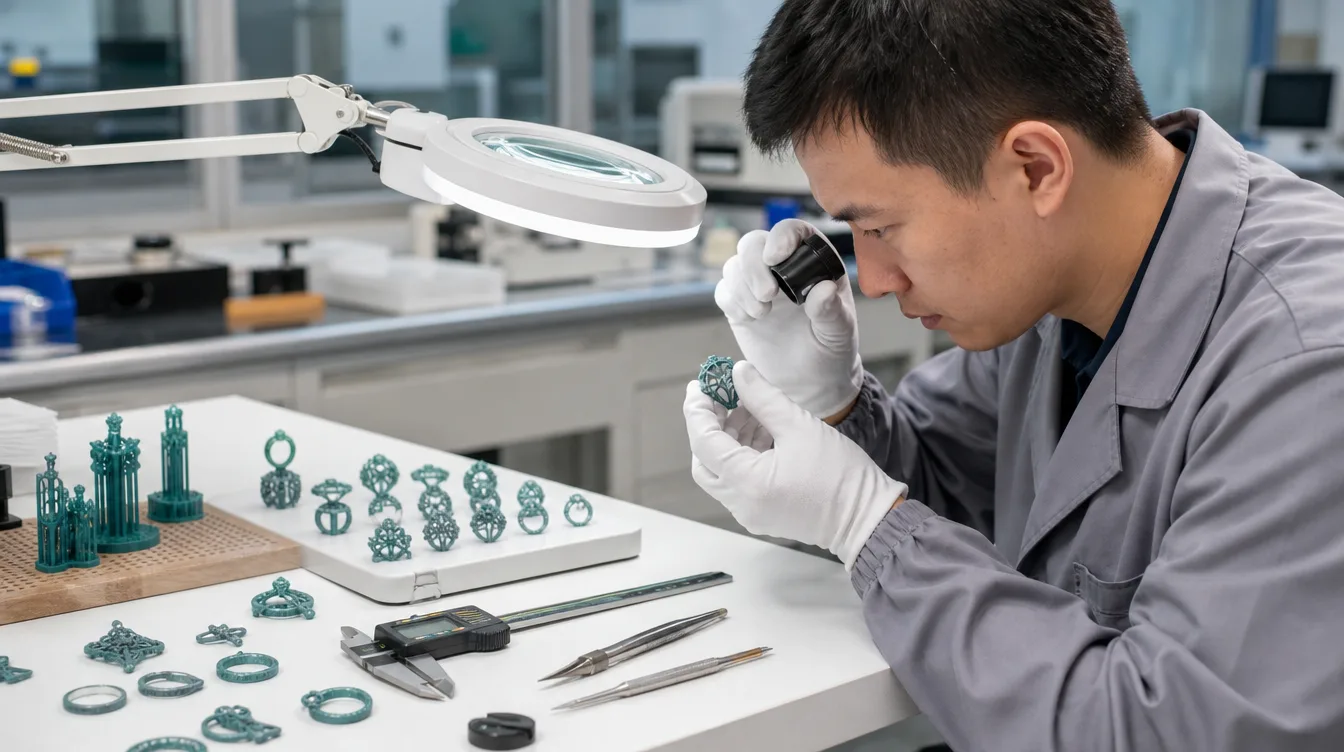
Protect Critical Surfaces
Support placement can affect visible faces, ornamental details, thin edges, engraving, setting areas and internal geometry. Where print stability permits, place support marks in less visible or accessible finishing zones rather than on the most critical decorative surfaces.
Do not force an unstable orientation simply to hide every support mark. Orientation must still work with the model geometry, resin behavior and printing process.
Jewelry Resin Printing Workflow
Material-specific sequence takes priority. Castable and specialty resins may require a different order or different post-processing conditions. Follow the current resin documentation rather than applying one generic industrial workflow to every material.
Casting Is a Complete Process
When the intended use is investment casting, final results depend on more than the printer. The selected resin must work together with the investment material, sprue strategy, flask preparation, burnout cycle, casting conditions, alloy and workshop procedure.
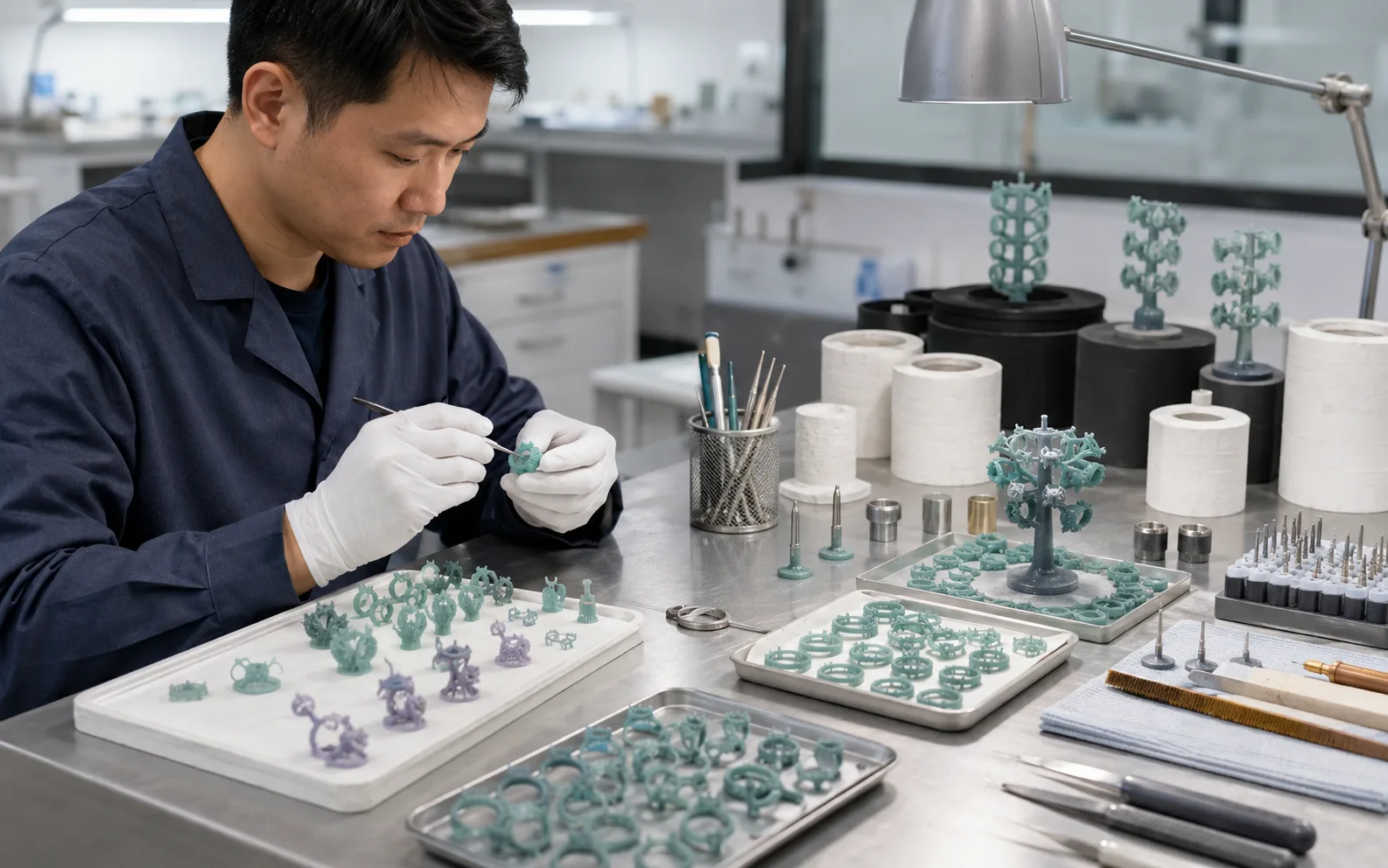
Pattern Inspection
Inspect the finished pattern as a manufacturing input. The checklist should reflect both visible quality and geometry that can influence the downstream process.
Printer & Material Matching
A jewelry project should be evaluated as a model + printer + resin + downstream-process combination.
Material Use Matters
Design / Review Model
Castable Pattern
Current YIDIMU material note: the publicly listed YIDIMU “Casting Model Resin” is positioned for dental casting-model workflows. For jewelry investment casting, confirm the exact compatible material and process with YIDIMU rather than assuming that a similarly named dental casting resin is validated for jewelry.
Sample Validation
A real model provides better evidence than comparing printer labels in isolation. Submit a representative CAD file so the model, material and workflow can be evaluated together.
Equipment Paths to Evaluate
Do not select equipment only because of a resolution label. Start from part size, detail, batch layout, resin compatibility and the complete processing route.
YIDIMU’s current product page positions this compact light-curing system for professional model making, precision samples and jewelry casting-pattern applications. Confirm the exact resin, settings and downstream workflow for the submitted model.
View current product page →For larger models, multiple parts or production-oriented layouts, evaluate usable build area, resin compatibility, practical detail reproduction and repeatability. A representative sample should be used before committing to a repeated workflow.
Explore industrial resin systems →Post-processing is part of final model quality. Use washing, complete drying and UV post-curing only according to the selected resin’s process requirements, then inspect the finished part before downstream use.
View post-processing equipment →Related Resources
Start With the Actual Model
Share the model, dimensions, intended use, required detail, quantity and casting workflow where applicable. YIDIMU can use that information to evaluate printer, resin and process fit.