
Evaluate larger forms and complex geometry while reducing unnecessary part splitting when the model fits the available build envelope.
Eternal M2 · Industrial Resin System
Eternal M2 Large-Format Industrial Resin 3D Printer
A 16-inch 8K LCD resin 3D printer with a listed 353 × 198 × 400 mm build envelope for larger industrial prototypes, housings, engineering models, multi-part layouts and selected low-volume production workflows.
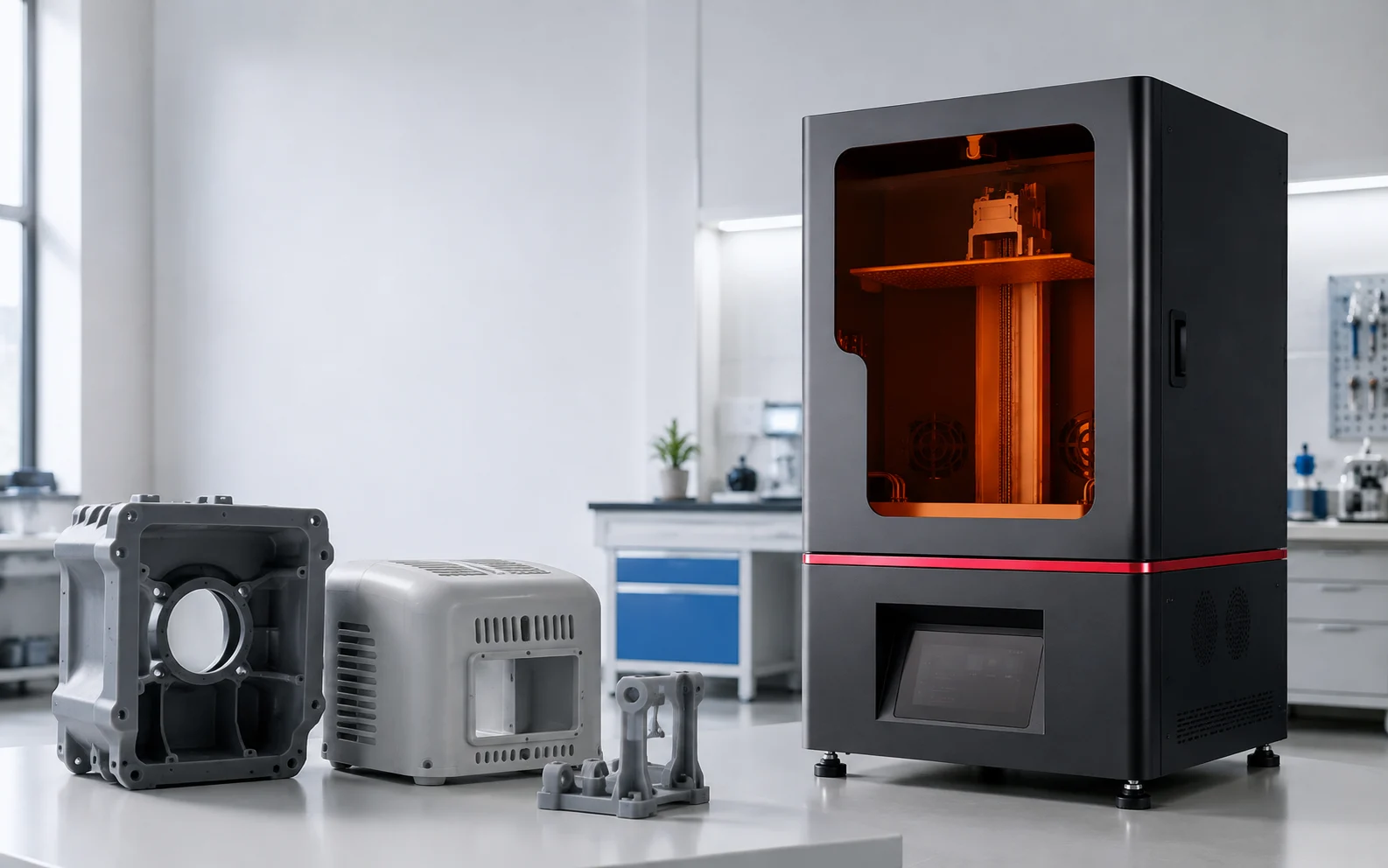
353 × 198 × 400 mmListed Build Volume
7680 × 43208K Display Resolution
≈ 46 μmXY Pixel Size
0.02–0.10 mmLayer Thickness Range
Designed Around Larger Parts
More room for the part and the build layout.
The Eternal M2 is positioned around a listed 353 × 198 × 400 mm build envelope. For product-development teams, that additional space can be useful when a housing, cover, engineering prototype or tall component would otherwise need to be split into more pieces. The same platform can also be evaluated for arranging several smaller parts in one build.
Build size does not establish finished-part dimensional accuracy. Geometry, orientation, support strategy, resin behavior, exposure settings, washing, complete drying, UV post-curing and the inspection method all affect the condition of the final part.
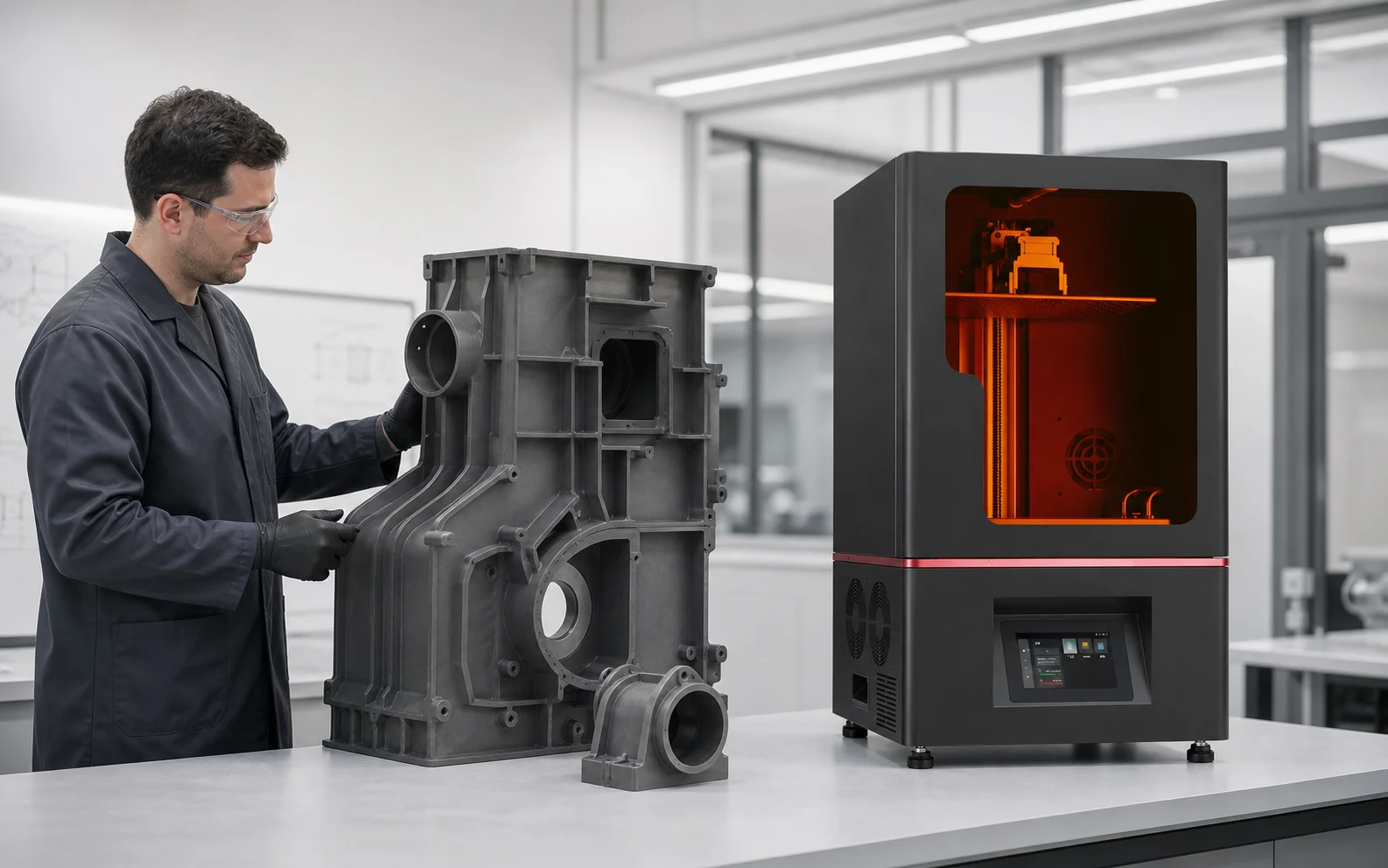
Engineering Application Gallery
Start with the production task, not a single specification.
M2 is an industrial LCD resin system for professional workflows where part size, build layout, material behavior and post-processing must be evaluated together.
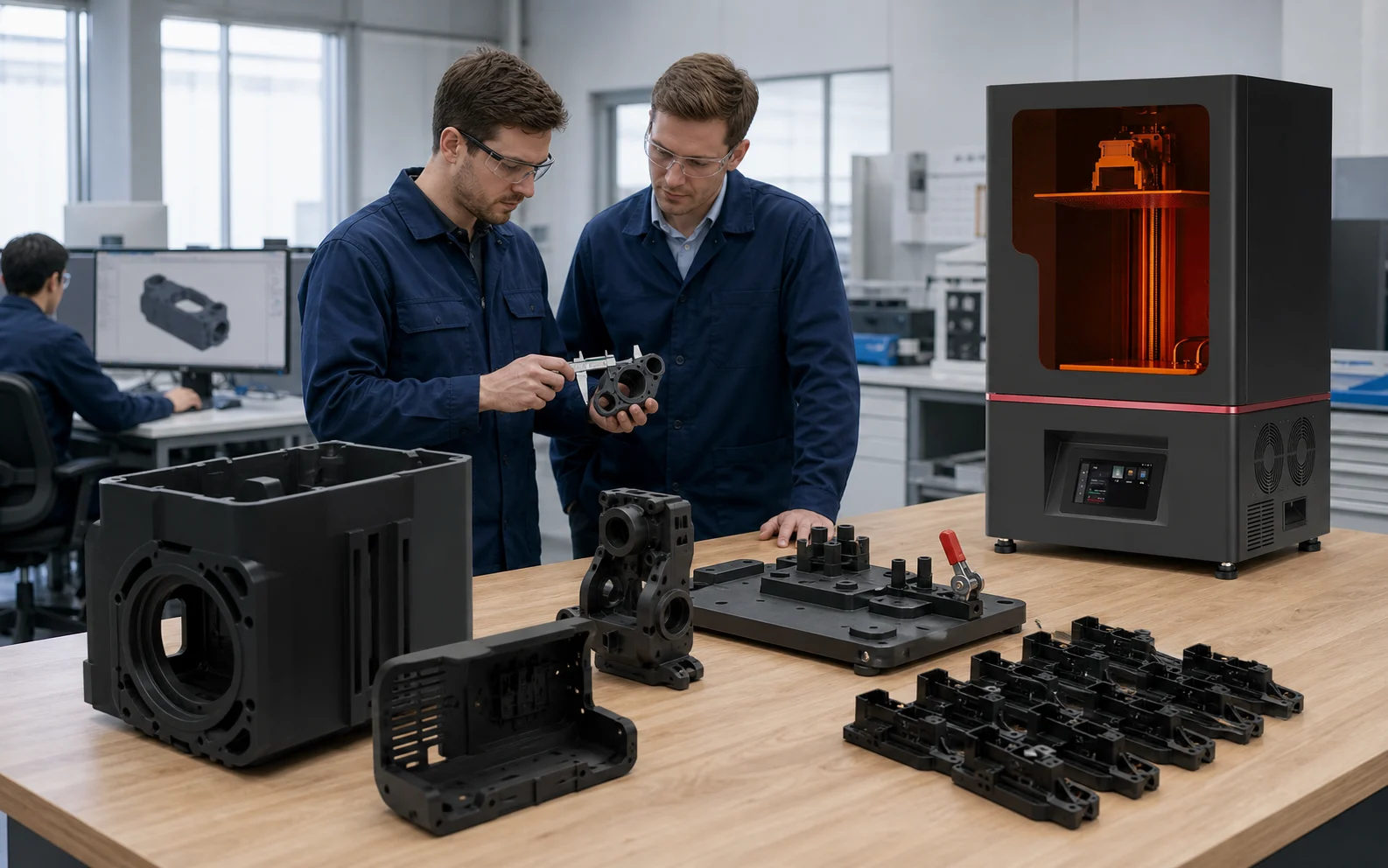
Create physical housings and covers for appearance review, interface checks and product-development discussion.
Produce representative structural or functional models for inspection and design iteration.
Check mating regions, access, clearances and physical relationships using an agreed inspection plan.
Evaluate positioning tools and production aids after confirming resin properties, load, wear and service conditions.
Arrange multiple parts on one platform only after validating spacing, support load, resin flow and downstream capacity.
Suitable production use should be based on accepted-part output, repeatability, post-processing and inspection—not nominal platform capacity alone.
System Architecture / Features
Documented specifications, without turning display metrics into an accuracy promise.
Eternal M2 uses LCD vat photopolymerization with a 16-inch 8K display. Published data lists approximately 46 μm XY pixel size, 405 nm UV wavelength and a 0.02–0.10 mm layer-thickness range.
01
16-Inch 8K LCD Exposure
The published display resolution is 7680 × 4320. The approximately 46 μm figure is treated here as XY pixel size / display sampling, not as guaranteed finished-part dimensional accuracy.
02
353 × 198 × 400 mm Build Envelope
The listed build space supports evaluation of larger prototypes and multi-part layouts. Whether a specific model can be produced in one piece still depends on orientation, supports, drainage and post-processing access.
03
405 nm UV · Adjustable Layer Thickness
Published specifications list a 405 nm UV wavelength and a 0.02–0.10 mm layer-thickness range. Resin suitability and process parameters should be confirmed for the actual material and application.
04
Files and Slicing Workflow
The supplied documentation lists STL and OBJ import formats, Windows 7 / Windows 10 or later, and ChiTuBox / ChiTuBox Pro for build preparation. The machine includes an integrated front control screen for routine operation.
05
Nominal Print-Height Speed
The supplied specification lists 50 mm/h. Actual cycle time depends on layer thickness, exposure and movement settings, part height, geometry, resin, support strategy and other process conditions.
From CAD to Finished Part
A complete resin workflow continues after the printer stops.
The final condition of a large resin part is shaped by build preparation and controlled post-processing. Evaluation should therefore cover the complete workflow rather than the exposure stage alone.
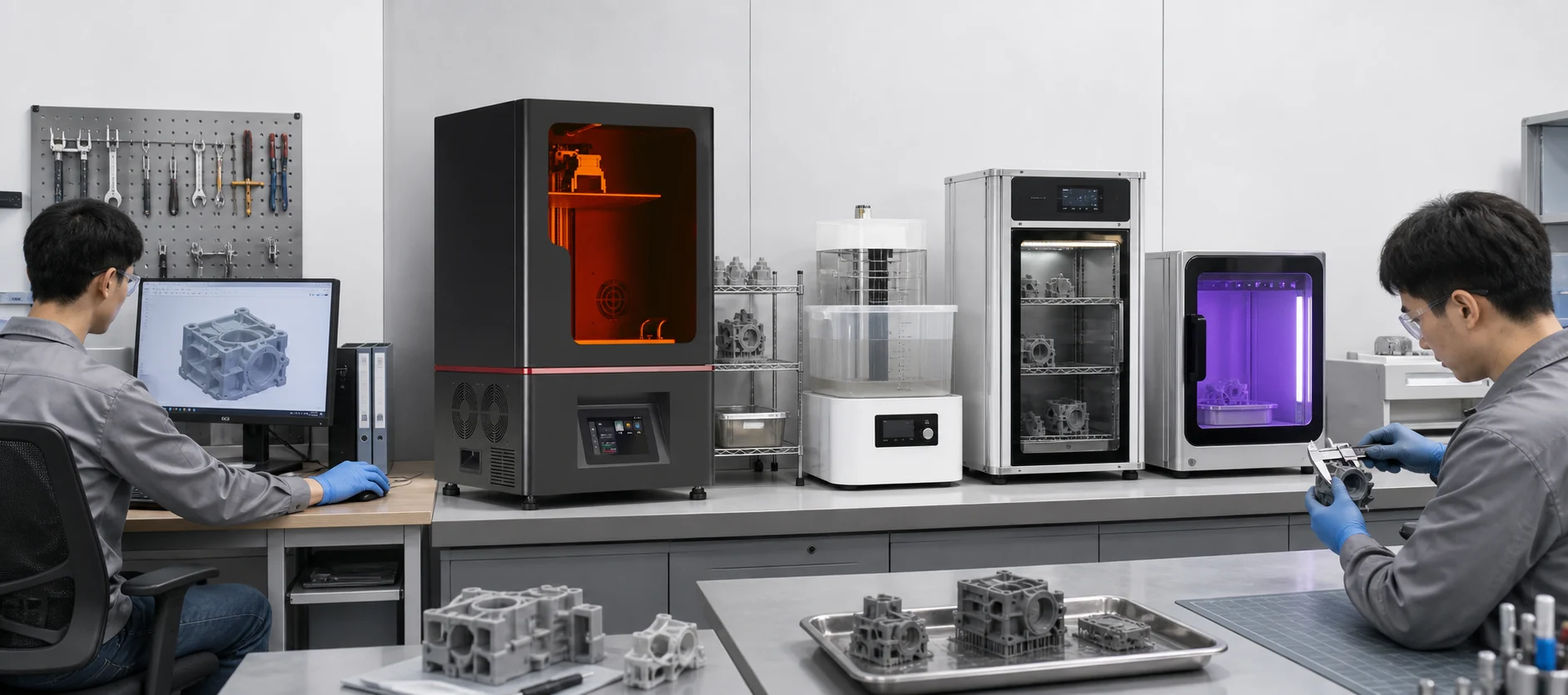
01
CAD / Model Review
Define part dimensions, critical features, intended use and acceptance criteria.
02
Build Preparation
Set orientation, supports, layout and process parameters for the selected resin.
03
Printing
Run the validated build on the Eternal M2 under suitable environmental conditions.
04
Washing
Remove uncured resin using the process confirmed for the selected material.
05
Complete Drying
Allow the part to dry fully before UV post-curing or dimensional evaluation.
06
UV Post-Curing
Use the resin-specific post-cure method and exposure conditions.
07
Inspection
Measure, fit-check and evaluate the processed part against the project requirement.
Large-Part Process Considerations
Large build volume solves only the first constraint.
A model fitting inside the machine does not automatically mean it is ready for a reliable large-part process. Build strategy and downstream handling become increasingly important as cross-sectional area, part height, support load and trapped resin increase.
Orientation
Balance height, support contact, surface priorities, cross-sectional area and post-processing access.
Support Load
Large or heavy sections may require a support strategy that accounts for geometry and separation forces during the build.
Resin Behavior
Viscosity, exposure response, mechanical properties and post-cure behavior should match the intended application.
Drainage & Washing
Hollow or enclosed geometry needs practical drainage and cleaning access so uncured resin is not trapped.
Complete Drying
Residual cleaning liquid can interfere with post-curing and inspection; drying should be complete before proceeding.
Post-Curing & Inspection
Evaluate the finished, post-processed part under defined measurement and acceptance conditions.
Sample Validation
Validate a representative part before defining the equipment decision.
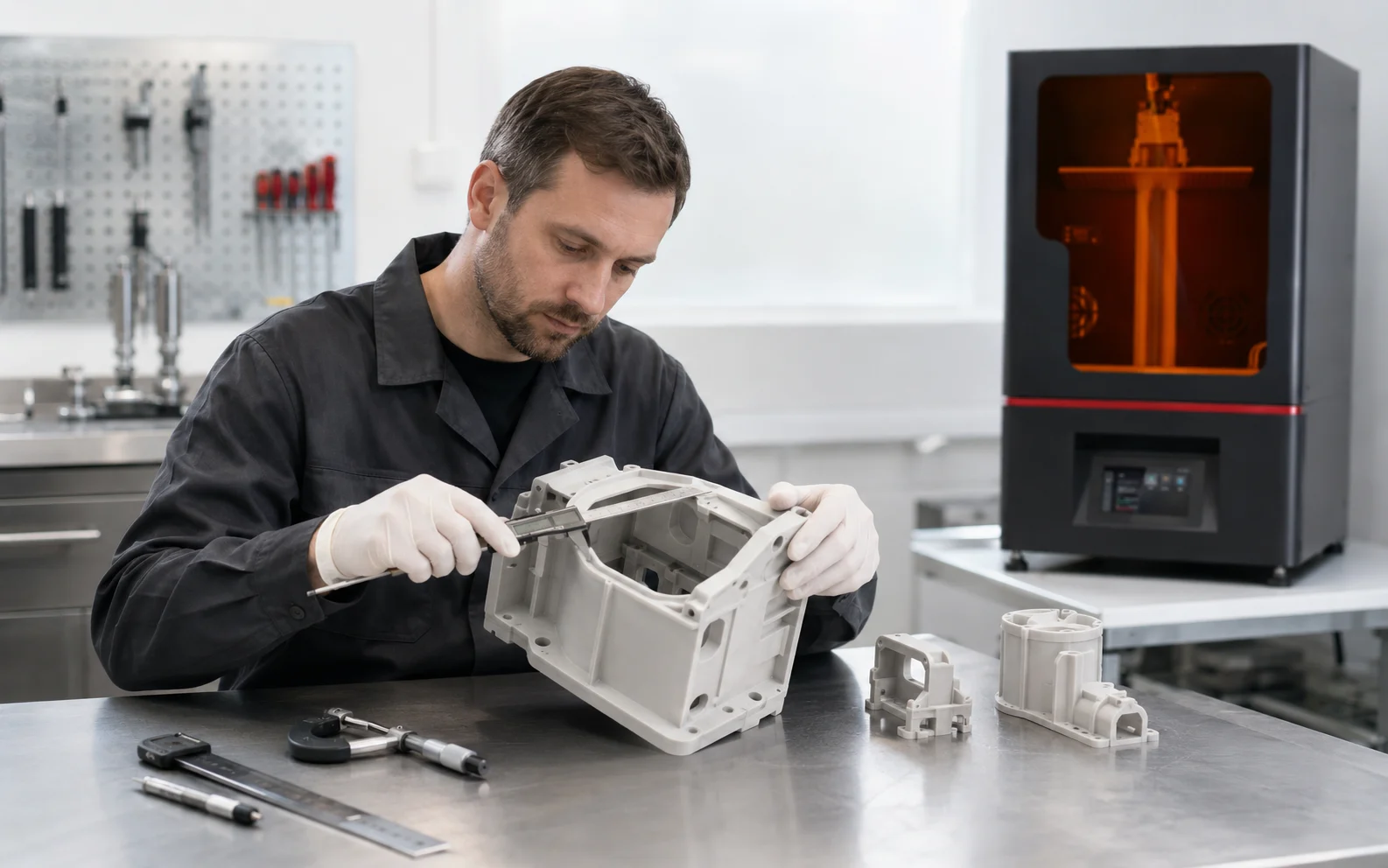
A specification table cannot show how your own housing, jig, prototype or multi-part layout behaves through printing, washing, drying, post-curing and inspection. A representative sample provides a more useful basis for discussing equipment, resin and workflow.
Share the model file, overall dimensions and target quantity.
Identify critical dimensions, mating surfaces, thin walls, holes and cosmetic surfaces.
State the intended resin behavior, finishing requirements and inspection priorities.
For batch work, define how many accepted parts are required—not only how many can be placed on the platform.
Technical Specifications
Eternal M2 published product data.
The values below follow the supplied Eternal M2 specification sheet and the current YIDIMU Eternal M2 product data. The former “±0.05 mm printing accuracy” claim is intentionally not presented as a finished-part accuracy guarantee.
- Model
- Eternal M2
- Product Positioning
- 16-inch industrial large-format LCD resin 3D printer
- Printing Technology
- LCD vat photopolymerization / light-curing surface forming
- Build Volume
- 353(L) × 198(W) × 400(H) mm
- Display Resolution
- 7680 × 4320 (8K)
- XY Pixel Size
- Approximately 46 μm
- Layer Thickness
- 0.02–0.10 mm
- Nominal Print-Height Speed
- 50 mm/h
- Light Wavelength
- 405 nm UV
- Print Temperature Range
- 15–40°C, as listed in the supplied specification
- Machine Dimensions
- 535(L) × 480(W) × 857(H) mm
- Rated Power
- 200 W
- Gross Weight
- 80 kg
- Power Supply
- AC 100–240 V / 50–60 Hz
- Supported File Formats
- STL, OBJ
- Operating System / Software
- Windows 7 / Windows 10 or later; ChiTuBox / ChiTuBox Pro
- Recommended Environment
- 10–30°C; 30%–90% relative humidity
XY pixel size describes the display sampling / pixel pitch in the build plane. It is not, by itself, a statement of finished-part dimensional accuracy. Actual results vary with geometry, resin, orientation, supports, exposure and motion settings, environment, washing, drying, UV post-curing and measurement conditions. Confirm the latest formal specification and application requirements before purchase or production use.
Materials & Post-Processing
Select the resin for the part, then validate the complete process.
YIDIMU publishes photopolymer materials for industrial models and other resin-printing applications. A material should not be treated as compatible or suitable for an Eternal M2 project solely because it cures at a nominally similar wavelength. Confirm the current material documentation, printer parameters and the intended mechanical, surface and environmental requirements.
Post-processing capacity matters as much as print capacity. Large parts and multi-part builds need adequate washing, complete drying and UV post-curing space before final inspection.
Industrial Production Planning
Plan for accepted-part output, not maximum packing density.
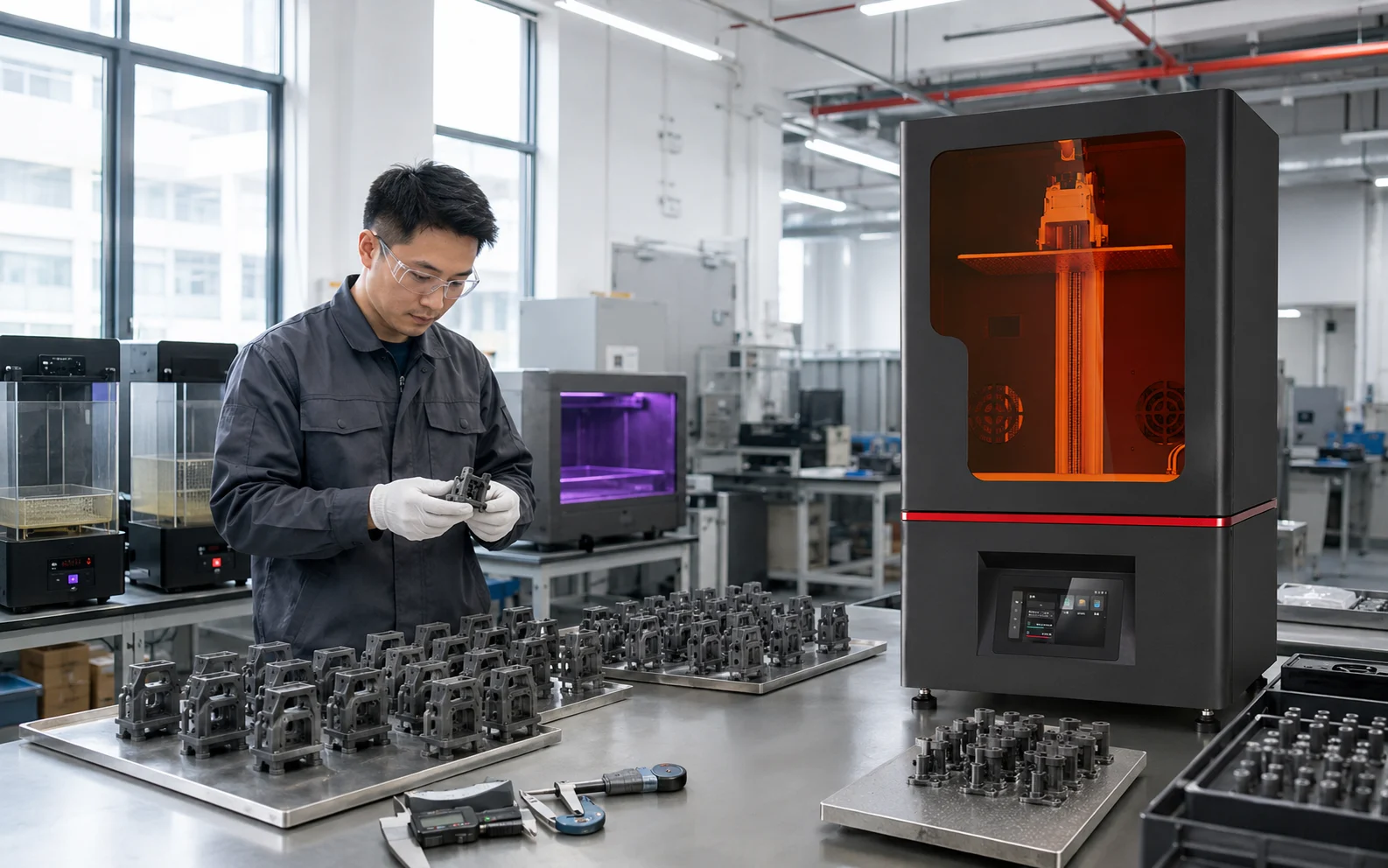
Multi-part and low-volume production requires a controlled system around the printer. Adding more parts to a platform may increase theoretical output, but it can also change support load, resin flow, separation behavior, cleaning workload and the impact of a failed build.
- 01LayoutArrange parts according to geometry, height, support strategy and access—not only free platform area.
- 02Part SpacingLeave practical spacing for supports, resin movement, part removal and downstream handling.
- 03Post-Processing CapacityMatch washing, drying and curing capacity to the number and physical size of printed parts.
- 04InspectionDefine dimensional, surface, fit and functional checks before the production run starts.
- 05RepeatabilityEvaluate repeated builds using the same resin, parameters, processing route and measurement method.
- 06Accepted-Part OutputTrack the number of conforming parts after post-processing, not just the number printed.
Eternal Industrial Series
Which system fits the actual part, layout and workflow?
M1 and M2 are both industrial resin systems. The practical distinction should start with the dimensions of the real part and the intended platform layout, not a generic “better” or “higher-end” label.
Industrial Resin System
298 × 165 × 370 mmStart with M1 when the representative part or multi-part layout fits its currently published build envelope and the complete workflow meets the project requirement.
Large-Format Industrial Resin System
353 × 198 × 400 mmM2 provides a larger listed build envelope in all three dimensions, giving additional room for larger prototypes or multi-part arrangements when the validated process supports them.
Why YIDIMU
Evaluate the equipment together with materials, post-processing and application support.
YIDIMU is a Shenzhen-based industrial resin 3D printing equipment manufacturer. Its current English website presents industrial, flexible-elastomer and dental resin systems alongside photopolymer materials, post-processing equipment, sample validation and technical resources.
Review the printer and the resin as one process rather than assuming material behavior from printer specifications alone.
Submit a representative model to discuss build size, geometry, material, post-processing and inspection before committing to a production workflow.
Use current documentation, warranty information, ordering and shipping information, and technical support channels when defining a purchase or deployment scope.
FAQ
Eternal M2 application and specification questions.
Is Eternal M2 a large-format resin 3D printer?
Yes. YIDIMU’s supplied and current product information lists a 353 × 198 × 400 mm build volume and positions Eternal M2 as a 16-inch industrial large-format LCD resin 3D printer.
Does approximately 46 μm mean the finished part is accurate to 46 μm?
No. The approximately 46 μm value is used here as XY pixel size / display sampling. Finished-part dimensional accuracy depends on additional variables including geometry, orientation, resin, support design, exposure and motion settings, washing, drying, post-curing and the measurement method.
Can M2 print a large housing or prototype in one piece?
Potentially, when the oriented model and support structure fit within the listed build envelope and the part can be printed, drained, washed, fully dried, post-cured and inspected appropriately. Submit the actual model for a more useful evaluation.
Is Eternal M2 suitable for low-volume production?
It can be evaluated for selected low-volume and multi-part production workflows. Suitability depends on part layout, resin, repeatability, print cycle, post-processing capacity, inspection requirements and the number of accepted parts produced.
What files and software are listed for Eternal M2?
The supplied specification lists STL and OBJ file formats, Windows 7 / Windows 10 or later, and ChiTuBox / ChiTuBox Pro.
What resin can be used with Eternal M2?
The machine is listed with a 405 nm UV wavelength, but resin compatibility should be confirmed against current material documentation and real sample testing. Matching nominal wavelength alone does not prove application suitability.
What post-processing is required after printing?
A professional resin workflow normally includes washing, complete drying, UV post-curing and final inspection using the process specified for the selected resin and application.
How should I choose between Eternal M1 and Eternal M2?
Start with the real part dimensions and intended build layout. The currently published M1 build envelope is 298 × 165 × 370 mm, while M2 is listed at 353 × 198 × 400 mm. Then compare resin, process, post-processing and inspection requirements using a representative model.
Send Your Model for Application Review
Use the real part to evaluate Eternal M2.
Share the model file, overall dimensions, material requirements, quantity, critical features, surface expectations and intended inspection criteria. YIDIMU can use that information to discuss printer fit, resin selection and the complete post-processing workflow.