
Material Strategy · Industrial Resin Printing

Industrial Resin 3D Printer Open Material System vs Closed System

The practical difference is not simply whether a printer can physically cure a third-party resin. Procurement teams should compare material access, parameter control, profile creation, validation workload, support boundaries and change control across the complete print-to-inspection workflow.

  • Material choice and sourcing flexibility
  • Exposure and motion parameter access
  • Qualification and repeatability burden
  • Support, warranty and process control
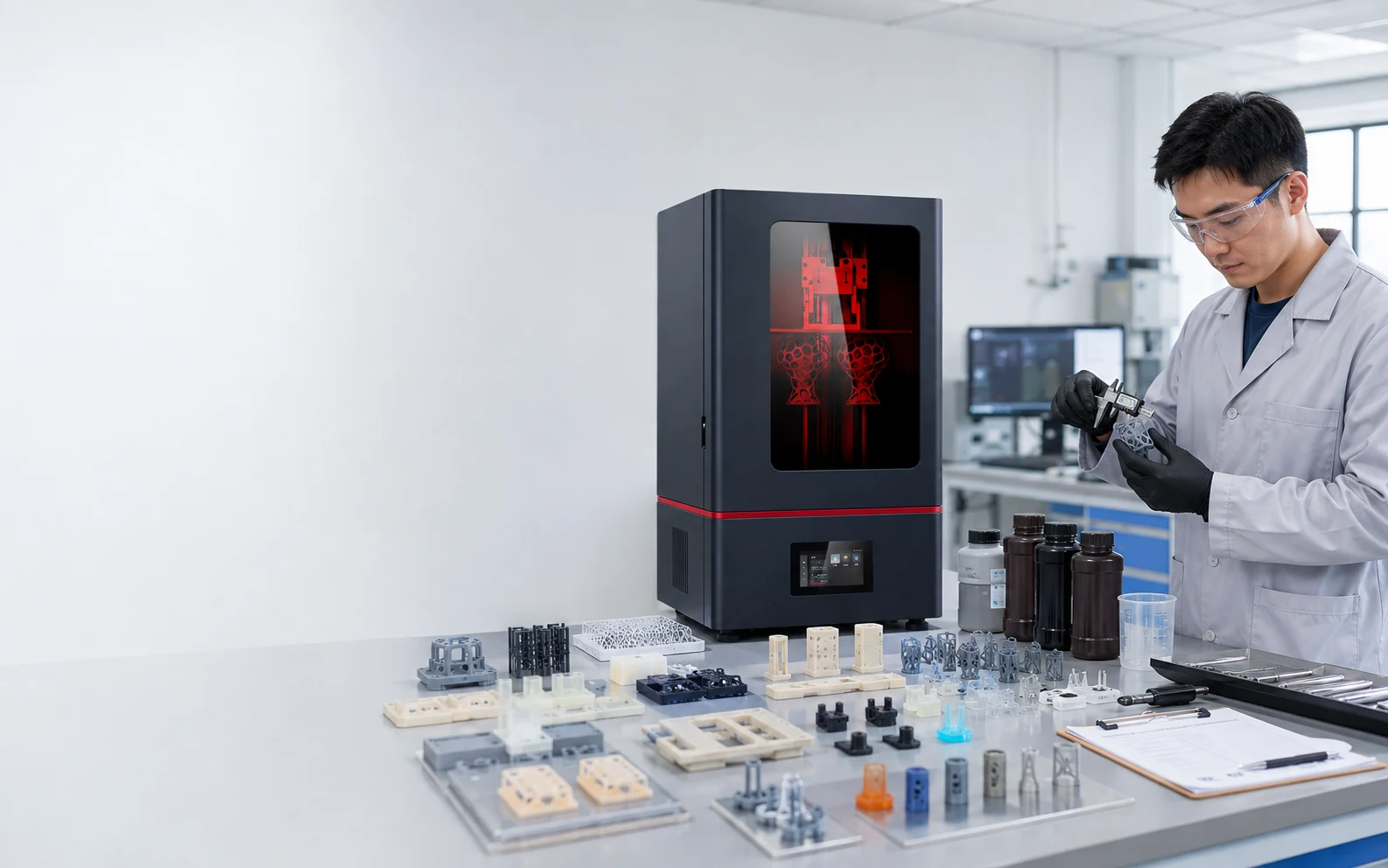
Engineer evaluating resin choices and finished test parts beside an industrial resin 3D printer
Material freedom is useful only when the resin, machine profile, post-processing sequence and acceptance method can be controlled together.

Direct Answer

Open material system vs closed system: what actually changes?

An open material system gives the user some degree of freedom to select resins, create or edit print profiles, or introduce materials outside a fixed vendor library. A closed system restricts some or all of those choices to predefined materials and settings. Neither approach is automatically better for industrial resin printing.

An open workflow can be valuable when a project needs specialty materials, multiple resin suppliers, experimental formulations or tighter control of exposure and motion parameters. The trade-off is that the user may take on more process development, documentation and validation. A closed workflow can reduce the number of variables an operator must manage and can make validated printer-material-post-processing combinations easier to standardize, but it may narrow sourcing flexibility or limit custom parameter development.

Do not use the word “open” as a procurement shortcut. Ask exactly which resins can be used, which parameters are editable, whether custom profiles can be saved or transferred, and what happens to technical support when an unvalidated material is introduced.

Key Takeaways

Six conclusions to carry into supplier discussions

01

Open and closed are not strict binary categories. A system can allow third-party resin while still restricting important machine parameters, or allow parameter editing only inside an approved material framework.

02

A matching nominal wavelength does not prove resin compatibility. Cure behavior also depends on resin chemistry, absorption, pigmentation, viscosity, layer conditions, separation behavior and post-curing requirements.

03

More parameter freedom creates more optimization options, but it also creates more variables that must be documented, controlled and revalidated after meaningful changes.

04

Material price should be compared through cost per accepted part, including supports, failures, washing, drying, UV post-curing, operator labor, inspection and rework.

05

Closed workflows may be attractive where standardized profiles, traceability and a clearly bounded support responsibility are more important than experimentation.

06

The final decision should be validated with the real resin and representative parts, processed through the complete wash, complete-dry, UV post-cure and inspection sequence.

Terminology

Think of material openness as a spectrum, not a label

Two suppliers may both call their machines “open” while offering very different levels of control. Separate the term into capabilities that can be demonstrated.

LEVEL 1

Validated library only

The workflow is built around predefined materials and fixed or tightly controlled settings.

LEVEL 2

Approved third-party materials

Additional resins may be supported through supplied or validated profiles, but the user does not necessarily gain full parameter access.

LEVEL 3

User-configurable profiles

The operator can edit relevant print parameters and save material-specific profiles inside the supported software workflow.

LEVEL 4

Experimental material development

The system allows broader resin experimentation and process tuning, with the user accepting more qualification and troubleshooting responsibility.

Decision areaMore open workflowMore closed workflowWhat procurement should verify
Resin sourcingPotentially broader access to third-party or custom materials.Material choices are limited to a defined ecosystem.Exact supported resin list, source restrictions, lot documentation and change policy.
Parameter accessMay allow exposure, layer, motion or timing changes.Profiles may be fixed or only partly editable.Which parameters are editable, their allowed range, and whether changes can be saved and exported.
Startup effortNew materials may require calibration and representative-part testing.Validated profiles can reduce initial process-development work.Who creates the profile and what evidence supports it.
Process ownershipUser may own more of optimization, validation and change control.Supplier may define more of the intended workflow.Responsibility for print failures, profile updates and troubleshooting.
StandardizationFlexible, but requires disciplined profile and material control.Can simplify operator training and multi-site consistency.Profile versioning, resin lot traceability, software revision control and operator permissions.
Support boundaryUnvalidated materials may receive limited support on some platforms.Support is often clearer inside the approved ecosystem.Written warranty, service and technical-support terms for third-party materials.

Engineering Questions

What should you test before choosing an industrial resin 3D printer material ecosystem?

1. Do you actually need third-party material freedom?

If the application can be met by a stable, documented resin already supported by the printer, broad material openness may add little operational value. It matters more when the project depends on a specialty property, a customer-specified resin, research formulation, regional material supply or multiple qualified sources.

  • Define the required material behavior before naming a resin.
  • Separate “nice to have more choices” from a true engineering requirement.
  • Check whether the candidate material has current TDS, SDS, IFU or other applicable technical documentation.
2. Is the printer compatible with the resin beyond wavelength?

A 405 nm label, for example, only describes one part of the exposure relationship. A usable process window can also depend on cure depth, optical absorption, pigment loading, viscosity, temperature sensitivity, separation forces, layer thickness and the post-cure schedule.

  • Confirm the resin is suitable for the machine architecture and intended vat/contact materials.
  • Check whether the slicer can express the settings the resin needs.
  • Run calibration pieces before committing to production geometry.

3. Can the team control the parameters that matter?

“Editable settings” is too vague for procurement. Ask for a screen-level demonstration of the current software. Depending on the machine, relevant controls may include normal and base exposure, layer thickness, lift or separation motion, retract behavior, waiting times and other process parameters.

  • Ask which settings are editable and which are protected.
  • Confirm whether profiles can be named, duplicated, backed up and transferred.
  • Determine whether software updates can alter available controls.

4. Who owns qualification after a material change?

Material freedom shifts attention from “can it print?” to “can we reproduce an accepted result?” If the resin supplier changes formulation, the printer firmware changes, the vat interface is replaced or a profile is edited, the team needs a defined rule for review and requalification.

  • Record resin identity and lot where traceability matters.
  • Lock an approved profile after validation.
  • Define which changes trigger calibration, representative-part testing or full requalification.

Economics

Open materials do not automatically mean lower part cost

Lower resin purchase price can be attractive, but it should not be isolated from yield. A less expensive material that requires more support, produces more failed jobs, needs additional finishing or creates dimensional rework can cost more at the point of acceptance.

Practical cost logic
Cost per accepted part = total printer-related cost + resin and consumables + post-processing + labor + inspection + failure/rework + downtime, divided by accepted parts.

For a material-system comparison, isolate the variables that openness can actually change: resin purchase price, sourcing risk, profile-development labor, calibration builds, failure rate after stabilization, post-processing consumables, operator training and technical-support burden. Do not assume that either open or closed systems win the calculation before running a representative workflow.

For broader production economics, see YIDIMU’s resin 3D printing for low-volume manufacturing guide and industrial resin 3D printer maintenance cost framework.

Qualification Workflow

How to introduce a new resin without turning production into an experiment

The main operational risk of material freedom is uncontrolled variation. Use a qualification sequence that ends with an approved, documented process rather than a one-off successful print.

STEP 01

Define acceptance

List material behavior, critical dimensions, fit, surface zones, quantity and inspection method.
STEP 02

Review documents

Check the current resin TDS, SDS, storage, handling, wash and post-cure requirements.
STEP 03

Create a candidate profile

Start from supplier guidance where available and record every intentional parameter change.
STEP 04

Calibrate

Use a controlled calibration geometry to establish a workable exposure and process window.
STEP 05

Print the real geometry

Use a representative part containing the walls, holes, interfaces and surfaces that matter.
STEP 06

Wash and fully dry

Follow the material-specific cleaning process and remove residual cleaning fluid before post-curing.
STEP 07

Post-cure and inspect

Complete required UV post-curing, then measure the finished condition that will be used or delivered.
STEP 08

Lock and monitor

Approve a documented profile, record revisions and define when a material or software change requires retesting.

YIDIMU’s resin 3D print quality inspection checklist provides a useful structure for the final inspection stage. For optical-system evaluation, the resin 3D printer light uniformity guide explains why a single central result does not represent the entire usable build plane.

Trade-Offs

When an open, closed or hybrid approach is easier to justify

A more open workflow deserves closer evaluation when...

  • R&D teams need to test custom or rapidly changing photopolymer formulations.
  • A specialty resin is central to the application and is not available inside one fixed library.
  • The business needs multiple material sources or wants to reduce dependence on one resin supplier.
  • Experienced process engineers need direct access to exposure and motion settings for optimization.
  • The organization has the metrology, documentation and process-control discipline to qualify its own profiles.

A more closed workflow deserves closer evaluation when...

  • The priority is a narrow set of standardized applications using predefined materials.
  • Operators benefit from fewer adjustable variables and a highly prescribed workflow.
  • The organization wants the printer, material and post-processing instructions to come from one controlled ecosystem.
  • Traceability, training and change control are easier to manage through approved profiles.
  • Support accountability is more important than experimental material access.
A hybrid model is common in practice. A machine may offer a validated material library for routine production while also allowing qualified users to create additional profiles. Evaluate the exact permissions and support terms rather than forcing every printer into a simple open/closed category.

Relevant YIDIMU Systems

Current industrial systems to evaluate with the intended resin

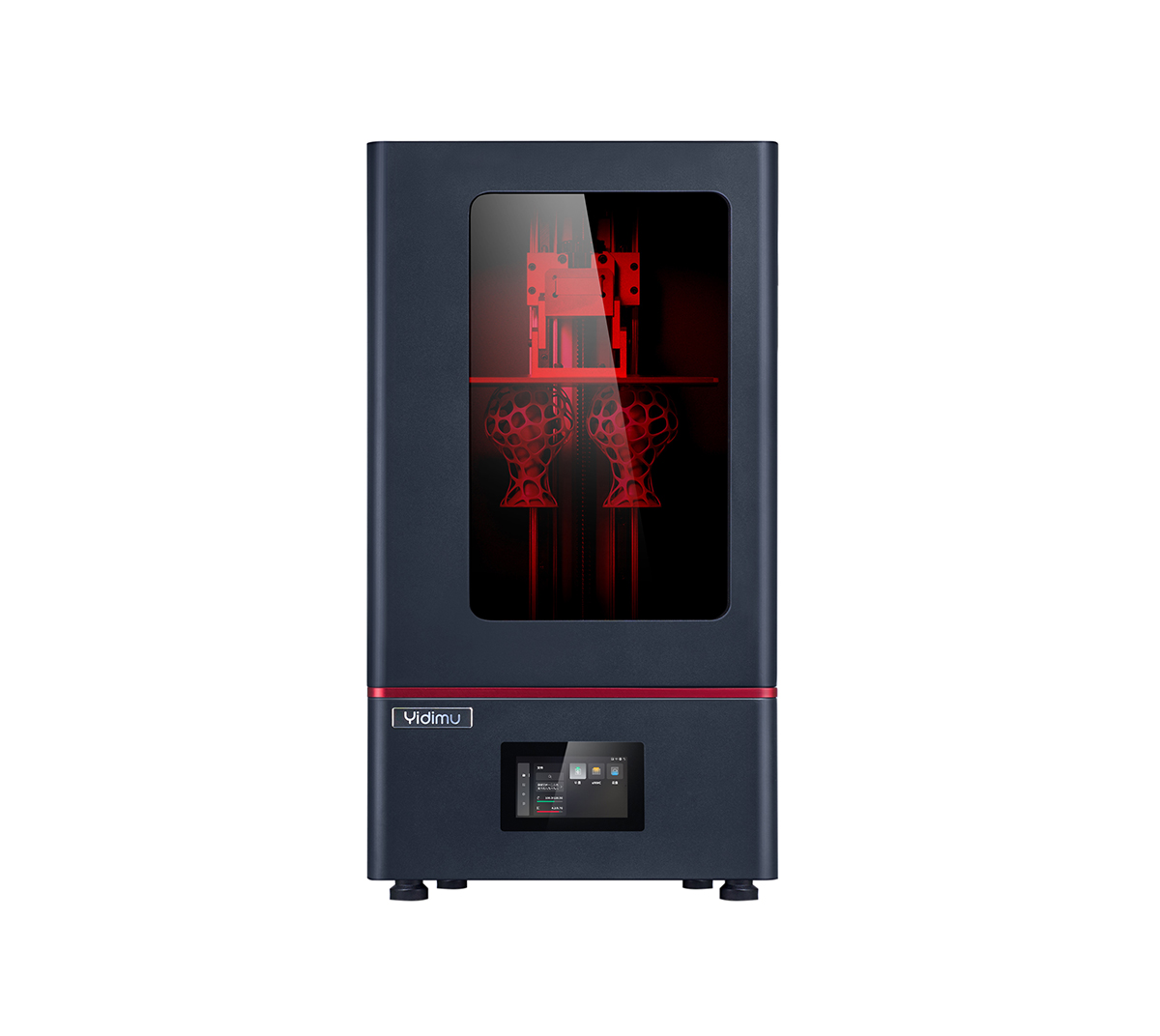
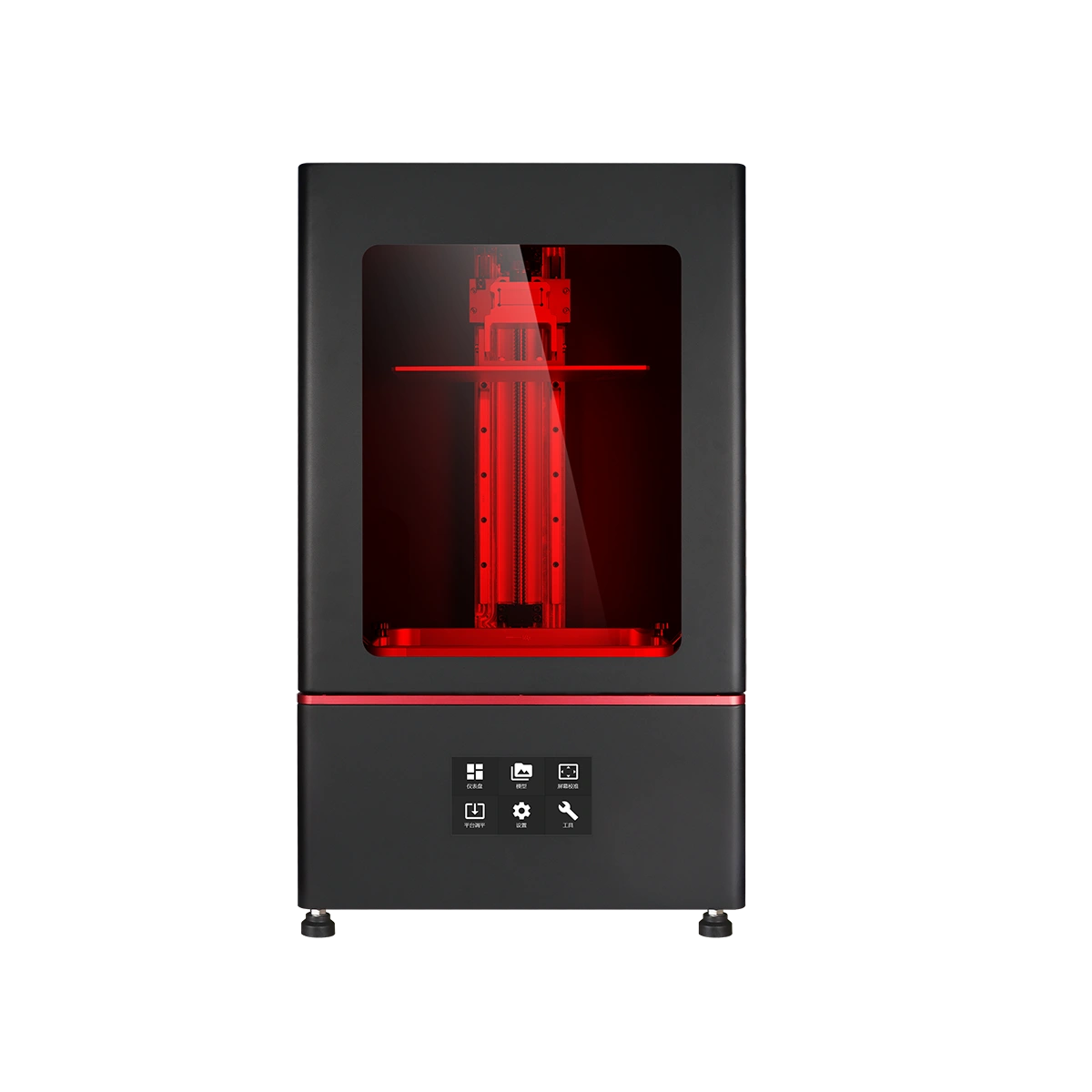
YIDIMU’s current public pages describe the Eternal M1 and Eternal M2 as industrial light-curing resin 3D printers. The M1 page specifically describes broad consumable compatibility, while the M2 page describes wide compatibility and lists CHITUBOX-based slicing. Those public descriptions are useful starting points, but they do not by themselves prove unrestricted third-party resin support or unrestricted access to every process parameter.

YIDIMU Eternal M1 industrial resin 3D printer
Eternal M1 — current industrial light-curing resin 3D printer.

Eternal M1

For material-system evaluation, ask YIDIMU to confirm the exact resin intended for your part, the current editable profile parameters, the recommended validation procedure and the technical-support boundary for that resin.

Review Eternal M1 →
YIDIMU Eternal M2 industrial resin 3D printer
Eternal M2 — large-format industrial light-curing resin 3D printer.

Eternal M2

When a project also needs a larger layout, evaluate material compatibility together with part orientation, support strategy, usable platform area, washing capacity, UV post-curing and finished-part inspection.

Review Eternal M2 →

Also review the current YIDIMU resin materials and post-processing equipment. Do not assume that a resin shown elsewhere on the website is automatically qualified for a particular printer or application; confirm the exact combination for the project.

Procurement Checklist

Questions to send a printer supplier before you compare “open” claims

  • Which resin brands, grades and wavelengths are currently supported on this exact printer configuration?
  • Can we use a resin not supplied or approved by you, and what limitations apply?
  • Which exposure, layer, lift, retract, delay or related process parameters can the user edit?
  • Can custom material profiles be named, duplicated, exported, backed up and transferred to another machine?
  • Does the slicer impose material locks, cloud authorization, subscription requirements or profile restrictions?
  • What happens to warranty and technical support when an unvalidated third-party resin is used?
  • Who is responsible for creating and validating a new resin profile?
  • What calibration geometry and representative-part tests are recommended before routine production?
  • How should resin lot changes, software revisions and parameter changes be documented?
  • What washing, complete-drying and UV post-curing workflow is required for the intended resin?
  • What consumables or vat components have resin-specific compatibility limits?
  • Can the supplier run our model with our intended material and provide the process record used for evaluation?

Limitations & Validation

A material list cannot replace representative-part qualification

Compatibility is application-specific. A resin may cure successfully yet still miss requirements for dimensions, surface quality, flexibility, heat exposure, fit, durability or post-processing behavior. Likewise, a profile that works on one geometry may require different support strategy or orientation on another.

Before approving a printer-material combination for engineering validation or repeat production, run a part that contains the real critical features. Complete washing, full drying and required UV post-curing before dimensional and functional inspection. Repeat builds when consistency across time, platform position, resin lot or operators matters.

The broader industrial resin 3D printer manufacturer evaluation guide explains how to combine material documentation, sample evidence, process controls, support and lifecycle cost in a supplier review. The SLA vs DLP vs LCD for industrial 3D printing guide provides additional context on why exposure architecture alone does not determine the final result.

FAQ

Industrial resin 3D printer open material system vs closed system FAQ

What does an open material system mean on a resin 3D printer?

It usually means the user has some freedom to use materials outside a fixed proprietary library and/or create custom print profiles. The exact degree of openness varies, so verify resin access, parameter access, profile management and support terms separately.

Does a 405 nm resin work on every 405 nm resin printer?

No. Nominal wavelength is only one compatibility factor. Resin cure behavior, optical absorption, pigment, viscosity, separation behavior, temperature, layer conditions, machine controls and post-curing can all affect whether a stable process can be established.

Is an open material system always cheaper?

No. A lower resin purchase price may be offset by profile-development labor, calibration builds, failures, rework, additional post-processing or weaker technical support. Compare cost per accepted part after the process is stabilized.

Is a closed resin system automatically more accurate or repeatable?

No. A controlled material ecosystem can reduce variables, but finished-part performance still depends on the printer, resin, geometry, orientation, supports, exposure, mechanics, washing, drying, UV post-curing and inspection method.

How should I evaluate YIDIMU material compatibility?

Start with the exact printer, resin and application. Ask for current compatibility confirmation, available profile controls, material documentation and a representative sample workflow. Evaluate the finished part against written acceptance criteria rather than relying on a general compatibility statement.

Related Resources

Continue the equipment and process evaluation

Industrial Resin 3D Printer Manufacturer EvaluationCompare application evidence, material documentation, process controls, support and lifecycle cost. SLA vs DLP vs LCD for Industrial 3D PrintingSeparate exposure technology from the broader machine, resin and post-processing workflow. Resin 3D Print Quality Inspection ChecklistInspect finished parts after the defined wash, complete-dry and UV post-cure sequence. Resin 3D Printing for Low-Volume ManufacturingEvaluate accepted-part output, labor, post-processing and repeat production. Resin 3D Printer Light UniformityCheck exposure consistency across the usable build plane rather than one central reading.

Project Evaluation

Send the material requirement together with the model

Share the model file, overall dimensions, intended application, resin or required material behavior, quantity, critical surfaces, fit or tolerance requirements, post-processing expectations and inspection method. YIDIMU can then discuss the relevant printer, material and validation path for the project.

Submit Your Model & Requirements →