
Scheduled upkeep
Inspection, cleaning, lubrication where specified, calibration checks, filters, approved wipes, tools and operator time.
OPERATING COST & PREVENTIVE MAINTENANCE
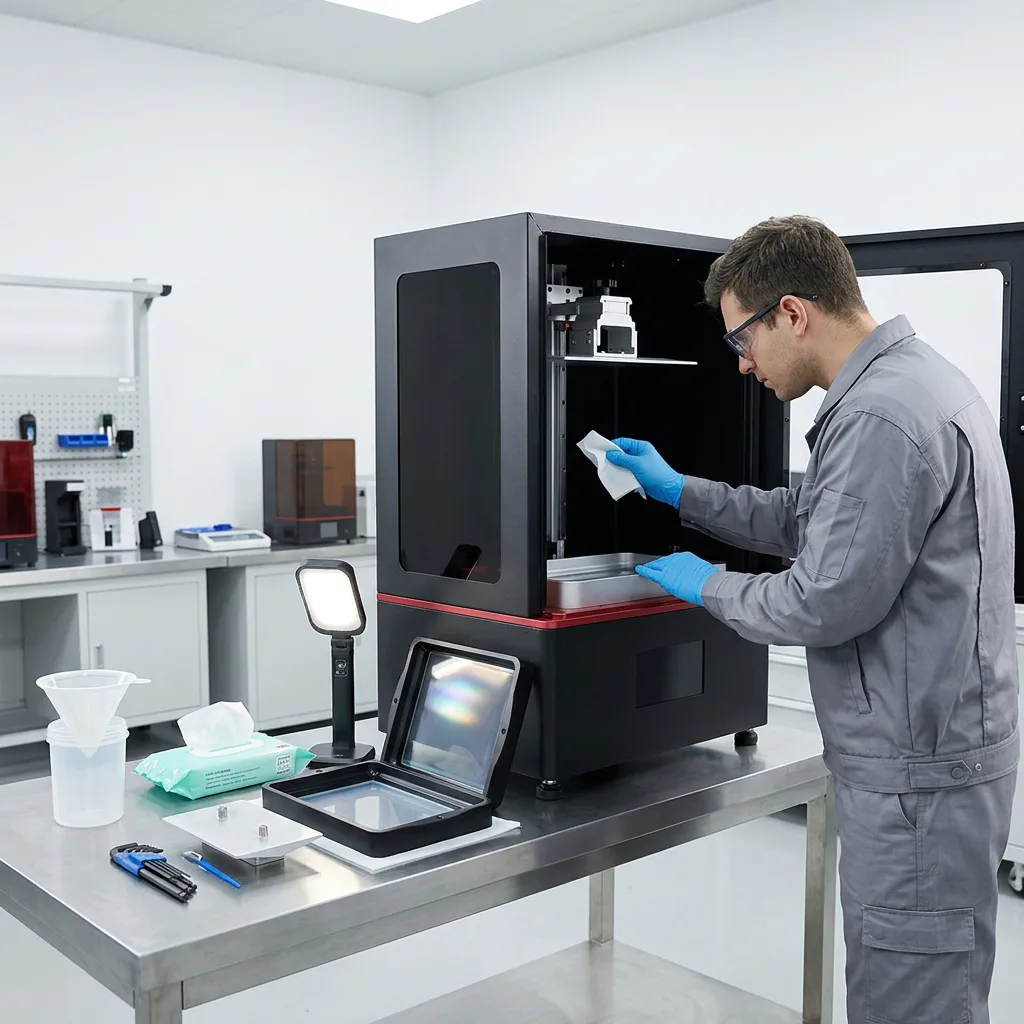
Industrial resin 3D printer maintenance cost does not have one reliable universal figure. It depends on printer architecture, utilization, resin, part geometry, release-film or tank wear, cleaning labor, service coverage, spare-part availability, post-processing equipment and the cost of downtime. The most useful budget is therefore a usage-based annual model—not a flat percentage copied from another machine.
DIRECT ANSWER
Inspection, cleaning, lubrication where specified, calibration checks, filters, approved wipes, tools and operator time.
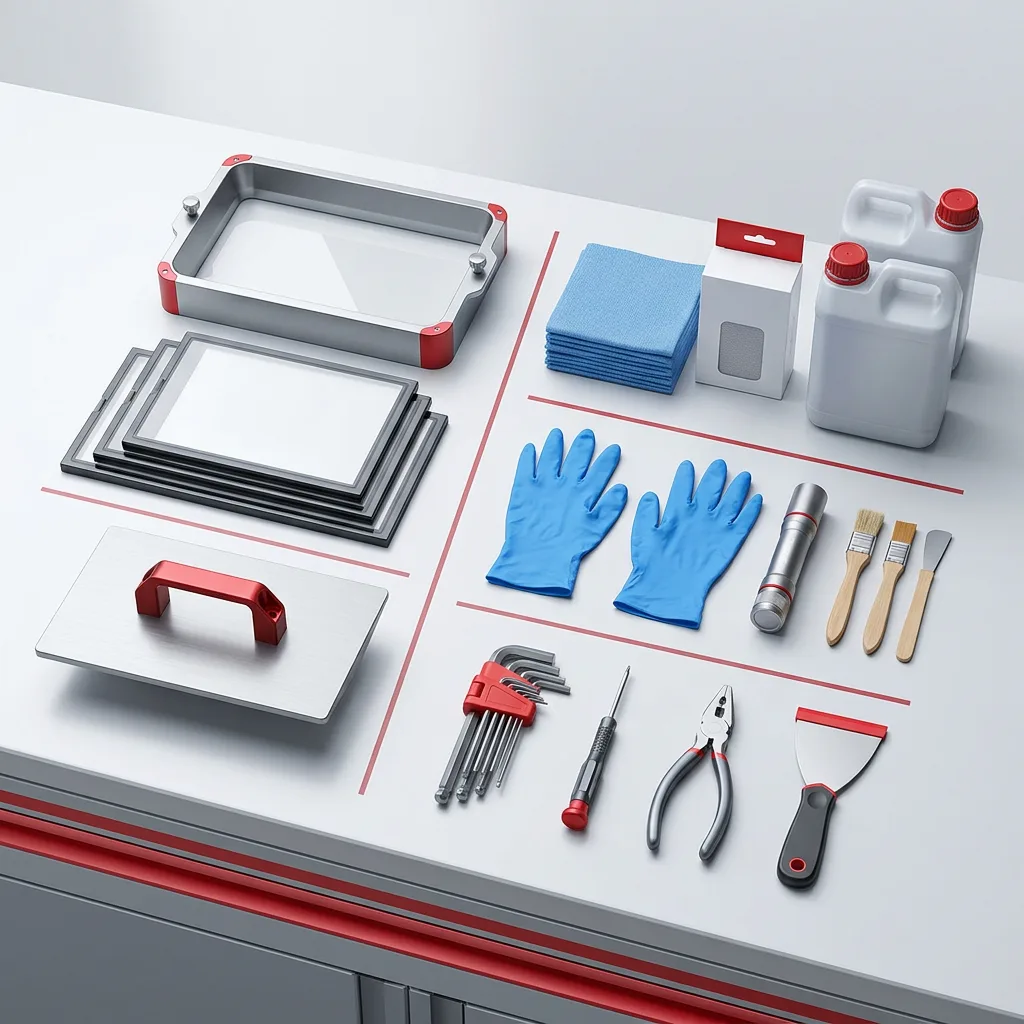
Resin tanks, release films, build surfaces, seals, mixers or other model-specific components that wear with printing and material exposure.
Service plans, replacement modules, travel or remote support, critical spares, unplanned repairs and lost production during downtime.
Wash equipment, solvent management, drying, UV post-curing, waste handling, inspection tools and the labor required to keep them controlled.
COST STRUCTURE
A maintenance budget should separate predictable recurring work from uncertain repair risk. Combining everything into a single “maintenance percentage” hides the causes of cost and makes supplier comparisons unreliable. It also makes it difficult to identify whether rising cost comes from the printer, the resin, poor operating discipline or the post-processing workflow.
| Cost category | What may be included | Main cost driver | How to verify |
|---|---|---|---|
| Routine cleaning | Approved wipes, cleaning tools, resin filters, spill-control materials and operator labor | Print frequency, resin changes, failures and cleanliness standard | Review the model-specific maintenance manual and actual labor records |
| Vat or release system | Complete resin tank, release film, seals, frames or other printer-specific wear parts | Resin formulation, geometry, repeated placement, temperature, handling and print hours | Request replacement criteria, current part price and installation procedure |
| Build platform | Surface cleaning, inspection, resurfacing or replacement where applicable | Part removal method, contamination, impacts and normal wear | Confirm permitted cleaning and service methods for the actual platform |
| Optical and light-delivery system | Inspection, approved optical cleaning, calibration and replacement modules | Printer architecture, contamination, light-source design and serviceability | Ask which optical tasks are operator-serviceable and which require a technician |
| Motion and calibration | Guide components, lead screws, bearings, sensors, platform alignment and calibration checks | Machine design, utilization, part load and environmental conditions | Use the preventive-maintenance interval supplied for the exact model |
| Post-processing equipment | Wash-system cleaning, solvent handling, filters, seals, UV-source checks and curing validation | Part throughput, resin carryover, solvent management and required process control | Budget the printer and post-processing equipment as one production cell |
| Technical service | Remote diagnosis, on-site labor, travel, service contracts and software or firmware support | Warranty scope, location, service response and internal technical capability | Request written warranty exclusions, response channels and chargeable service terms |
| Downtime and failures | Lost machine time, delayed orders, rejected parts, wasted resin and repeat post-processing | Spare-part lead time, troubleshooting speed and process stability | Track failure causes and productive hours rather than only repair invoices |
Material itself is normally classified as an operating cost, not maintenance. However, resin lost during tank cleaning, filtering, failed builds, contamination or an uncontrolled leak should be recorded against the maintenance or failure event that caused the loss. This distinction helps management see whether the cost belongs to normal production or preventable process disruption.
TECHNOLOGY DIFFERENCES
LCD or MSLA, DLP and laser-based SLA systems are all vat-photopolymerization processes, but their light-delivery systems and service requirements are not identical. A comparison should therefore use the parts and maintenance procedure of the exact machine rather than assuming that all resin printers have the same wear pattern.
Budget attention typically includes the resin vat and release interface, the condition of the masking and light-delivery assembly, optical cleanliness, platform alignment and the availability of replacement modules. Ask whether screen or light-module replacement is a field procedure, a distributor procedure or a factory service.
Maintenance planning should consider the vat and release system, projector or light-engine service, optical cleanliness and calibration requirements. The projected image system differs from an LCD mask, so component pricing and serviceability must be checked separately.
Maintenance may involve the tank and release mechanism, optical windows, laser-delivery components, scanning or motion systems and calibration. Avoid treating an optical-cleaning instruction from one machine as a universal procedure for another.
BUDGET MODEL
Start with an annual cost worksheet for each printer and each post-processing unit. Do not use the purchase price alone as the base. Two similarly priced machines can have different wear-component prices, replacement intervals, service access and downtime exposure.
Annual maintenance cost = scheduled service + routine maintenance supplies + usage-driven wear parts + maintenance labor + post-processing maintenance + safety and waste-control supplies + unplanned repair reserve
Maintenance cost per productive print hour = annual maintenance cost ÷ productive print hours
Maintenance cost per accepted part = annual maintenance cost allocated to the job ÷ accepted parts
Downtime cost = unavailable production hours × internal value of lost capacity, plus expediting, outsourcing or delay costs where applicable
| Budget line | Unit basis | Planned quantity | Current unit cost | Annual total |
|---|---|---|---|---|
| Preventive service | Per visit or contract | Enter | Confirm | Calculate |
| Vat or release components | Per tank, film or kit | Enter | Confirm | Calculate |
| Approved cleaning and filtering supplies | Per month or build | Enter | Confirm | Calculate |
| Maintenance labor | Hours × labor rate | Enter | Confirm | Calculate |
| Post-processing maintenance | Per unit or interval | Enter | Confirm | Calculate |
| Critical spare parts | Stock item | Enter | Confirm | Calculate |
| Unplanned repair reserve | Risk allowance | Define | Document basis | Calculate |
Do not publish or approve the worksheet until the supplier has confirmed current prices, part numbers, compatibility, replacement criteria and warranty treatment. A maintenance estimate based on a different printer generation or resin family can be misleading.
PREVENTIVE CONTROL
The exact interval must come from the current manual, but a budget can be organized by event. Event-based planning is especially useful when utilization changes from occasional prototyping to continuous production.
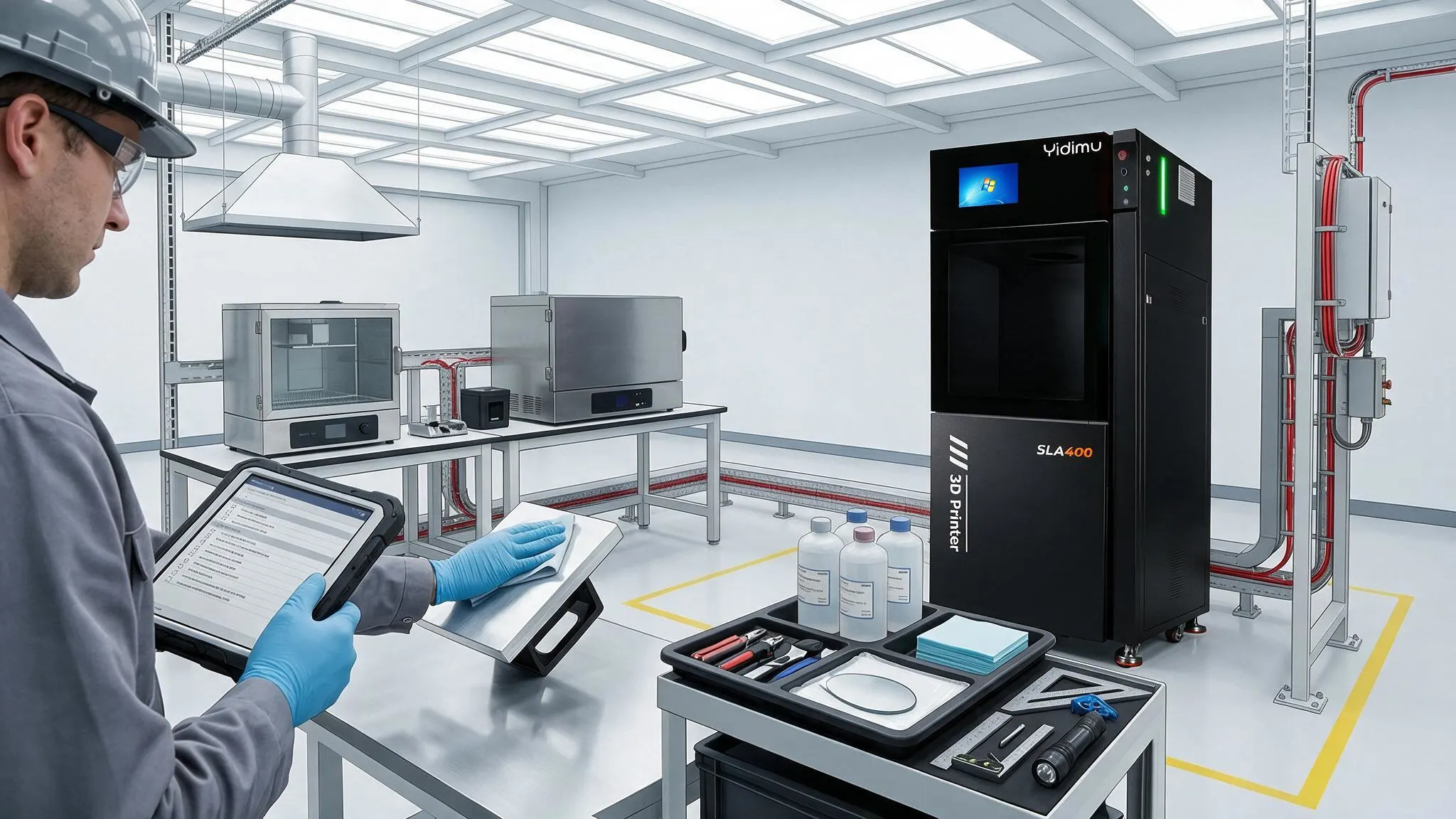
YIDIMU’s current troubleshooting guidance includes disconnecting power during maintenance, using dust-free materials for the resin vat and print platform, storing resin sealed and away from light, and cleaning the vat before changing resin types. Always reconcile general guidance with the manual for the exact printer and resin. See the YIDIMU troubleshooting page and request the current model documentation when preparing a production schedule.
COST CONTROL
Cost reduction should focus on preventing contamination, repeated failures and unplanned downtime. Extending a wear component beyond its documented replacement condition can increase the risk of a leak, damaged part, lost build or larger repair. Replace by condition and manufacturer criteria—not by an arbitrary desire to reach a target number of hours.
PROCUREMENT CHECKLIST
APPLICATION REVIEW
Share your model dimensions, resin requirements, expected throughput, production schedule and post-processing workflow. YIDIMU can review the application, discuss industrial resin printer options, compare resin material categories and identify the information needed for a realistic operating-cost evaluation.
FREQUENTLY ASKED QUESTIONS
No percentage is reliable across all machines. Architecture, utilization, resin, wear-component design, service coverage, local labor, spare-part lead time and post-processing equipment can change the annual cost. Use current part prices and expected operating conditions for the exact system.
They are normally usage-driven consumables or wear components. The budget should include their current price, replacement criteria, installation labor and any resin loss or downtime associated with replacement. Some printers replace a film; others replace a complete tank or a different release assembly.
It can. Resin formulation, viscosity, pigment, filler content, chemical interaction, cleaning method and storage requirements may change vat wear, contamination risk and operator labor. Confirm compatibility and maintenance guidance in the current technical documentation.
The failed part itself is a production-loss cost, but the inspection, cleaning, filtering, component damage, resin loss and downtime caused by the failure should be linked to that event. This helps separate normal scheduled maintenance from preventable process failures.
Allocate annual maintenance by productive print hours, machine utilization or a documented job-costing method, then divide the job allocation by accepted parts. Using accepted output prevents failed builds from making cost appear artificially low.
Provide the printer model under consideration, intended resins, representative geometries, print hours, builds per week, material-change frequency, required post-processing, operator capability, service location and acceptable downtime. Request current written prices and replacement criteria rather than generic estimates.