Supplier Evaluation · Industrial Resin 3D Printing

Industrial Resin 3D Printer Supplier Checklist

Use this checklist before requesting final quotations or approving a supplier. It turns a broad equipment search into a comparable review of application fit, sample evidence, materials, post-processing, service, maintenance and the cost of producing acceptable parts.

  • Start from the real part and acceptance criteria
  • Ask every supplier for the same evidence
  • Validate the complete wash-dry-cure workflow
  • Compare lifecycle obligations, not only machine price
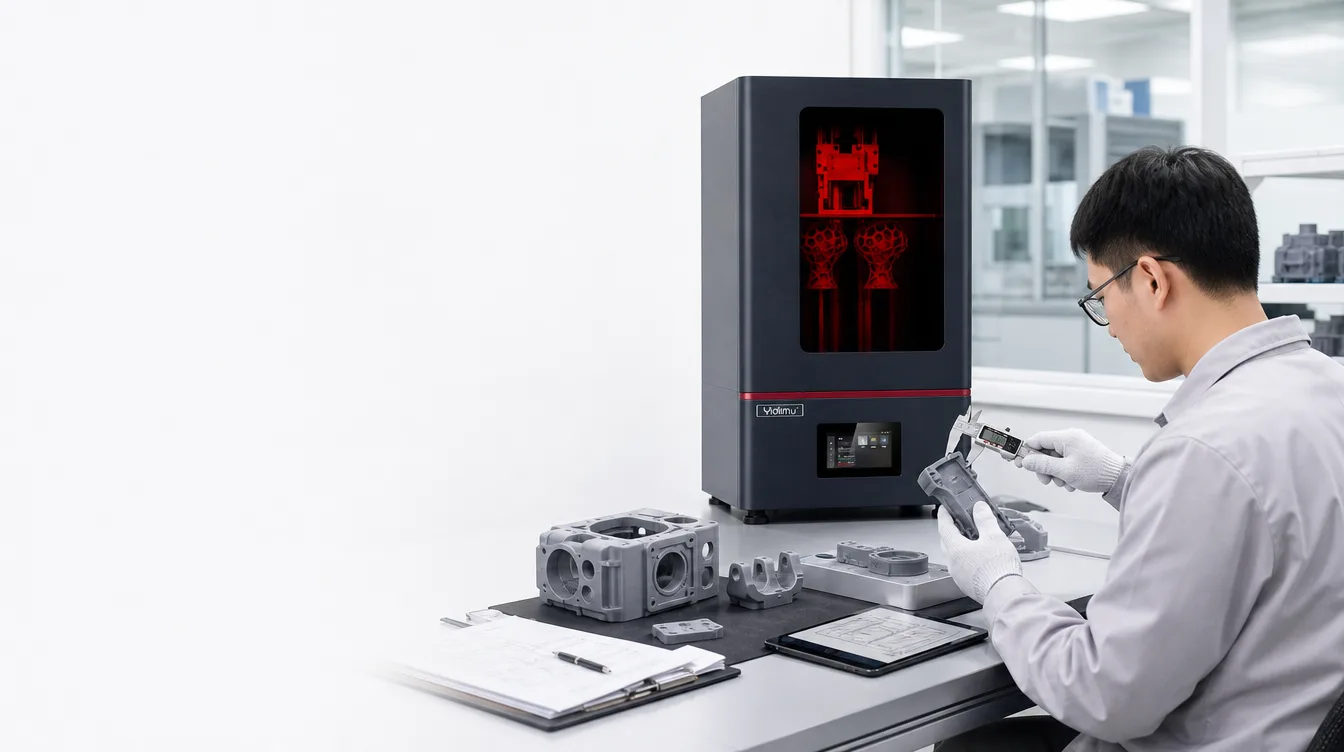
Engineer reviewing an industrial resin 3D printer, printed parts and supplier evaluation documents
Supplier selection is more reliable when the equipment proposal is tied to representative parts, documented process conditions and measurable acceptance criteria.
Direct Answer

What should an industrial resin 3D printer supplier checklist include?

An industrial resin 3D printer supplier checklist should verify more than build size, resolution and quoted price. It should require a written application brief, the proposed printer and resin, material documentation, representative sample testing, dimensional and repeatability checks, the complete washing, complete drying and UV post-curing workflow, software and file compatibility, maintenance and spare-part planning, technical support, facility and safety requirements, and the total commercial scope. The strongest comparison is made when every supplier answers the same questions and produces evidence using the same representative parts and acceptance criteria.

Define success firstWrite down the part, material behavior, critical dimensions, surface expectations, quantity and inspection method before comparing machines.
Evidence beats claimsRequest current specifications, technical documents, process records and representative samples instead of relying on demonstration parts.
Inspect after post-cureDimensional or fit evaluation should reflect the final controlled workflow, not an uncured or partially processed sample.
Compare accepted outputProduction value depends on usable parts after printing, washing, drying, curing, finishing and inspection.
Clarify lifecycle scopeMaintenance, consumables, software, training, service, spare parts and downtime exposure belong in the purchasing decision.

Before the RFQ

Build one technical brief that every supplier must answer

A supplier comparison becomes difficult when vendors are responding to different assumptions. One proposal may be optimized for a small cosmetic prototype, another for a densely packed batch, and a third for a different resin or post-curing method. Create a common evaluation packet first. Then require each supplier to state where the proposed workflow meets the requirement, where it needs validation and where it does not fit.

01

Part and application definition

Send representative files rather than a generic industry label such as “industrial prototyping.” Include:

  • overall dimensions and the oriented size if already known;
  • thin walls, holes, channels, mating features and cosmetic surfaces;
  • critical dimensions, datums, fit conditions and inspection method;
  • expected prototype or batch quantity and revision frequency;
  • the actual environment in which the part will be handled or tested.
02

Printer architecture and usable build fit

Ask why the proposed vat-photopolymerization system is appropriate for the geometry. Do not stop at nominal XYZ build volume. Review the supported orientation, edge clearance, expected build height, removal access, hollow-part drainage and whether a batch layout can be processed without compromising critical surfaces.

03

Material identification and documentation

Require the exact resin grade proposed for testing and the current technical and safety documents applicable to that material. Confirm storage, handling and post-processing requirements from the formal documentation. Generic labels such as “ABS-like,” “tough” or “high-temperature” are not acceptance criteria by themselves.

04

Representative sample-test plan

Choose a sample that exposes the real risks: the largest useful geometry, difficult surfaces, small holes, thin walls, mating interfaces or repeated parts across the platform. Ask the supplier to record the printer, resin, orientation, supports, profile, wash method, complete drying step, UV post-cure procedure and inspection stage used for the sample.

05

Dimensional performance and repeatability

A single visually attractive model does not prove a stable process. Define which dimensions will be measured, at what stage, with what instrument and against what tolerance. Where repeatability matters, request multiple parts, multiple builds or distributed platform positions rather than one center-position sample.

06

Post-processing as part of the system

Confirm how parts are drained, washed, fully dried, UV post-cured, support-removed, finished and inspected. Ask what equipment, consumables, operator time and workspace are required. The post-processing method must match the selected resin documentation; do not accept a universal wash or cure time applied to every material.

07

Capacity based on accepted parts

Ask for the assumptions behind any throughput statement. Relevant inputs include validated parts per build, oriented build height, preparation, print cycle, unloading, wash and cure capacity, changeovers, operator touch time, inspection and reprints. Compare sustainable accepted output, not only nominal vertical speed.

08

Software, file and parameter control

Confirm supported file types, slicing workflow, profile management, parameter visibility, update process and how production settings are backed up or controlled. If the application depends on traceability, ask which job, machine, resin and process records can be retained for later review.

09

Maintenance and spare-part planning

Request the model-specific maintenance schedule, operator tasks, wear components, replacement criteria and current spare-part ordering process. Clarify which service activities can be performed by trained operators and which require supplier intervention. Include post-processing equipment in the maintenance review.

10

Facility, EHS and material handling

Review workspace, electrical requirements, ventilation or local controls where applicable, PPE, chemical storage, spill response, cleaning materials and waste handling. The supplier should point you to the current SDS and equipment documentation, while the buyer remains responsible for local legal and facility requirements.

11

Documentation, training and technical support

Ask what manuals, setup documents, resin guidance, troubleshooting channels, training options and escalation routes are available for the exact configuration. Request the current written warranty and service scope rather than assuming website language, distributor statements or an older quotation still applies.

12

Commercial scope and lifecycle cost

Make suppliers separate the printer price from the rest of the production cell. Identify included accessories, resin, wash and cure equipment, software, shipping, installation, training, routine consumables, wear parts, maintenance, inspection tools and any services that are quoted separately.

Evidence Matrix

Turn supplier answers into documents you can compare

The checklist is useful only when a “yes” can be tied to evidence. Use the same evidence request for every supplier and record unresolved items before the commercial decision.

Evaluation item Supplier should provide Buyer should verify Decision status
Application fit Proposed printer, resin, orientation approach and known constraints Representative geometry fits the intended workflow and critical features are addressed Pass / Conditional / Open / Reject
Material Exact resin identity and current technical/safety documentation Required behavior is supported by documentation and part testing where needed Pass / Conditional / Open / Reject
Sample validation Process record for representative printed samples Measurements and functional checks are made after the complete final workflow Pass / Conditional / Open / Reject
Repeatability Repeated or distributed test results where relevant Variation is acceptable for the real part and inspection method Pass / Conditional / Open / Reject
Post-processing Wash, drying, curing and handling requirements for the proposed resin Equipment, labor, staging space and process controls can support expected volume Pass / Conditional / Open / Reject
Service and maintenance Current maintenance, wear-part, service and warranty documentation Responsibilities, exclusions, ordering routes and downtime exposure are understood Pass / Conditional / Open / Reject
Commercial scope Itemized quotation and clearly stated exclusions The compared totals cover the same printer, material and post-processing scope Pass / Conditional / Open / Reject
PassRequirement is supported by current evidence and the result matches the defined acceptance criteria.
ConditionalThe proposed workflow may fit, but a stated limitation, process change or additional validation remains.
OpenThe answer is incomplete, outdated or not yet supported by evidence. Resolve it before treating proposals as equivalent.
Formal qualification note: teams building a controlled additive-manufacturing program may use standards such as ISO/ASTM 52920:2023 for quality-relevant processes in industrial AM production sites and ISO/ASTM 52902:2023 for benchmarking artefacts used to assess AM system capability. These frameworks can inform an acceptance plan, but they do not replace application-specific requirements, supplier documentation or representative-part testing.

Common Red Flags

What should make procurement ask for more evidence?

None of these points automatically disqualifies a supplier. They indicate that the proposal needs clarification before technical and commercial comparisons are treated as complete.

Only a pixel or resolution claim is used to prove accuracy.Final dimensions also depend on optics, calibration, resin cure behavior, geometry, orientation, supports and post-processing.
Sample parts are display models chosen by the supplier.A demonstration model may avoid the geometry, dimensions or surfaces that matter in your project.
Material names are generic and documents are missing.Ask for the exact resin and the current TDS, SDS, IFU or other applicable formal documentation.
Throughput is stated without the batch layout and post-processing load.Printer output can be limited by washing, drying, curing, finishing, inspection or operator availability.
Maintenance cost is represented as one universal percentage.Wear components, utilization, resin, service terms, local support and downtime vary by system and use case.
The quotation does not identify what is excluded.Software, post-processing equipment, freight, installation, training, consumables or service can materially change implementation cost.

Relevant YIDIMU Systems

Industrial printer options to evaluate against the checklist

YIDIMU's current industrial resin printer range includes Eternal M1 and Eternal M2. Use the product pages as the starting point for the current configuration, then request the latest specification, material and workflow information for the exact project under review.

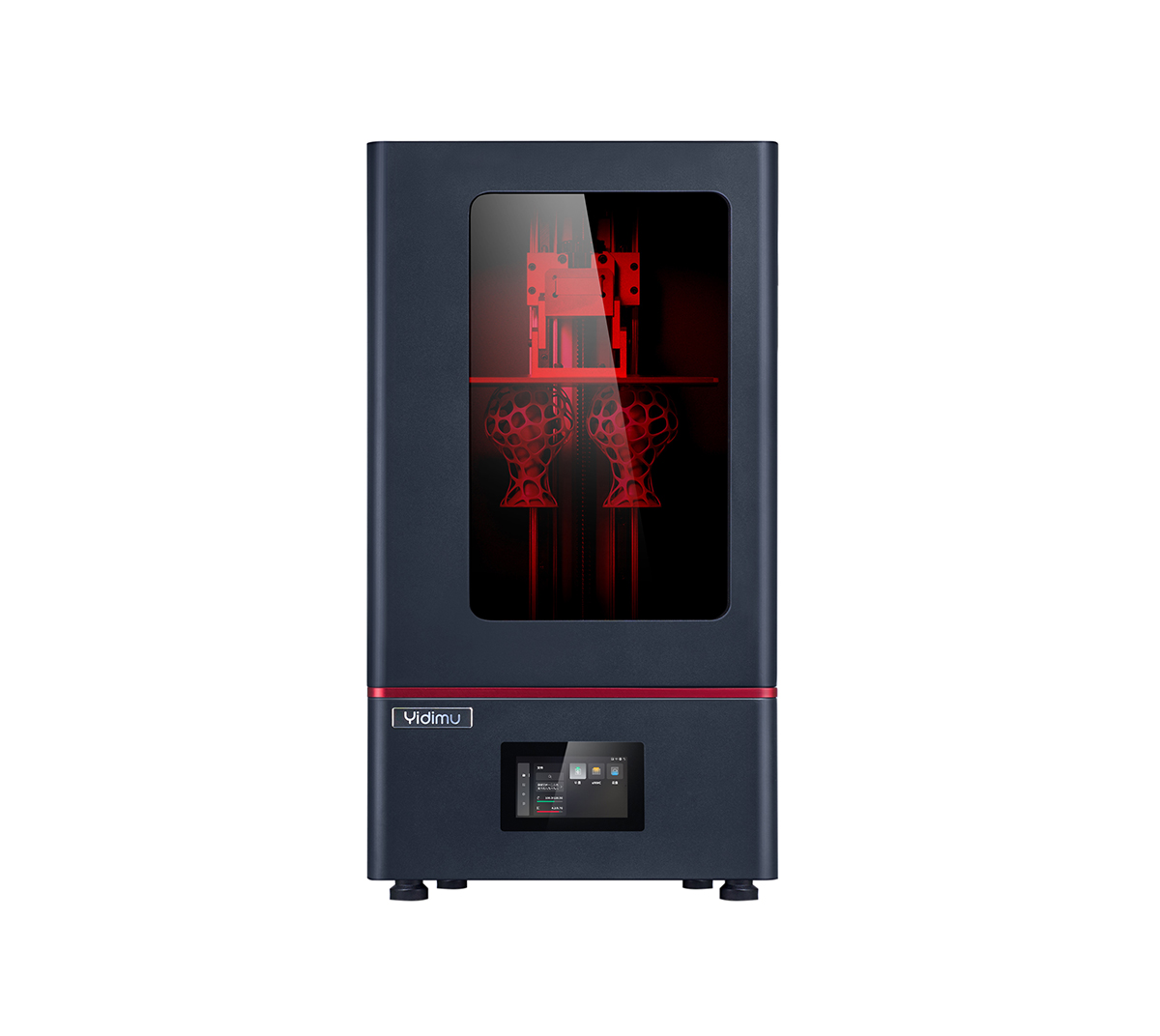
YIDIMU Eternal M1 industrial resin 3D printer
Eternal M1 — industrial resin 3D printer option for project evaluation.

Eternal M1

Evaluate the M1 around the actual supported part, resin requirement, batch layout, post-processing plan and inspection criteria rather than treating any single specification as proof of final performance.

Review Eternal M1 →
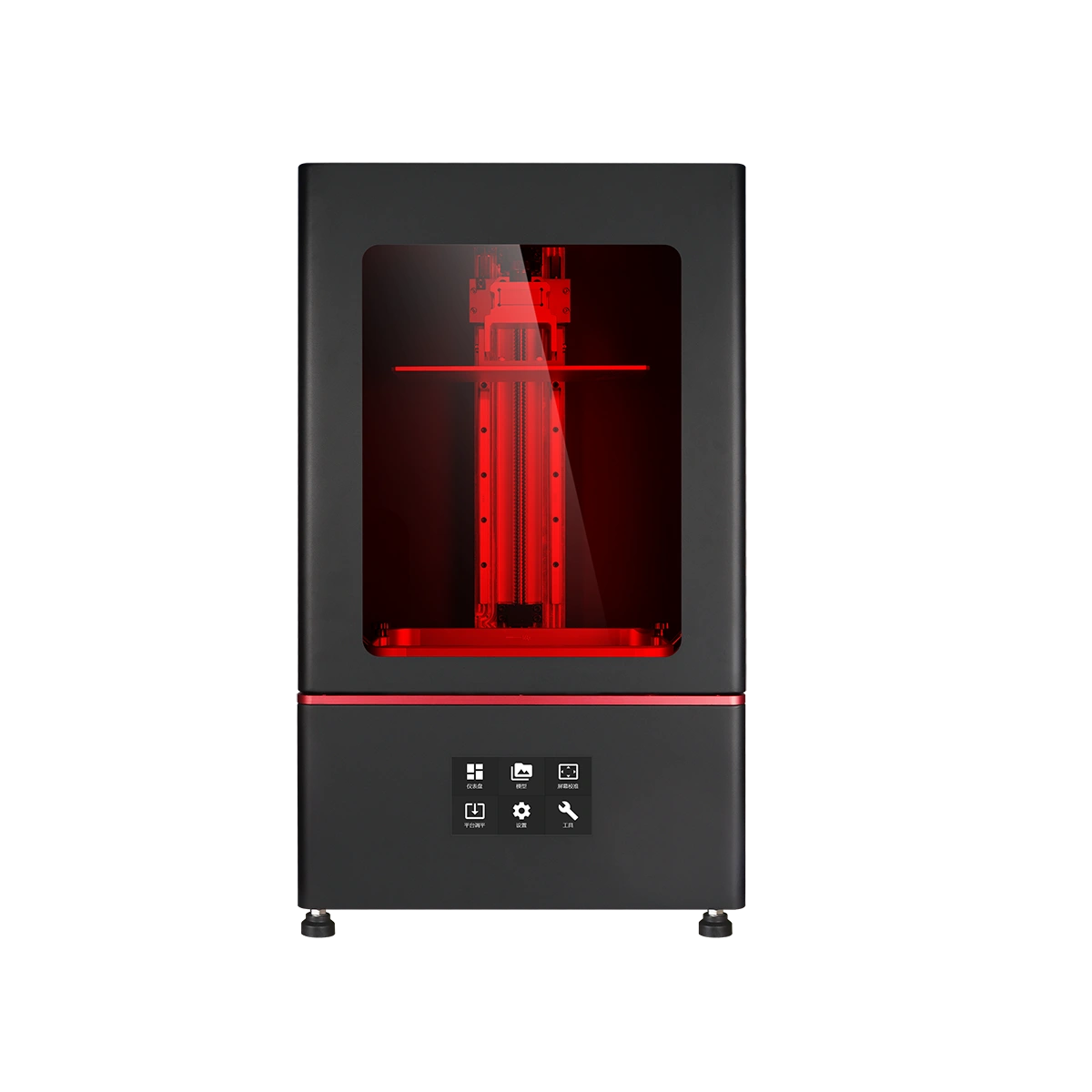
YIDIMU Eternal M2 industrial resin 3D printer
Eternal M2 — large-format industrial resin 3D printer option for project evaluation.

Eternal M2

For larger parts or denser multi-part layouts, validate usable build fit together with orientation, separation behavior, handling, wash and cure capacity and measurement after final post-processing.

Review Eternal M2 →

Material selection should be reviewed separately against the current YIDIMU resin materials and the corresponding technical documents. Post-processing capacity should also be checked against the available supporting and UV curing equipment.

Practical Evaluation Checklist

What to send with a serious supplier enquiry

A supplier can give a more useful response when the enquiry contains enough information to connect the printer, resin and workflow to the real part.

Project package

  • 3D model file with confirmed units and overall dimensions;
  • intended use and the function of the printed part;
  • critical dimensions, fits, holes, walls and datums;
  • cosmetic surfaces and acceptable support-mark locations;
  • material behavior required in the intended environment;
  • prototype quantity, batch quantity or expected production mix;
  • surface, finishing, painting, bonding or assembly requirements;
  • tolerance or inspection criteria and the measurement method;
  • post-processing constraints, available workspace and operator capability;
  • photos or drawings of mating parts when assembly fit is important.

Limitations & Validation

A supplier checklist narrows risk; it does not prove your production result

Specifications and supplier documents are screening tools. They cannot predict every interaction among resin chemistry, equipment condition, orientation, supports, exposure, temperature, separation, washing, complete drying, UV post-curing, finishing and measurement. A representative part should therefore be processed through the intended final workflow before a dimensional, appearance, fit or functional conclusion is accepted.

If the requirement involves repeated production, do not base the decision on a single successful build. Define the number of repeated parts or builds that is appropriate for the project risk, compare results using the same inspection method, and record failures as well as accepted parts. For safety-critical, regulated or customer-qualified applications, the applicable quality system, validation plan and regulatory requirements must be determined separately.

Frequently Asked Questions

Industrial resin 3D printer supplier checklist FAQ

What is the first question to ask an industrial resin 3D printer supplier?

Start with your part: can the supplier show how the proposed printer, resin and post-processing workflow address the actual geometry, critical dimensions, surface requirements, quantity and inspection method? This is more useful than asking which model is “best.”

Should I compare industrial resin 3D printers by resolution?

Resolution can describe part of the imaging system, but it does not independently prove final dimensional accuracy or repeatability. Evaluate the complete process and measure representative parts after the intended post-processing workflow.

What documents should a resin 3D printer supplier provide?

Request the current printer specification, applicable manuals, exact resin technical and safety documents, maintenance guidance, post-processing instructions, software information, quotation scope and current service or warranty terms relevant to the proposed configuration.

How should I test a supplier before buying the printer?

Use a representative part or batch that includes the geometry and quality characteristics that matter in your application. Record orientation, supports, resin, settings, wash, complete drying, UV post-curing and inspection, then evaluate the finished part against predefined criteria.

How do I compare supplier quotations fairly?

Make each quotation cover the same scope. Separate machine price from resin, washing and curing, software, accessories, freight, installation, training, wear parts, maintenance, inspection and other implementation costs. Record exclusions explicitly.

Does a passed sample guarantee production performance?

No. A sample confirms only the tested conditions and part. Production use adds repeatability, batch loading, operator variation, maintenance, material control and downstream capacity. Validate repeated representative builds when those factors matter.

Related Resources

Continue the supplier evaluation

Industrial Resin 3D Printer Manufacturer Evaluation Use the broader due-diligence framework for manufacturer capability, process controls and lifecycle support. Industrial Resin 3D Printer Maintenance Cost Build a maintenance budget around wear parts, service, operator work and downtime exposure. Large-Format Resin 3D Printer for Industrial Parts Evaluate usable build fit, supports, post-processing and representative sample validation for larger parts. Resin 3D Printer Light Uniformity Understand how to evaluate spatial exposure consistency and why a supplier percentage needs a defined test method. Resin 3D Printing for Low-Volume Manufacturing Compare batch layout, post-processing, inspection, reprints and accepted-part economics. Resin 3D Printing Resource Center Browse current technical guides for equipment evaluation, process control and production planning.

Project Review

Apply the supplier checklist to your actual model

Send the model file, overall dimensions, intended application, material requirements, quantity, critical dimensions, surface expectations, fit conditions and inspection method. YIDIMU can review the project around an industrial resin printer, resin and post-processing workflow without treating a specification sheet as a substitute for representative-part validation.

Submit Project Requirements View Industrial 3D Printers