
Are 3D Printed Shoes Durable? Flex & Fatigue Testing
Are 3D printed shoes durable enough for everyday wear? They can be, provided that the material, structural design, printing process and post-processing conditions are suitable for the intended application. However, a shoe that feels flexible immediately after printing is not necessarily capable of maintaining its performance after repeated walking, bending and compression.
For footwear manufacturers, the more useful question is whether a printed shoe can retain its structural integrity, cushioning response and dimensional stability throughout its intended service conditions.
Answering that question requires physical testing rather than relying exclusively on appearance, material hardness or tensile strength.
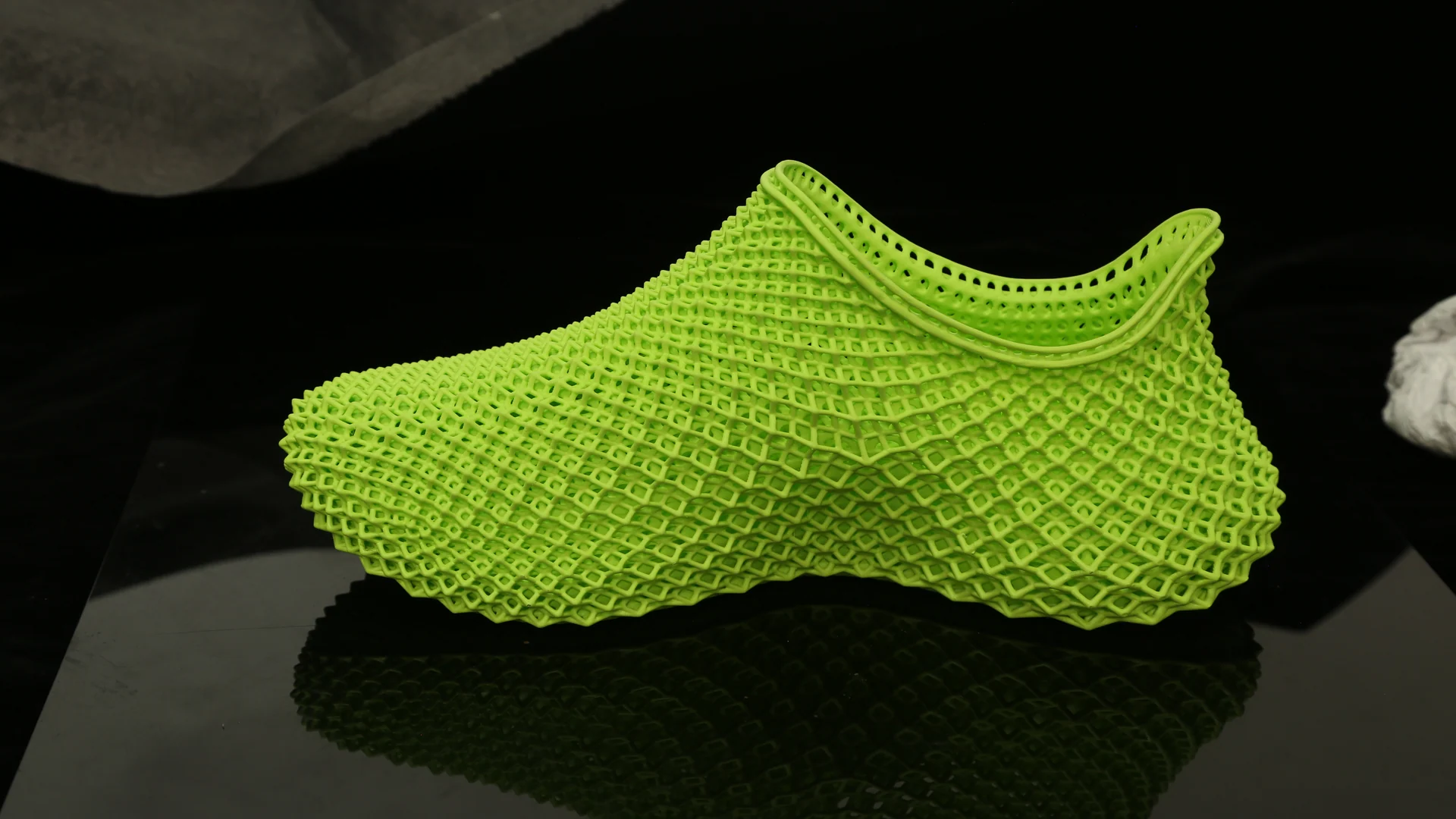
What determines the durability of 3D printed shoes?
Footwear durability depends on material fatigue resistance, tear strength, lattice geometry, abrasion resistance, elastic recovery, manufacturing consistency and post-curing conditions. These properties must be evaluated against the intended application before production approval.
1. What Does Durability Mean for 3D Printed Footwear?
Durability is not a single material property. A shoe may resist tearing but gradually lose its cushioning performance. Another may recover its original shape after compression yet wear rapidly when exposed to abrasive surfaces.
Different footwear components also experience different mechanical loads.
| Footwear Component | Primary Loading Conditions | Durability Requirements |
|---|---|---|
| Midsole | Repeated compression and impact | Fatigue resistance, cushioning retention and elastic recovery |
| Outsole | Ground contact, friction and bending | Abrasion resistance, traction and flex resistance |
| Insole | Localized pressure and repeated compression | Dimensional stability and resistance to permanent deformation |
| Printed upper | Stretching and localized tension | Tear resistance and structural fatigue performance |
| Fully printed shoe | Combined bending, compression and friction | Whole-shoe structural and functional durability |
A successful midsole compression test does not establish outsole durability. Similarly, an abrasion-resistant outsole does not demonstrate that the entire shoe can withstand repeated flexing.
2. Flexible Resin vs. Traditional Footwear Materials
Conventional footwear manufacturing commonly uses EVA, TPU, polyurethane and rubber. Each material family contains numerous grades developed for different combinations of elasticity, weight, cushioning and wear resistance.
Flexible photopolymer resins introduce a different manufacturing approach. Light-curing additive manufacturing enables complex cellular structures, variable-density lattices and customized geometries without conventional molding tools.
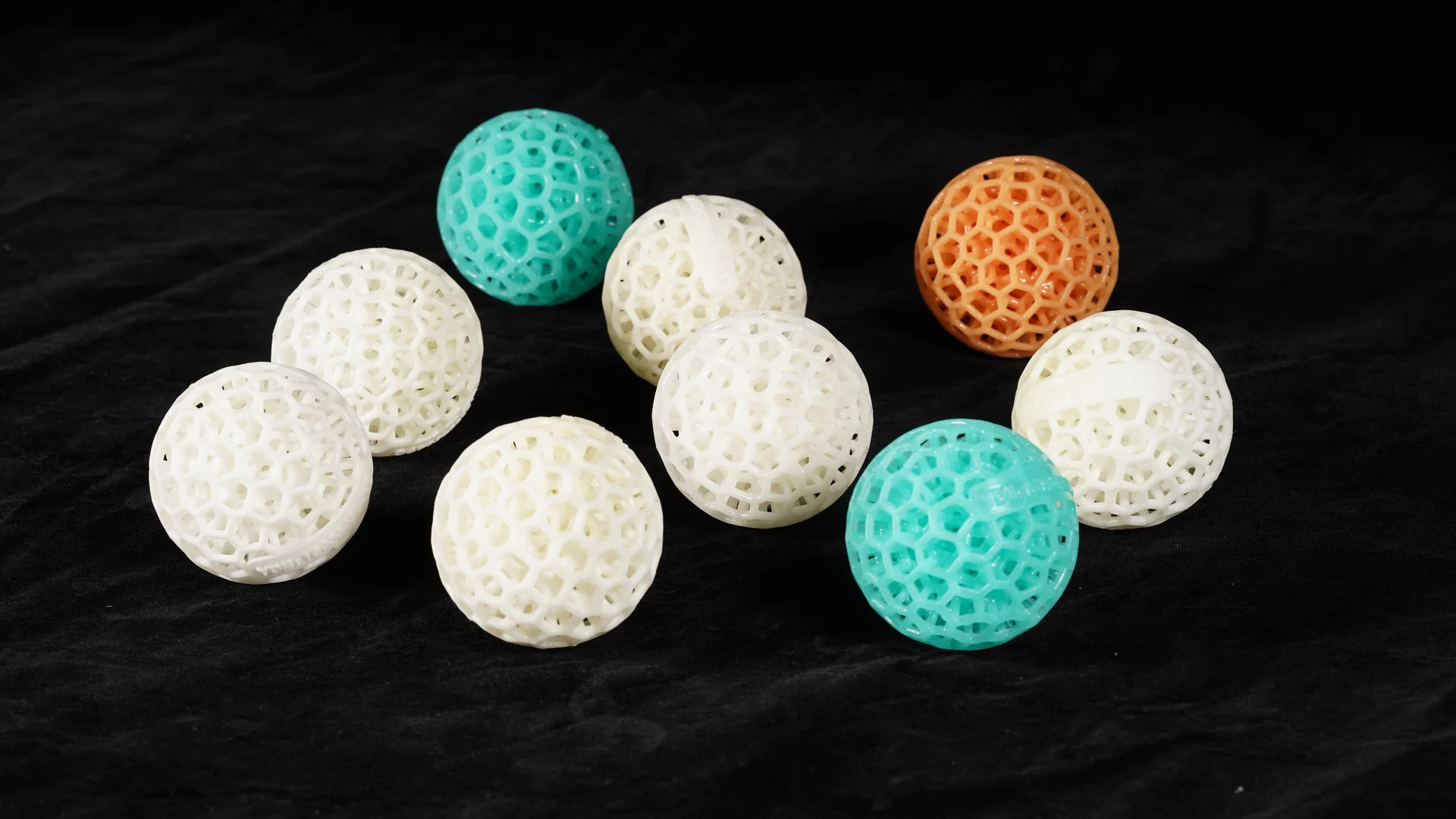
Flexible Photopolymer Resin
Elastomeric photopolymer materials can be used to develop flexible lattice structures, footwear cushioning components and elastic engineering prototypes.
Material selection should consider tear resistance, elongation, fatigue behavior, elastic recovery, printing compatibility and the mechanical properties obtained after post-curing.
| Material | Typical Characteristics | Common Applications |
|---|---|---|
| EVA foam | Lightweight and compressible | Midsoles and cushioning layers |
| TPU | Grade-dependent elasticity and abrasion resistance | Outsoles and structural components |
| Rubber | Grade-dependent flexibility, traction and wear resistance | Ground-contact surfaces |
| Flexible photopolymer resin | High geometric design freedom and formulation-dependent mechanical performance | Printed lattices, midsoles, insoles and footwear development |
Flexible resin should not be considered a universal replacement for traditional footwear materials. Suitability depends on the specific formulation and the performance of the finished printed component.
3. Why Shore Hardness Alone Cannot Predict Shoe Durability
Shore A hardness is frequently used when selecting flexible materials. It describes resistance to indentation under specified measurement conditions, but it cannot independently predict the fatigue life of a printed shoe.
Two materials with the same Shore A hardness may differ considerably in tear strength, elastic recovery, elongation and abrasion resistance.
Structural geometry introduces another variable. A solid block and an open lattice manufactured using the same resin can exhibit very different compression responses.
Material hardness is not structural stiffness, and flexibility is not fatigue resistance.
Footwear engineers must evaluate the interaction between material formulation, cellular geometry and actual loading conditions.
4. How Lattice Structures Affect Footwear Fatigue Life
One of the principal advantages of 3D printed footwear is the ability to control internal geometry digitally. Instead of relying on a uniform foam block, designers can adjust the cellular structure throughout the shoe.
The heel, arch and forefoot may require different mechanical responses. These requirements can be addressed through regional changes in lattice geometry and density.
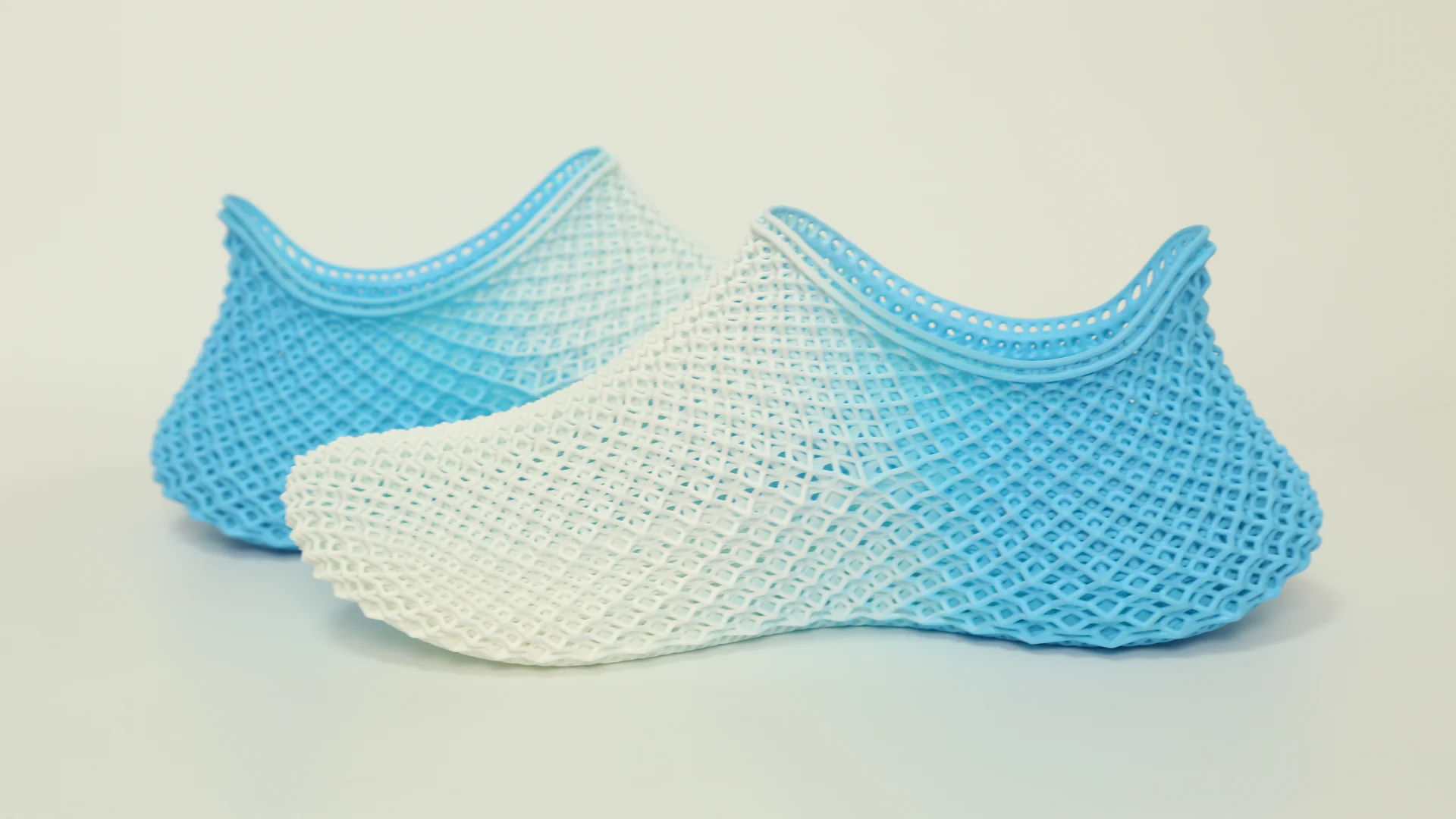
Cell Geometry
Gyroid, honeycomb and strut-based structures distribute deformation differently. Their topology affects how local stresses develop during compression and bending.
Relative Density
The proportion of solid material within a lattice influences weight, stiffness, deformation and local collapse behavior.
Wall Thickness
Thin walls and narrow struts may reduce weight but can become more sensitive to manufacturing defects and stress concentrations.
Transitions between different lattice regions deserve particular attention. A sudden change from a compliant cellular structure to a dense section may concentrate deformation at the interface.
Gradual density transitions and suitable connection geometry may help distribute loading more evenly. Their effectiveness must still be verified through representative component testing.
Explore additional design considerations in our guide to 3D printed lattice structures in flexible resin.
5. Common Failure Modes in 3D Printed Shoes
Footwear fatigue does not always begin with a visible fracture. A component may progressively lose stiffness, cushioning or dimensional recovery before obvious structural damage appears.
| Failure Mode | Possible Causes | Recommended Investigation |
|---|---|---|
| Forefoot cracking | Repeated bending or localized strain | Inspect crack initiation points and bending geometry |
| Lattice strut fracture | Stress concentration or manufacturing defects | Review node geometry, wall thickness and print quality |
| Permanent compression deformation | Incomplete recovery or progressive cellular damage | Measure residual deformation after cyclic compression |
| Loss of cushioning | Changes in cellular stiffness or material response | Compare force-displacement curves before and after testing |
| Outsole abrasion | Ground friction and insufficient wear resistance | Measure wear using an applicable abrasion test |
| Layer separation | Unsuitable process settings or localized defects | Review exposure conditions, orientation and fracture surfaces |
| Environmental degradation | UV exposure, temperature, moisture or chemical contact | Compare conditioned and unconditioned specimens |
Identifying where damage begins is often more useful than recording only the number of cycles completed before failure. Damage location and fracture patterns can help distinguish material limitations from structural or manufacturing problems.
6. How to Test the Durability of 3D Printed Shoes
6.1 Flex Resistance Testing
Walking repeatedly bends the forefoot region of a shoe. Flex resistance testing reproduces controlled bending to determine whether cracks develop or existing defects grow.
Test records should include the bending method, cycle count, specimen conditioning, crack locations and changes in crack length.
When the selected method requires an initial cut, record both the original cut length and its final length after testing.
6.2 Cyclic Compression Testing
Cyclic compression is particularly relevant to printed lattice midsoles and cushioning structures. The component is repeatedly compressed under controlled loading or displacement conditions.
Useful evaluation criteria include:
Changes in compressive stiffness.
Residual thickness after a defined recovery period.
Changes in force-displacement behavior.
Cracked struts or collapsed cellular regions.
Changes in energy dissipation and recovery characteristics.
A component may complete a compression test without breaking but still fail its intended cushioning requirements.
6.3 Abrasion Resistance Testing
Outsoles experience repeated contact with abrasive surfaces. Testing helps determine whether the selected material and tread configuration are suitable for the intended environment.
Depending on the method, evaluation may involve material volume loss, wear dimensions or changes in surface geometry.
Abrasion resistance and slip resistance are separate performance characteristics. Low material loss does not automatically indicate adequate traction.
6.4 Tear Resistance Testing
Tear resistance is particularly important around thin walls, lattice junctions, openings and structural transitions.
Evaluation should consider how damage propagates from an existing defect rather than relying exclusively on tensile strength measured using an undamaged specimen.
6.5 Environmental Conditioning
Footwear may experience sunlight, elevated temperatures, moisture, perspiration and repeated cleaning. These conditions can affect the mechanical behavior of polymer materials.
Where relevant, specimens should undergo appropriate environmental conditioning before selected mechanical tests are repeated. Comparing the results with unconditioned specimens helps identify environmental sensitivity.
7. Which Standards Apply to Footwear Durability Testing?
International standards provide defined methods for evaluating selected footwear properties. The appropriate method depends on the component, shoe construction and target application.
| Standard | Test Focus | Application |
|---|---|---|
| ISO 17707:2005 | Outsole flex resistance | Evaluation of qualifying outsole specimens under repeated flexing |
| ISO 24266:2020 | Whole-shoe flexing durability | Repeated bending evaluation of footwear within the method's scope |
| ISO 20871:2018 | Outsole abrasion resistance | Evaluation of outsole material wear |
ISO 24266:2020 provides two methods for evaluating whole-shoe flexing durability. Results from these methods may not be directly comparable.
The standard contains applicability restrictions related to heel height, sole thickness at the flexing region and footwear flexing behavior. These limitations are particularly relevant to thick, unconventional or highly structured 3D printed lattice soles.
8. YIDIMU A18X Footwear Testing Example
YIDIMU's published A18X footwear testing announcement describes third-party commissioned mechanical testing of a 3D printed footwear sample manufactured using elastomeric photosensitive resin.
The announcement illustrates the importance of evaluating finished footwear through defined flex resistance and abrasion resistance tests rather than relying solely on material specifications or initial flexibility.
Read the original YIDIMU A18X footwear testing announcement for the reported test conditions, acceptance criteria and specimen results.
Test results apply to the submitted specimen and the specified testing conditions. They do not establish walking distance, service life, performance in other footwear designs or consistency across future production batches.
9. A Three-Level Validation Strategy for Footwear Manufacturers
When a printed shoe fails a durability test, immediately changing the resin may not solve the underlying problem. A more informative approach separates material behavior, cellular structure behavior and finished-shoe performance.
Level 1: Material
Evaluate representative solid specimens produced under controlled printing and curing conditions.
Level 2: Structure
Evaluate representative lattice sections containing the actual wall thickness, node geometry and density transitions.
Level 3: Finished Shoe
Evaluate combined loading, flexing, abrasion and other application-specific footwear requirements.
| Observed Test Outcome | Recommended Investigation Priority |
|---|---|
| Solid specimens fail early | Material suitability, printing conditions and post-curing |
| Solid specimens pass but lattices fail | Cellular geometry, local strain and manufacturing defects |
| Lattice specimens pass but the complete shoe fails | Structural transitions and whole-shoe load distribution |
| One build passes but subsequent builds fail | Resin condition, process variation and batch consistency |
| Initial tests pass but conditioned specimens fail | Environmental sensitivity and material aging |
Each outcome identifies an investigation priority rather than a confirmed cause of failure. Structural stress concentrations and manufacturing defects may interact, requiring further controlled testing.
10. How to Improve the Durability of 3D Printed Shoes
Optimize Material Selection
Select materials according to the required mechanical and environmental properties. A resin developed for flexible prototypes may not be suitable for repeated ground contact or long-term footwear loading.
Reduce Local Stress Concentrations
Review sharp corners, abrupt thickness changes and lattice-to-solid transitions. Modify geometry where repeated testing identifies consistent crack initiation sites.
Adjust Regional Lattice Density
Different footwear regions experience different loading conditions. Regional geometry adjustments can help achieve the required deformation response without relying on a uniform lattice throughout the entire shoe.
Control Printing Conditions
Print orientation, exposure conditions, resin temperature and equipment settings can influence the consistency of thin cellular features. Establish a documented printing profile and retain manufacturing records.
Standardize Cleaning and UV Post-Curing
Complex lattice structures can retain uncured resin within internal spaces. Cleaning, drying and post-curing should follow the requirements of the selected material system.
Changes to post-curing conditions may alter mechanical behavior. Significant process adjustments should be followed by renewed performance evaluation.
11. From Footwear Prototyping to Repeatable Production
Producing a successful flexible shoe prototype demonstrates that a particular geometry can be manufactured. Repeatable production requires evidence that independently manufactured parts can meet the same acceptance criteria.
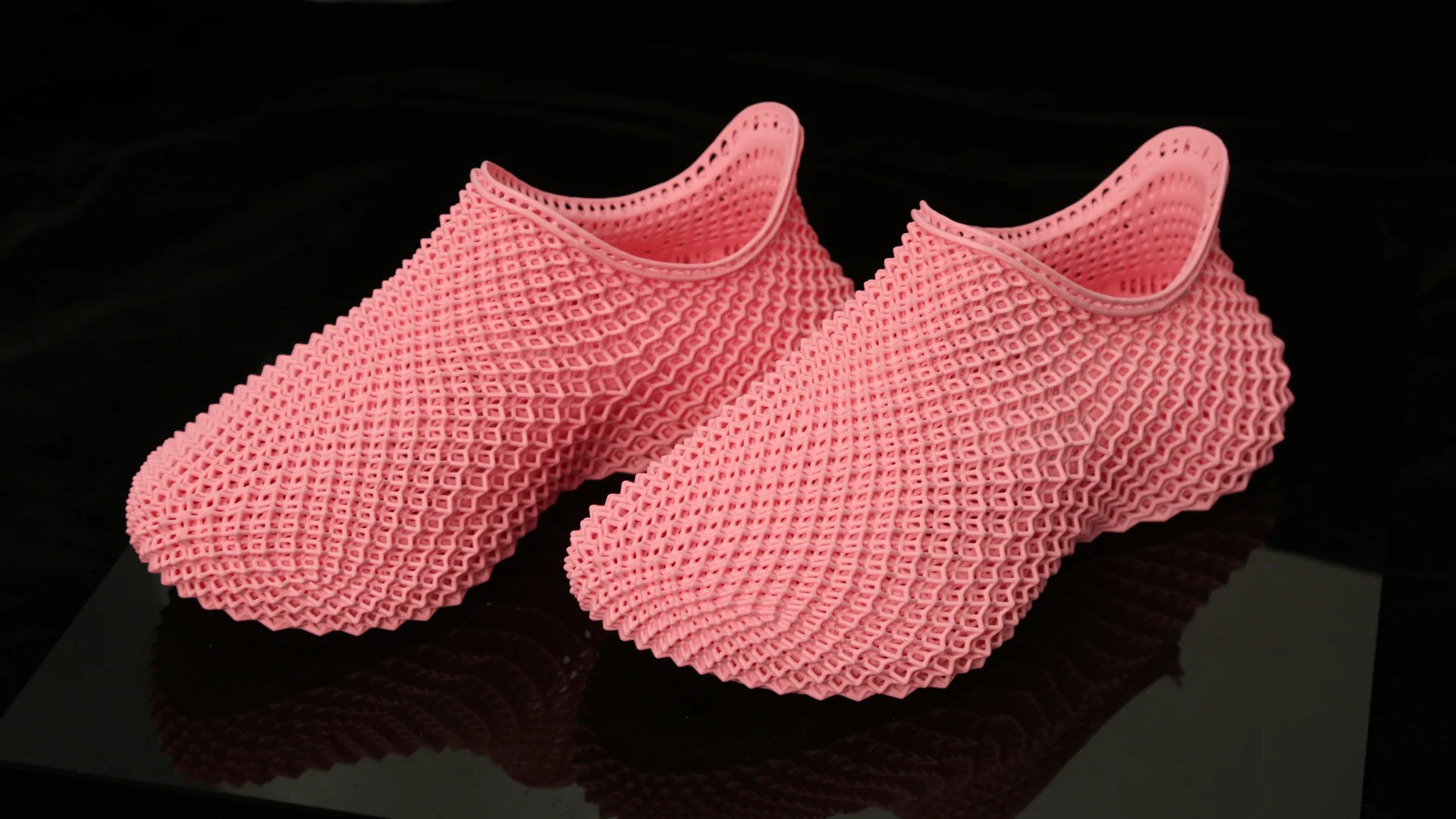
Before increasing production quantities, footwear manufacturers should establish a controlled record covering:
Resin identification and material batch.
CAD file and lattice design revision.
Print orientation and approved printing profile.
Cleaning, drying and UV post-curing conditions.
Specimen conditioning and test methods.
Dimensional measurements and visual inspection.
Flex, compression and abrasion test results.
Acceptance criteria and batch release decisions.
Validation should include independently manufactured specimens across representative production builds rather than relying exclusively on a selected successful prototype.
12. Flexible Resin 3D Printing Equipment for Footwear Development
Equipment selection for footwear development should consider part dimensions, material compatibility, lattice geometry, printing conditions and downstream processing requirements.
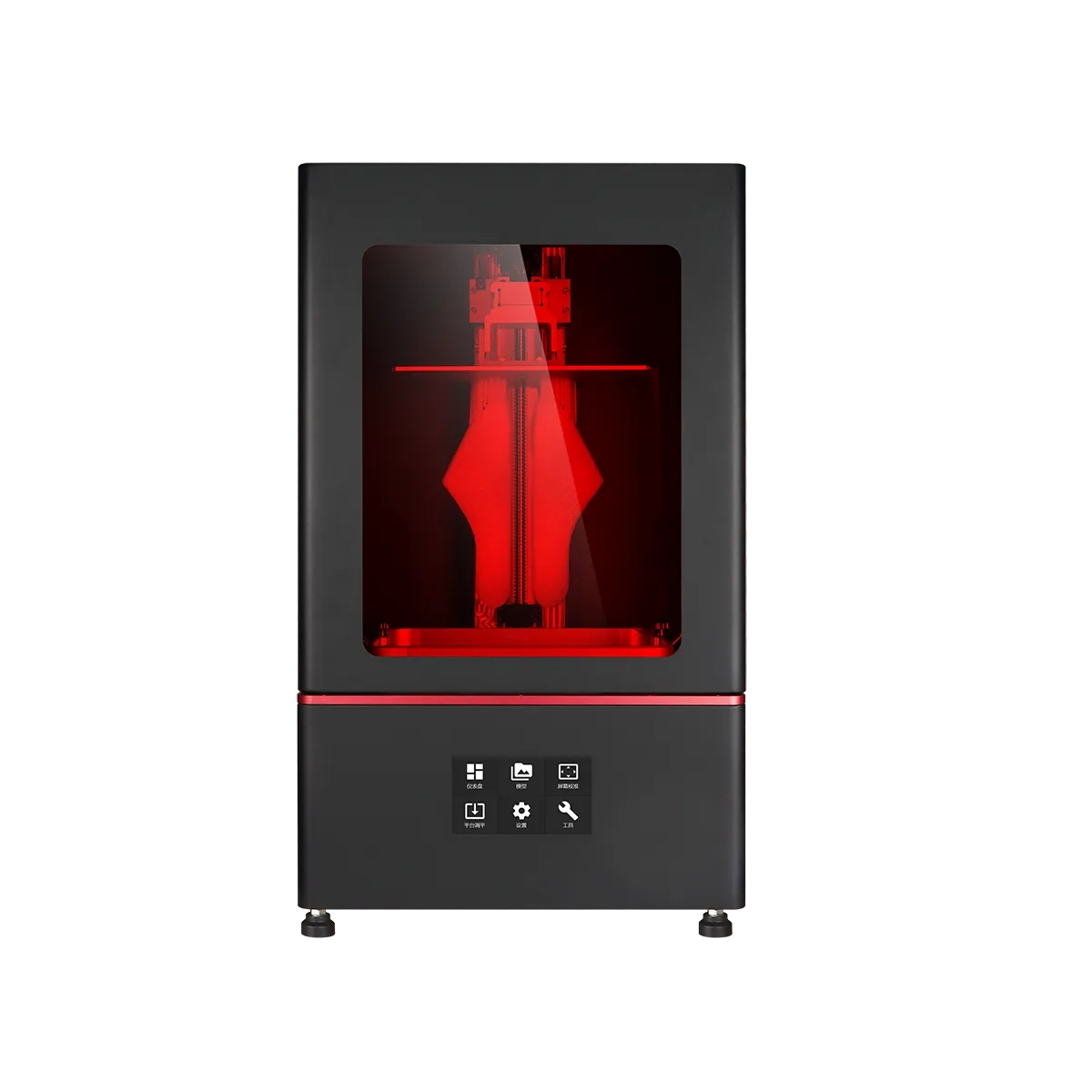
YIDIMU Flex G2
The Flex G2 is designed for flexible and elastomeric photopolymer printing workflows, including footwear lattice structures, cushioning samples and flexible engineering components.
14-inch 16K exposure system.
302 × 162 × 370 mm build volume.
405 nm UV light-curing system.
Dedicated flexible resin application workflow.
Finished-part durability must be evaluated independently of equipment specifications. A printer's build volume, display resolution and exposure system do not establish the fatigue life of a manufactured footwear component.
13. Frequently Asked Questions
How long do 3D printed shoes last?
There is no universal lifespan. Service life depends on material formulation, shoe design, manufacturing process, wearer loading, walking surfaces and environmental exposure. Laboratory fatigue results cannot be converted directly into months of wear without an established correlation.
Are resin 3D printed shoes as durable as traditional shoes?
They can meet specific durability requirements, but equivalence must be demonstrated through comparable testing. A printed midsole, outsole and complete shoe may require different evaluation methods.
Does higher Shore A hardness make a printed shoe more durable?
Not necessarily. Higher hardness does not automatically improve tear resistance, elastic recovery or fatigue life. Structural stiffness and local loading conditions must also be considered.
Can laboratory flexing cycles be converted into walking steps?
No direct conversion should be assumed. Laboratory flexing cycles are performed under defined mechanical conditions. Actual walking combines variable bending, compression, impact, friction and environmental exposure.
Can flexible resin be used for 3D printed outsoles?
Potentially, provided that the selected resin and finished structure demonstrate suitable abrasion resistance, traction, flex resistance and environmental stability for the intended use.
Can one flexible resin produce different cushioning zones?
Yes. Adjusting lattice topology, relative density and wall thickness can produce different structural responses using the same material. The resulting mechanical performance should be verified through representative testing.
Final Considerations
The durability of 3D printed footwear cannot be determined by its appearance, flexibility or material hardness alone.
The manufacturing opportunity lies in combining digitally controlled structures with suitable elastomer formulations and repeatable processing. Physical validation establishes whether the resulting design can withstand the loading conditions associated with its intended application.
For footwear development teams, the transition from a successful prototype to a validated product begins with understanding how the structure behaves after repeated deformation, not simply how it feels when it leaves the printer.
Develop Your Flexible 3D Printed Footwear Structures
YIDIMU provides flexible resin 3D printing equipment, photosensitive materials and technical support for footwear development, cellular structures and elastomer applications.
Discuss your CAD model, target material properties, component dimensions and planned production quantities to evaluate a suitable printing workflow.
References
ISO 17707:2005. Footwear — Test methods for outsoles — Flex resistance.
ISO 24266:2020. Footwear — Test methods for whole shoe — Flexing durability.
ISO 20871:2018. Footwear — Test methods for outsoles — Abrasion resistance.
GB/T 3903.1-2017. Footwear — Test methods for whole shoe — Flexing resistance.
GB/T 3903.2-2017. Footwear — Test methods for whole shoe — Abrasion resistance.
YIDIMU. A18X Flexible Resin 3D Printed Footwear Testing Announcement.