
Scaling AM Beyond Printer Farms: High-Throughput Industrial 3D Printing
Key Takeaways: As additive manufacturing transitions to industrial-scale volumes, rely less on "printer farms" (clustering desktop units) which often result in compounding labor, failure rates, and post-processing bottlenecks. True scale requires shifting to high-throughput industrial platforms, optimizing cross-build repeatability, and integrating standardized washing and UV post-curing. This guide dissects the hidden costs of clustering and outlines how to build a predictable, scaled AM workflow.
In the early stages of adopting resin 3D printing, the path to expanding capacity seems straightforward: if one desktop printer is not enough, buy five more. Before you know it, a "printer farm" is born. While this cheap-and-cheerful clustering model works for hobbyists and early-stage hand-board prototyping, businesses attempting to run continuous, high-volume batches quickly run into a wall of compounding labor, dimensional drift, and post-processing bottlenecks.
As we navigate the demands of modern manufacturing, 3D printing is no longer judged as a novelty—it is judged as real production. "Moving from bottles to tankers" (shifting from sporadic prints to predictable industrial output) requires extracting more throughput from each system rather than simply multiplying footprint and headaches. To scale successfully, manufacturers must understand the tipping point where clustering desktop units fails, and where high-throughput industrial integration becomes economically and operationally necessary.
1. The Hidden Bottlenecks of "Printer Farm" Scaling
On paper, scaling via a farm of cheap desktop machines looks cost-effective. In reality, this approach overlooks the hidden operational costs of volume manufacturing:
The Labor Trap: Running 10 separate desktop printers means 10 build platforms to calibrate, 10 vats to fill, 10 peel films to inspect, and 10 scrap-removal processes. Labor costs scale linearly with the number of machines, completely erasing any initial hardware savings.
Compounding Failure Rates: If a single desktop machine has a 90% success rate, managing a farm of 10 or 20 non-industrial units inevitably leads to everyday downtime, vat damage, or wasted resin. A single failure on a busy print bed can ruin multiple tightly nested parts.
Material and Consistency Variance: Affordable consumer-grade printers lack closed-loop environmental controls (like chamber heating). As a result, resin viscosity shifts with ambient room temperature, causing dimensional drift, warped lattices, and inconsistent mechanical properties between "Printer #1" and "Printer #10."
The Post-Processing Nightmare: 10 different build platforms discharge parts at different times. Manually washing, drying, and UV curing these batches without standardized, industrial-scale post-processing equipment results in unequal tensile strength, surface tackiness, and warp—ruining assembly tolerance.
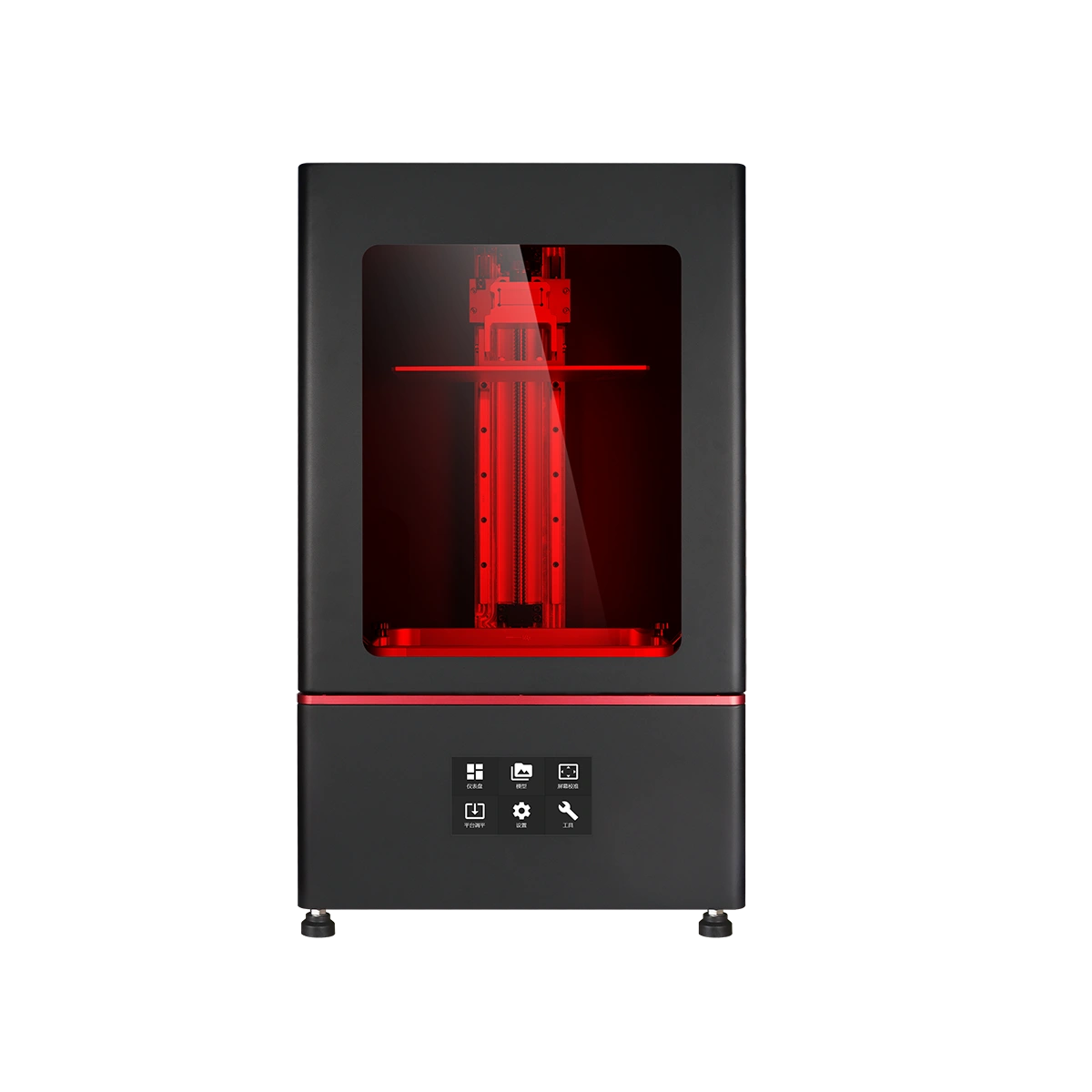
The Eternal M2 Industrial 3D Printer (353 x 198 x 400 mm build volume) allows high-throughput, nested multi-part production on a single rigid platform, minimizing operator intervention.
2. Transitioning to High-Throughput Industrial Systems
To move beyond prototyping and achieve true scaled AM production, the manufacturing workflow must be treated as an integrated industrial process. This shift relies on three foundational pillars:
A. Maximizing Build Volume & Optical Uniformity
Industrial LCD masked stereolithography (MSLA) and laser scanning SLA systems are designed to maximize throughput per square foot. Multi-part prints that would require a dozen small platforms can be consolidated onto a single large build. However, scaling the build area without compromising quality requires extreme optical precision.
YIDIMU industrial platforms, like the Eternal M2 and Eternal M1, combine rigid, dual-linear-rail Z-axis movement with highly uniform 405nm optical systems. This ensures that whether a part is printed at the dead center or the outermost edges, it receives identical exposure, preventing the "edge-warping" common in clustered desktop farms. When large, one-piece parts are required—such as automotive interiors or appliance housings—a dedicated industrial galvanometer system like the SLA400 (400 x 400 x 350 mm) can scan expansive areas without splitting and bonding, avoiding the assembly errors of multi-part segmentation.
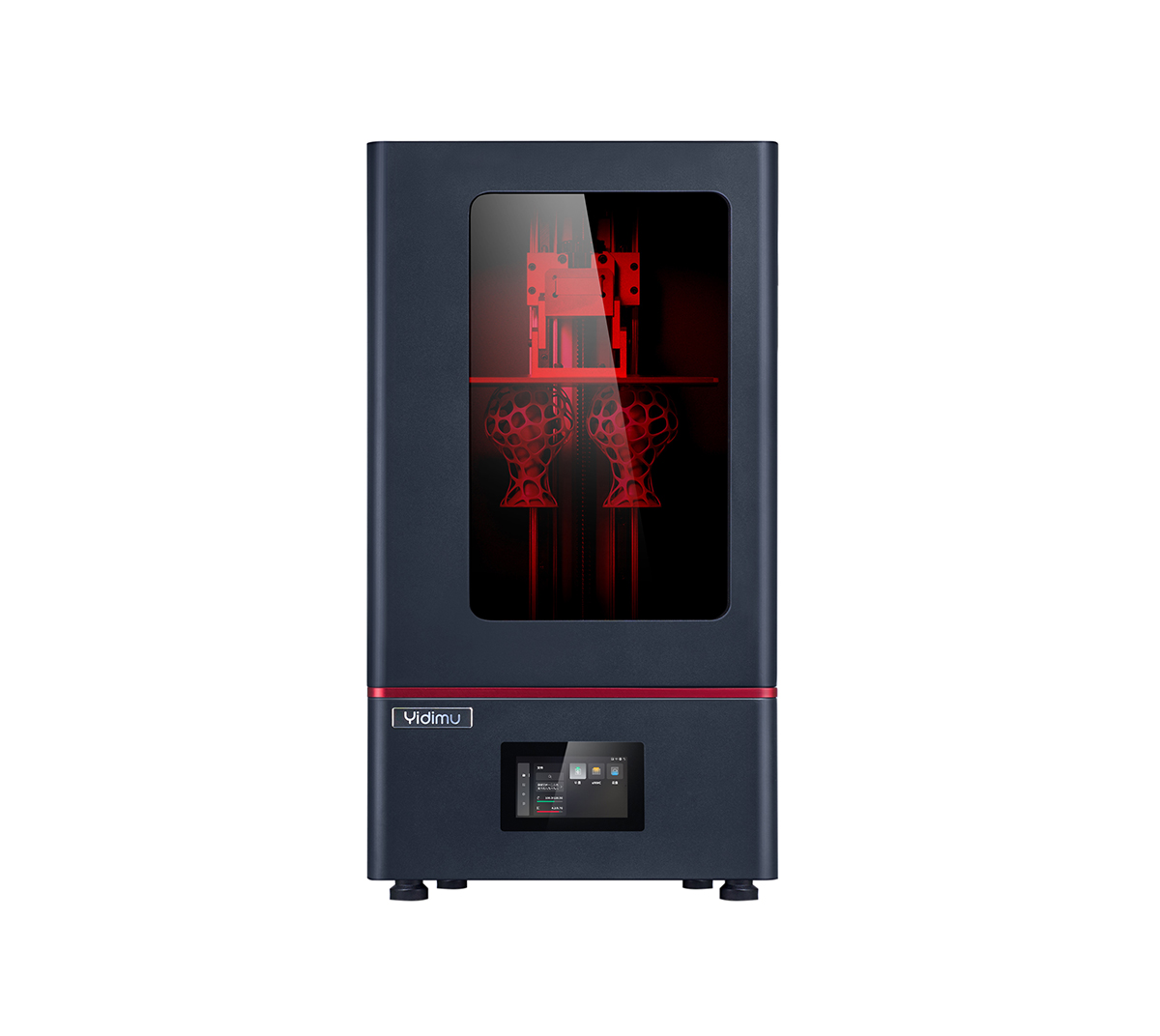
Industrial-grade motion and optical systems on the Eternal M1 (298 x 165 x 370 mm) preserve critical assembly tolerances across consecutive, multi-part build cycles.
B. Dedicated Elastomer & Functional Material Matching
One of the most valuable directions in scaled 3D printing is the production of flexible, elastic, and high-performance components, such as shoe-sole lattice structures, cushioning supports, and wearable soft robotics. Elastic resins are notoriously difficult to process due to their high viscosity (often between 2500–3000 cps) and intense peel forces during release.
Standard desktop farms cannot handle these high-performance materials without frequent delamination or hardware failure. Success requires specialized elastomer platforms, like the Flex G2 and Extreme 450 Pro. These machines use low-release-force films and intelligent constant-temperature chamber heating to lower resin viscosity and ensure stable layer-by-layer adhesion, allowing complex lattice geometries to print predictably and survive thousands of stress cycles without fatigue.
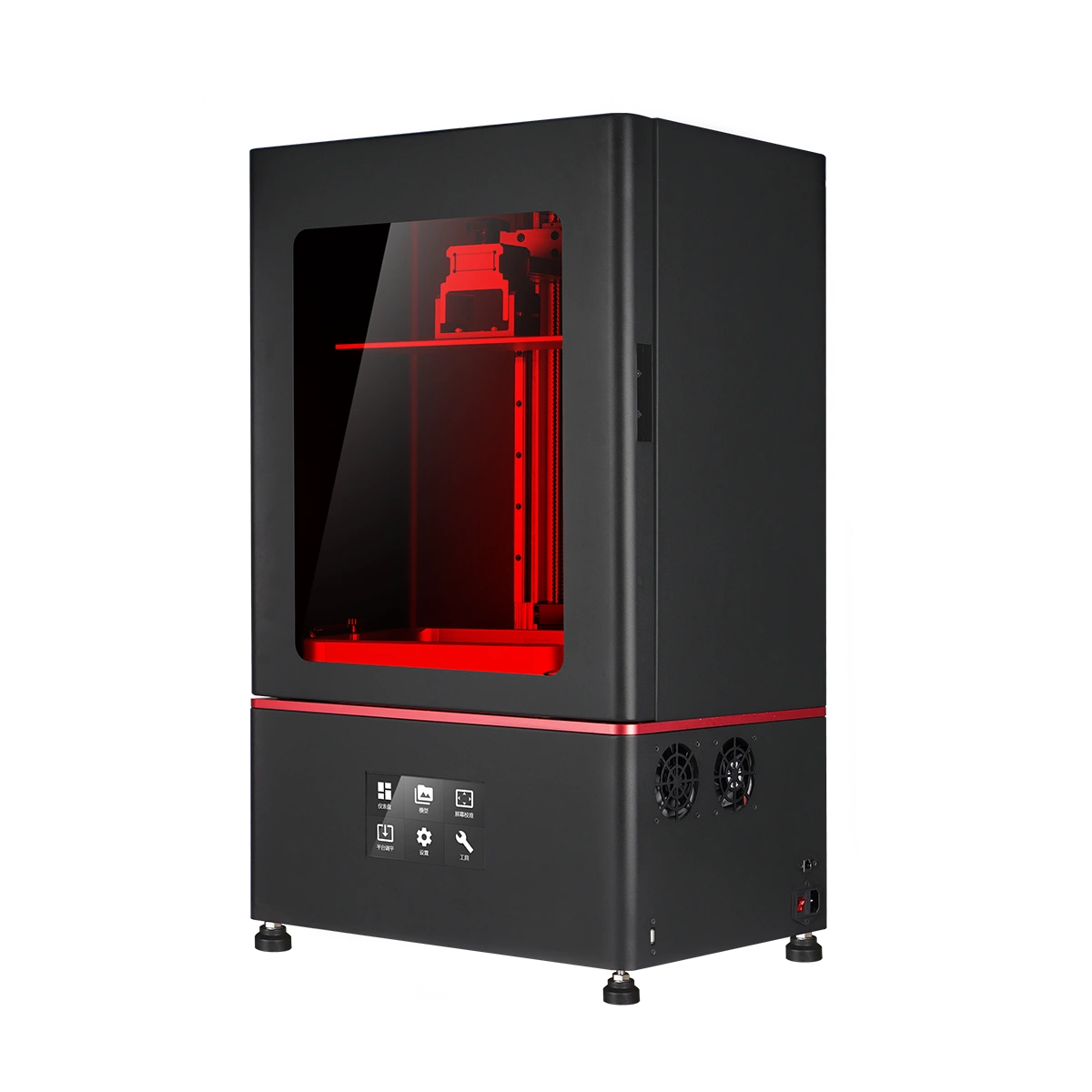
The Flex G2 utilizes specialized vat technology and thermal regulation to stabilize high-viscosity elastomeric resins (50A to 90A Shore hardness).
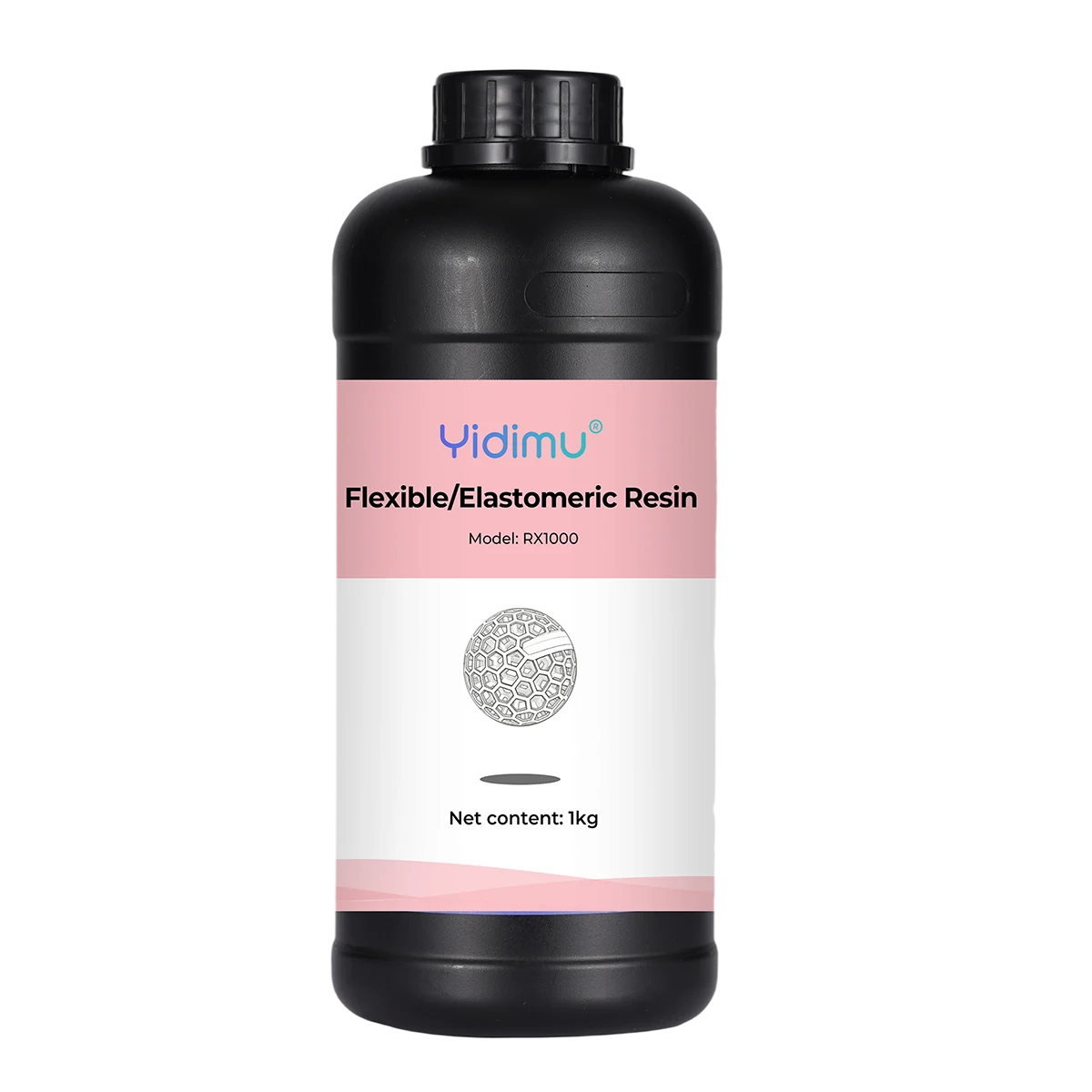
Functional materials, like YIDIMU Elastomeric Resin, require consistent environmental control to deliver true rubber-like and silicone-like properties.
C. Standardizing Post-Processing
Even the most precise printer only delivers a "green" (partially cured) part. The final mechanical properties, dimensional accuracy, and surface quality of your components are decided in the wash and post-cure stages. In a high-throughput setup, post-processing must be treated with the same rigorous SOPs as the print cycle itself.
Consolidating your workflow with dedicated post-processing equipment, such as industrial ultrasonic cleaners (like YIDIMU's 10L systems) and multi-wavelength UV curing boxes, ensures repeatable results. Industrial washing ensures TPM or IPA solvent fully penetrates nested lattices, while automated, rotating-turntable post-curing delivers even, deep交联 (cross-linking) across every face of the batch, preventing uneven warping or tacky surfaces.
3. Key Steps to Evaluate Your AM Scalability
Before investing in hardware expansion, production teams should map out a clear evaluation path to ensure the 3D printing workflow fits their existing factory parameters:
| Manufacturing Scenario | Quality Focus | Processing Target | Recommended Integration (YIDIMU) | Key Material Direction |
|---|---|---|---|---|
| Continuous Engineering Prototyping & Low-Volume Batches | Multi-part nesting efficiency, smooth finish, stable assembly tolerances | Industrial-grade LCD masked exposure (MSLA) | Eternal M2 (353x198x400 mm) or Eternal M1 (298x165x370 mm) | Rigid, ABS-Like, High-Temperature, High-Clarity Resin |
| High-Performance Flex Lattices & Footwear Production | Consistent rebound, tear resistance, peel-force control for viscous resins | Specialized elastomeric MSLA & large-format thermal-controlled DLP | Flex G2 (302x162x370 mm) or Extreme 450 Pro (450x253x400-600 mm) | 50A to 90A Elastomeric photopolymer resin |
| One-Piece Large Components & Manufacturing Aids | Maximized monolithic builds, eliminating warping and assembly bonding | High-speed laser stereolithography (SLA) with digital galvanometer | SLA400 (400x400x350 mm) with auto-calibration | Industrial-grade prototyping and casting resins |
| Digital Dental Working Models, Surgical Guides & Casts | Ultra-precise micron-level fit, medical/biocompatible compliance, rapid turnaround | Micron-accuracy dental LCD | Eternal D1 (10.1-inch 14K) or Eternal Y8 (10.3-inch 8K) | Dental Model, Surgical Guide, and Castable Resin |
Run Multi-Part Validation: Submit your most complex functional CAD/STL data for a sample print, and request a full-bed nested build. Measure the dimensional variation of parts from the center to the corner of the platform.
Assess Material Lifecycle & HDT: Verify whether your parts require specialized post-processing to meet heat deflection temperature (HDT) or fatigue life targets. Avoid quoting datasheet numbers without testing the complete post-curing cycle on your exact geometry.
Budget for Workflow, Not Just Machines: Ensure you have matched the footprint and electrical/exhaust requirements of your post-processing systems (washing tanks, drying stations, and curing boxes) to the maximum discharge rate of your printers.
Evaluate Total Cost of Ownership (TCO): Calculate the labor-hours per part, vat/release-film replacement intervals, resin consumption, and fail-rate amortizations. In industrial environments, the higher upfront cost of an integrated, robust machine is quickly recuperated by drastically lower labor, scrap, and downtime costs.
Conclusion
Clustering cheap desktop machines might offer an appealing low-cost point of entry, but as production scale grows, "printer farms" inevitably become labor-heavy bottlenecks that sacrifice batch consistency. The future of reliable additive manufacturing belongs to high-throughput, industrial-grade systems supported by standardized post-processing workflows.
When you view 3D printing as an integrated manufacturing step—rather than just a standalone machine—you elevate your operation from simple prototyping to true production capacity.
Evaluating high-volume resin production for your facility? Contact YIDIMU to submit a model for an engineering and process assessment. Our technical team can assist with multi-part nesting evaluations, elastomer optimization, and post-processing calibration to help you find the most efficient, cost-effective industrial equipment and material configuration for your workflow.