
Research News / Medical Additive Manufacturing
3D-Printed Vascular Stent: Can It Recover After Being Compressed by Half?
Researchers have developed intricate braided structures using 3D-printed nickel-titanium alloy. In laboratory testing, one prototype achieved 92.1% elastic recovery after 50% radial compression. The findings are promising, but clinical use remains a separate challenge.
Imagine a doctor showing you a vascular stent and saying, "This device was made using 3D printing."
Would you see it as a medical breakthrough, or would you hesitate before allowing it to be placed inside your body?
That hesitation raises an important question. A vascular stent is not an ordinary 3D-printed model. It must withstand compression, bending and expansion. If designed for long-term implantation, it must also perform reliably in a complex biological environment.
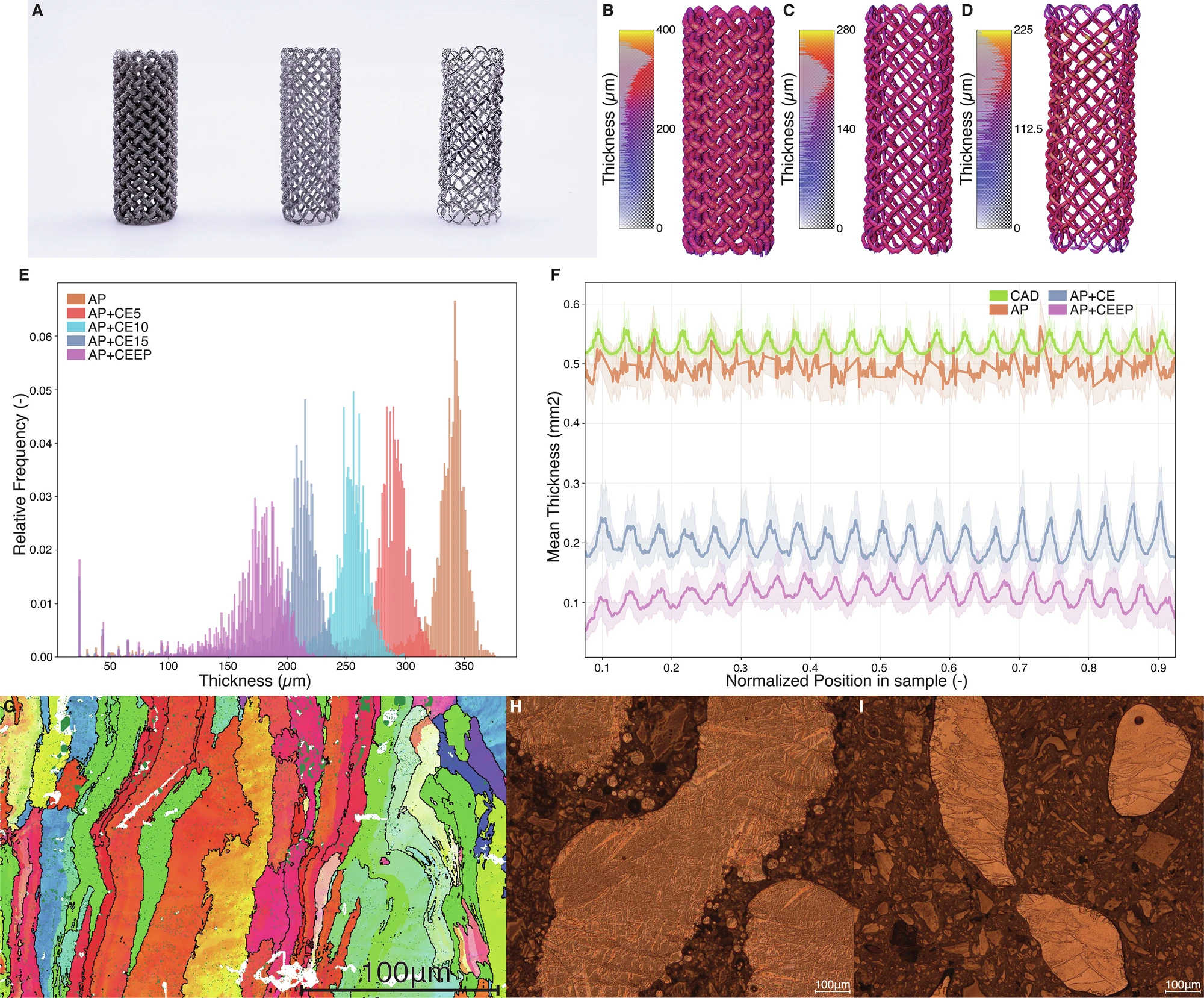
A study published innpj Metamaterials on September 30, 2026 explores a new approach to manufacturingsuperelastic braided structures using metal additive manufacturing.
On October 13, Spain's IMDEA Materials Institute announced the findings of the international research team, led by IMDEA Materials Institute and Universidad Politécnica de Madrid, with collaborators from MIT and the University of Galway.
Their objective was to investigate whether 3D printing could produce highly flexible, complex nickel-titanium structures suitable for the future development of personalized minimally invasive vascular devices.
The study provides an important proof of concept: carefully designed metal structures can undergo substantial radial compression and recover much of their original geometry.
Why Must a Vascular Stent Be Compressed Before It Expands?
Many minimally invasive vascular procedures rely on catheters to deliver medical devices to a specific location inside a blood vessel.
Rather than inserting a fully expanded device, the clinician delivers it in a compact configuration. Once the device reaches the intended location, it can be expanded or deployed, depending on its particular design.
This creates a difficult engineering balance.
During delivery, the device must be compact and sufficiently flexible to travel through curved or narrow anatomical pathways. Following deployment, it needs to provide the radial support required for its intended medical function.
A structure that is too stiff may be difficult to compress and navigate through the vessel. Excessive outward force may also create concerns for the surrounding vessel wall.
A structure that is too compliant, however, may not provide adequate support or anchoring after deployment.
For devices intended to remain inside the body, long-term fatigue resistance, corrosion behavior, surface integrity and biocompatibility introduce additional design requirements.
Producing the correct shape is only the beginning. The more difficult task is achieving the mechanical and biological performance required for a specific medical application.
Why Did the Researchers Choose Nitinol?
Nitinol is a nickel-titanium alloy, commonly abbreviated as NiTi.
It is already an established material in several cardiovascular medical devices manufactured through conventional processes.
One of its most important properties is superelasticity.
Under appropriate conditions, superelastic nitinol can accommodate substantial deformation and recover much of its original shape when the applied force is removed.
This behavior is valuable for medical devices that need to be compressed into a delivery system and subsequently recover their designed geometry.
However, manufacturing nitinol using metal 3D printing is not straightforward.
The thermal conditions of the printing process can affect the alloy's microstructure, transformation behavior, surface quality and mechanical response.
Consequently, a 3D-printed nitinol part does not automatically behave like a conventionally manufactured component made from the same nominal alloy.
This was one reason the research team investigated the combined effect of material properties, geometric design and post-processing.
What Happens When Metal Is Designed to Behave Like a Textile?
Many metal components produced through additive manufacturing use lattice architectures.
These structures are typically made from interconnected struts arranged in a repeating geometric pattern.
When compressed, deformation is largely accommodated through bending of the struts and their connecting regions.
This can result in relatively high stiffness or localized concentrations of mechanical strain.
The researchers explored a different approach:interwoven metal filaments arranged in a braided architecture.
A braided structure can accommodate deformation through the movement and reorientation of its interwoven elements.
The principle is easier to understand when comparing a flexible woven mesh with a rigid framework made from fixed joints.
Both may contain thin structural elements, but the way those elements interact produces very different mechanical responses.
Combining this braided geometry with nitinol's superelastic behavior creates the possibility of achieving large reversible deformation without relying exclusively on the bending of rigid interconnected struts.
How Were the Structures Manufactured?
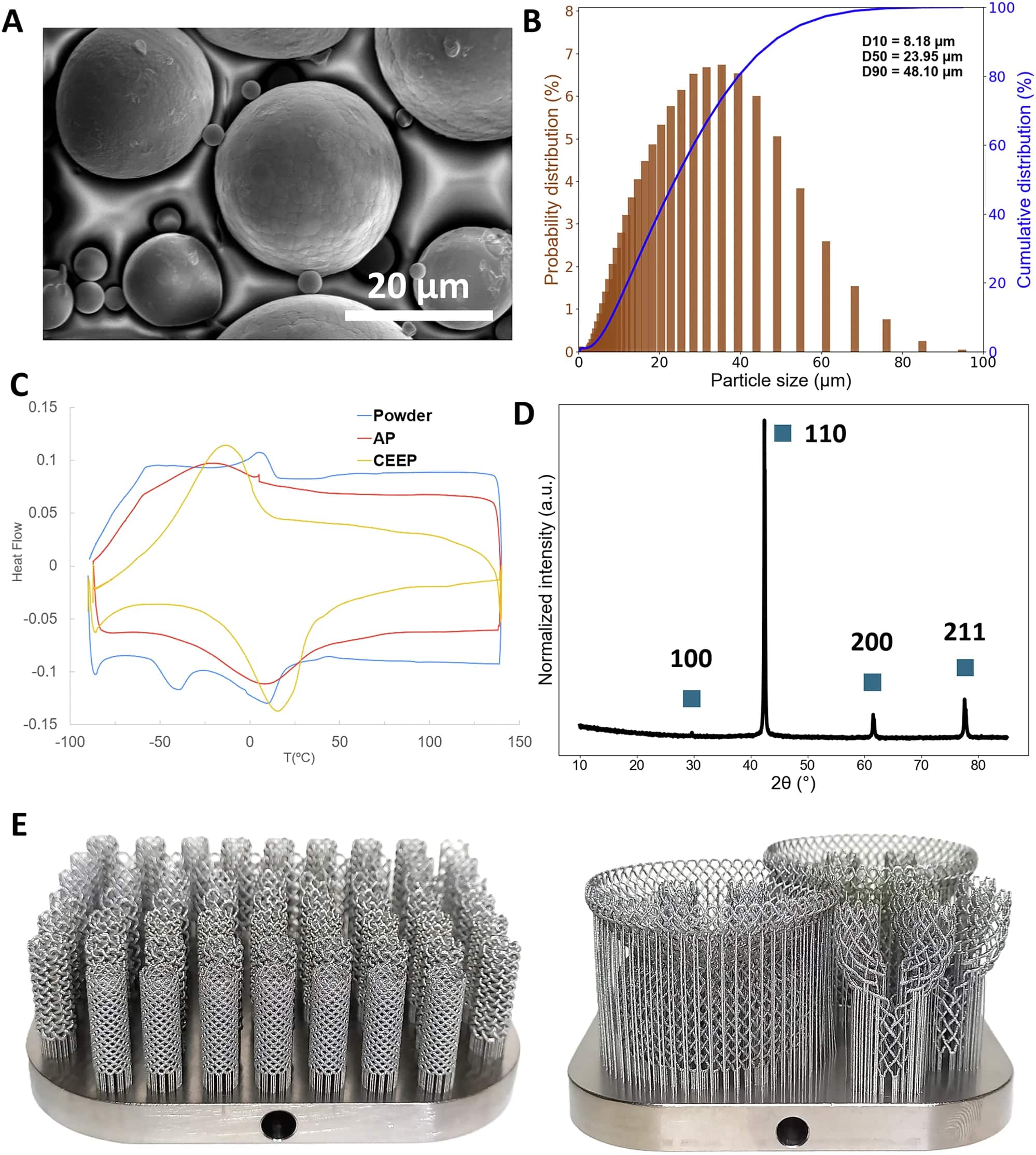
The team usedlaser powder bed fusion (LPBF), a metal additive manufacturing process in which a laser selectively fuses successive layers of metal powder.
This approach makes it possible to create complex, interlaced geometries within a single additive manufacturing build.
Manufacturing did not end when the printing process was complete.
The researchers applied chemical etching and electropolishing to modify the printed filament geometry and surface condition.
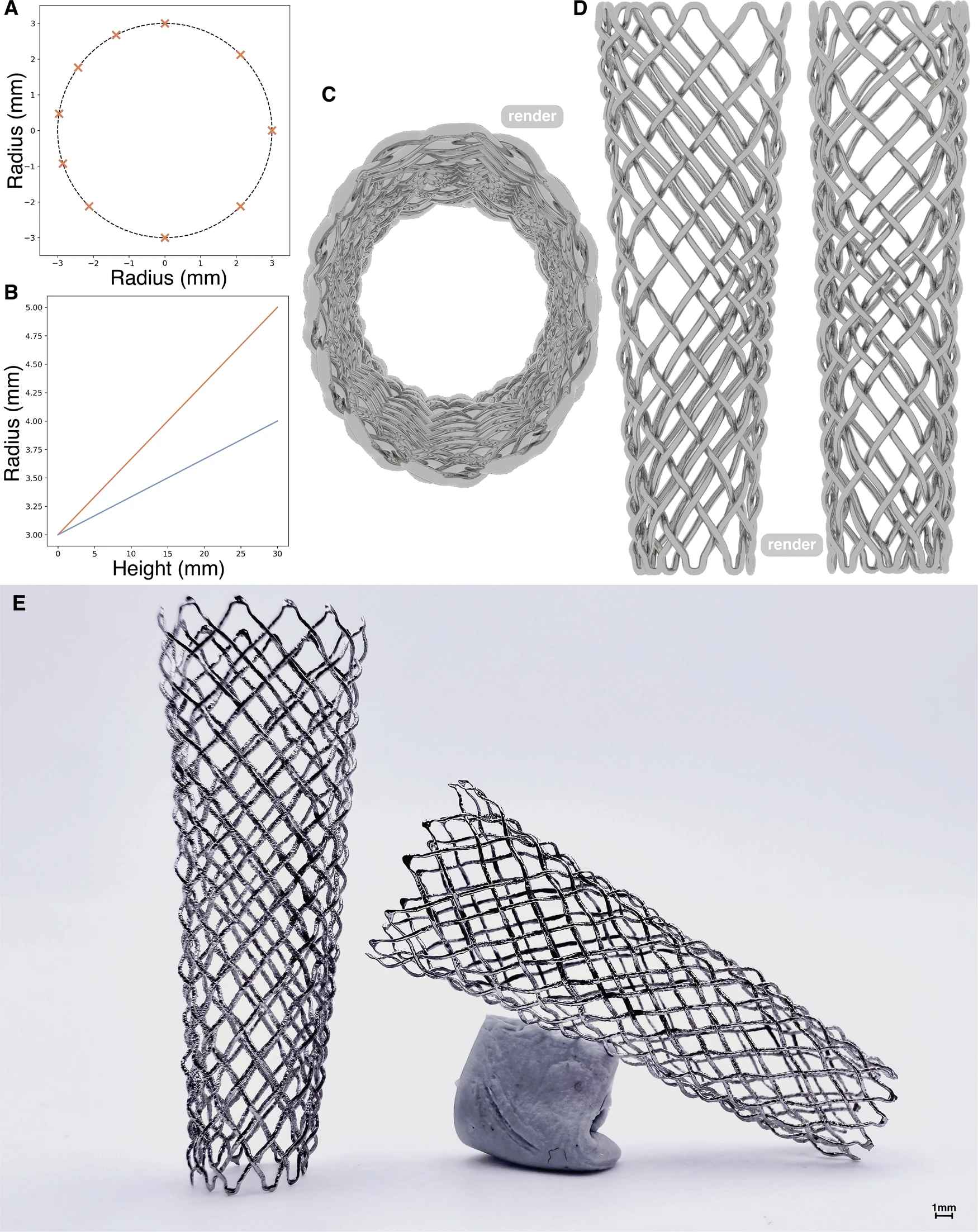
These finishing operations were important because the dimensions and surface condition of the individual filaments influence how the structure responds to compression.
The finished mechanical behavior therefore cannot be attributed to the printer alone.
It emerges from the combined influence ofalloy properties, structural geometry, manufacturing conditions and post-processing.
What Did the 50% Compression Tests Reveal?
One of the most significant findings came from radial compression testing.
The researchers compared different braided configurations and post-processing conditions.
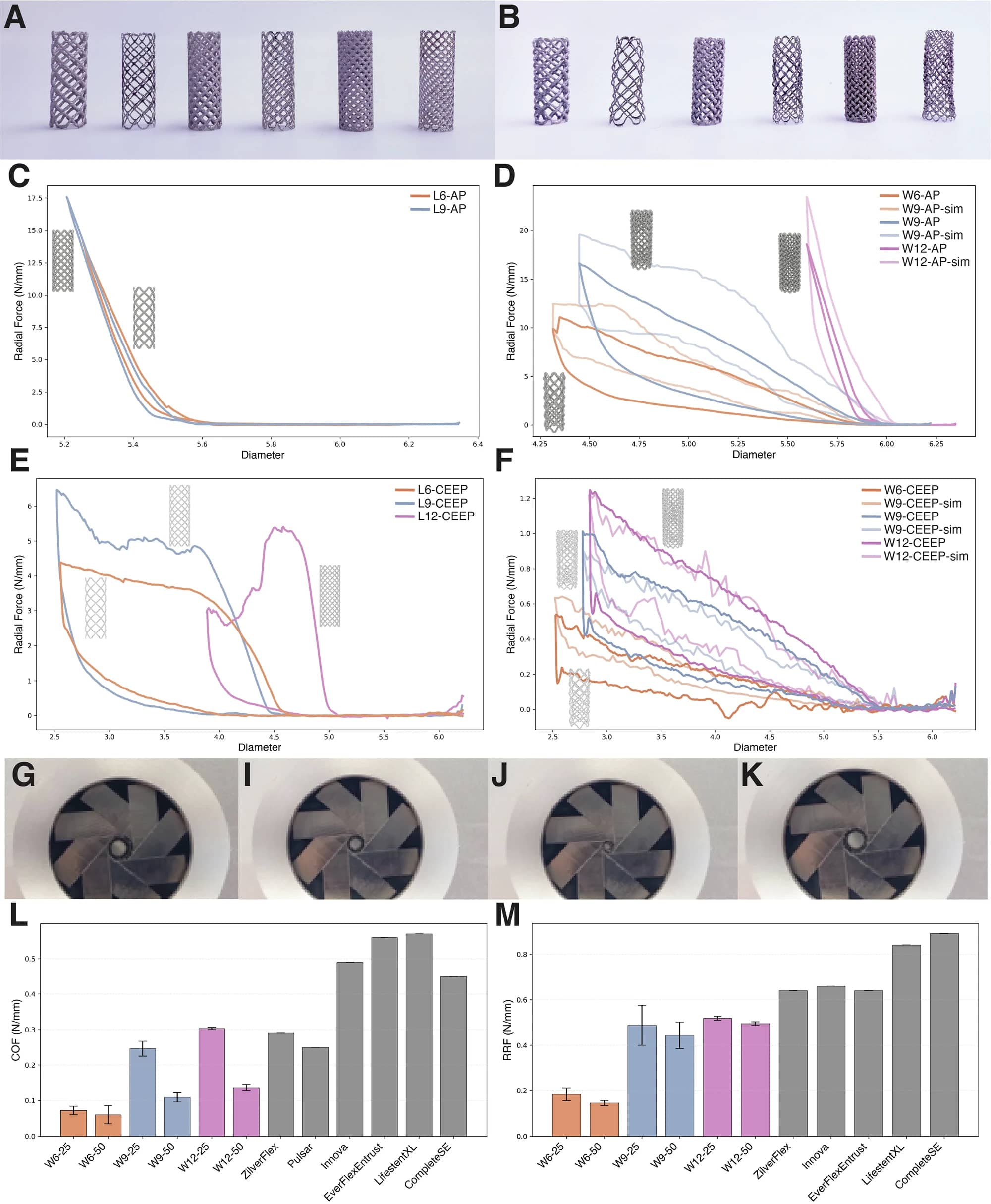
In selected tests, the diameter of the braided structures was reduced by 50% before the applied load was removed.
The study reported the following elastic recovery ratios for chemically etched and electropolished braided specimens under the specified test conditions.
| Specimen | Radial Compression | Elastic Recovery |
|---|---|---|
| W6 CEEP | 50% | 92.1% ± 1.1% |
| W9 CEEP | 50% | 86.6% ± 1.0% |
| W12 CEEP | 50% | 85.7% ± 0.2% |
Source: Aguilar Vega et al., npj Metamaterials (2026). W6, W9 and W12 identify different braided structural configurations. CEEP indicates chemical etching followed by electropolishing. These are mechanical test results, not clinical success rates or demonstrated in-body performance.
The W6 CEEP specimen achieved an average elastic recovery of 92.1% after 50% radial compression.
The higher-density W9 and W12 configurations also recovered substantially, although their reported recovery ratios were lower under the same nominal compression condition.
More densely braided does not automatically mean better elastic recovery.
The findings also illustrate an engineering trade-off.
Different architectures produced different combinations of radial stiffness, resistive force, outward force and elastic recovery.
A highly flexible structure may be easier to compress and deliver, but flexibility alone is not enough to establish its suitability for a vascular application.
Engineers must also consider whether the deployed structure can provide sufficient support and remain appropriately positioned.
The most useful design is not necessarily the one with the highest recovery percentage. It is the design that balances all the relevant requirements for its intended function.
Does This Mean the 3D-Printed Stent Is Ready for Human Implantation?
No. The study demonstrates mechanical feasibility, not clinical approval.
The researchers evaluated the prototypes through mechanical characterization, including a single crimping and recovery cycle intended to represent catheter-based delivery and deployment.
That is an important experimental step, but it does not establish the long-term safety or effectiveness of an implant.
According to the research team's published conclusions and institutional announcement, further work is required before the technology can advance toward human clinical applications.
Important areas for future evaluation include:
Long-term fatigue performance:whether the thin metal filaments can withstand repeated loading over their intended service life.
Surface and corrosion behavior:how the finished alloy behaves in the intended biological environment, including corrosion and potential material release.
Biocompatibility:whether the final manufactured and processed device meets the biological safety requirements associated with its intended use.
Manufacturing consistency:whether the process can repeatedly produce devices with controlled geometry, surface condition and mechanical properties.
Clinical evaluation and regulatory review:whether the final device can demonstrate acceptable safety and performance for a defined medical indication.
How Is Metal Medical 3D Printing Different From Resin 3D Printing?
It is important not to confuse this research with the resin-based 3D printing processes commonly used for dental models and engineering prototypes.
The study involved nitinol powder and laser powder bed fusion, a high-temperature metal additive manufacturing process.
By contrast, LCD and SLA resin 3D printing use light to cure photopolymer materials.
These technologies belong to the broader field of additive manufacturing, but their material systems, manufacturing mechanisms, finishing requirements and possible end uses differ substantially.
Professional resin 3D printing can support dental study models, orthodontic models, engineering prototypes, design verification and other production-related workflows.
However, the ability to print the geometry of a medical device does not establish that the printed material is appropriate for contact with the human body.
For example, a resin suitable for dental models is not automatically suitable for surgical guides, intraoral appliances or implants.
Material selection must follow the intended application, the manufacturer's validated processing instructions, and applicable safety and regulatory requirements.
For additional guidance on professional dental resin workflows, see Yidimu'sdental 3D printer selection guide.
Could Future Vascular Devices Be Designed for Individual Patients?
Human anatomy is not identical from one patient to another.
Vessel diameter, curvature, branching geometry and disease characteristics can all influence the requirements of a vascular device.
Conventional manufacturing remains highly effective for producing standardized medical devices at scale.
However, producing complex patient-specific geometries through conventional methods may involve manufacturing constraints.
Metal additive manufacturing offers another design route.
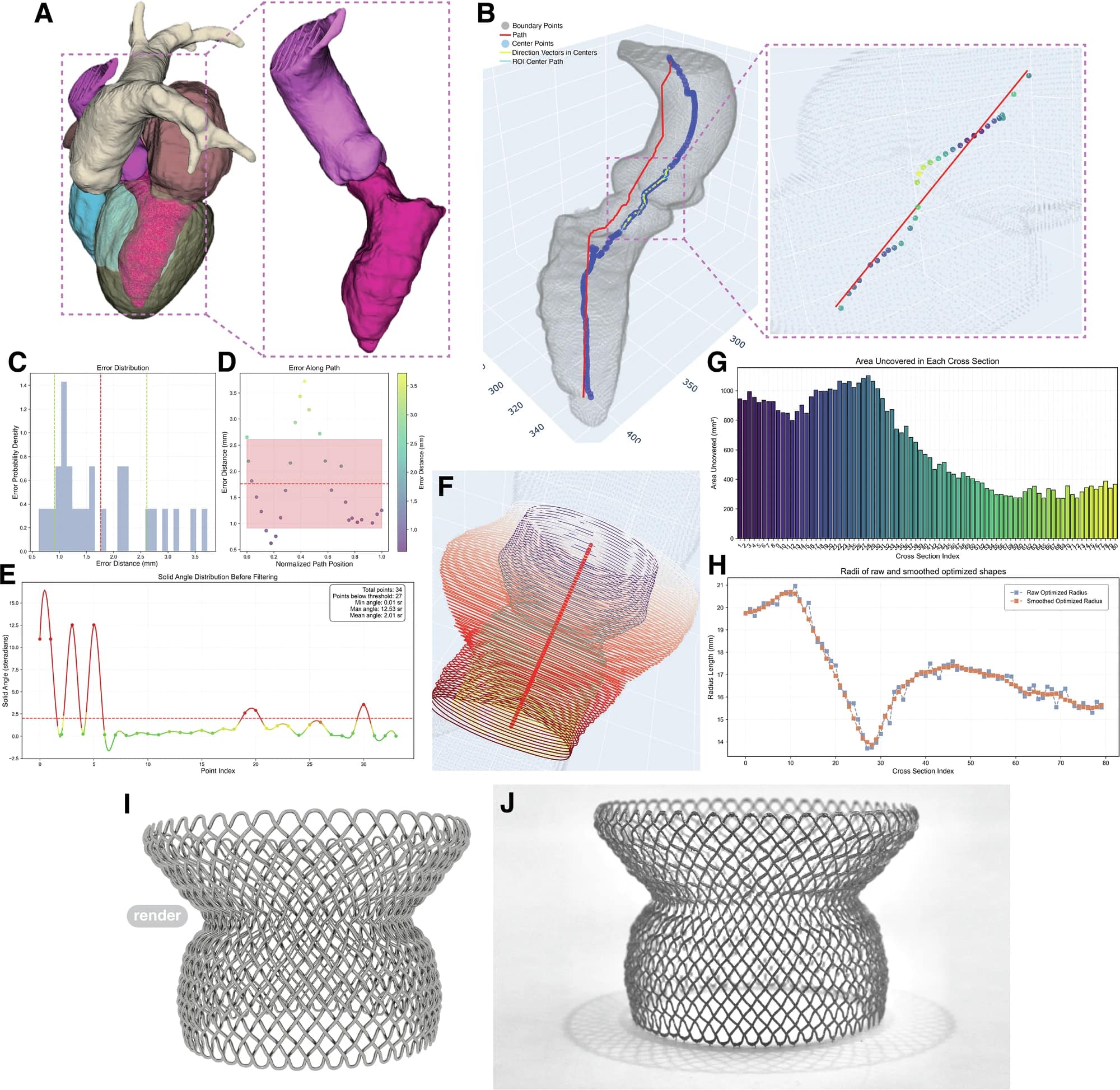
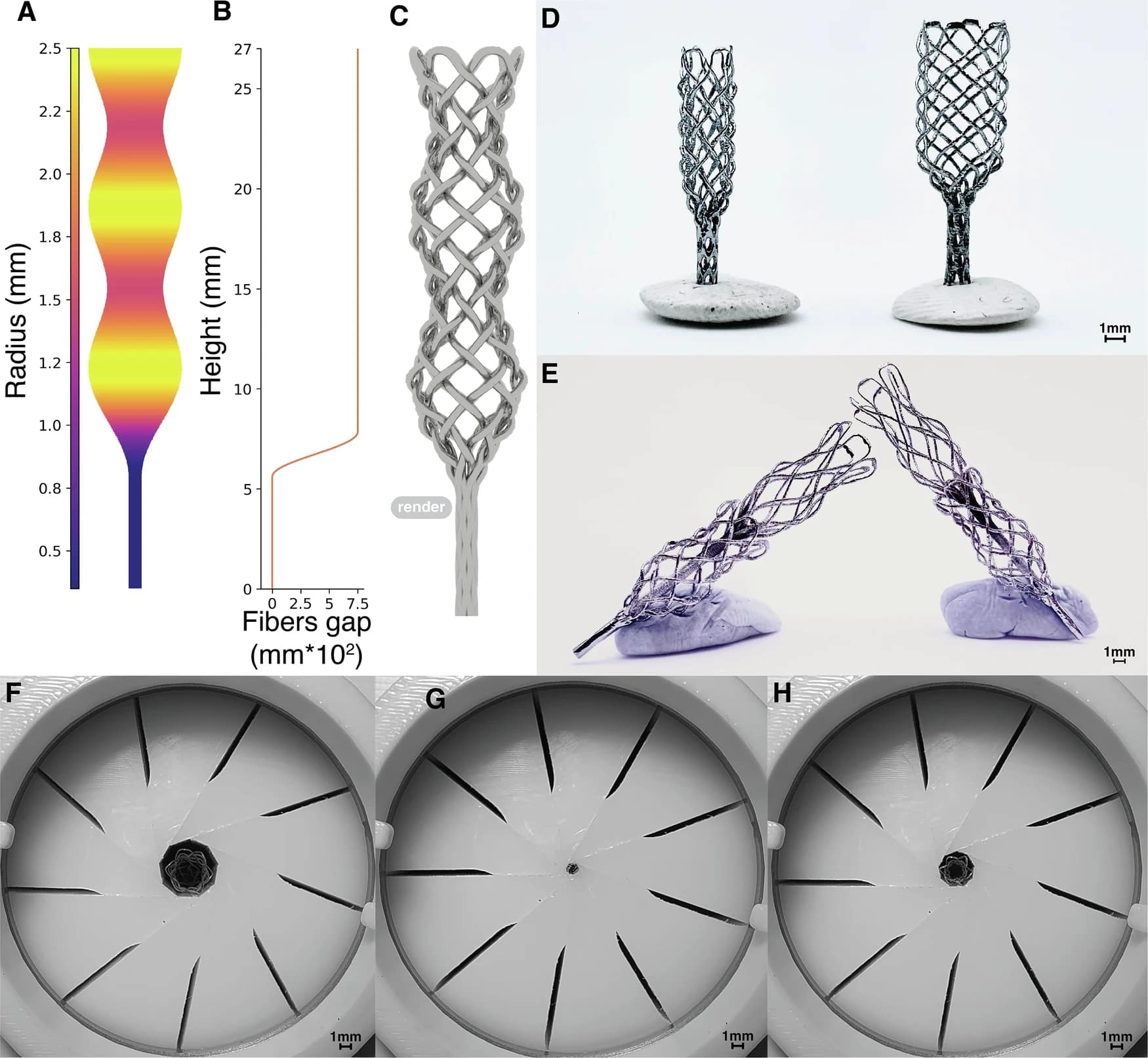
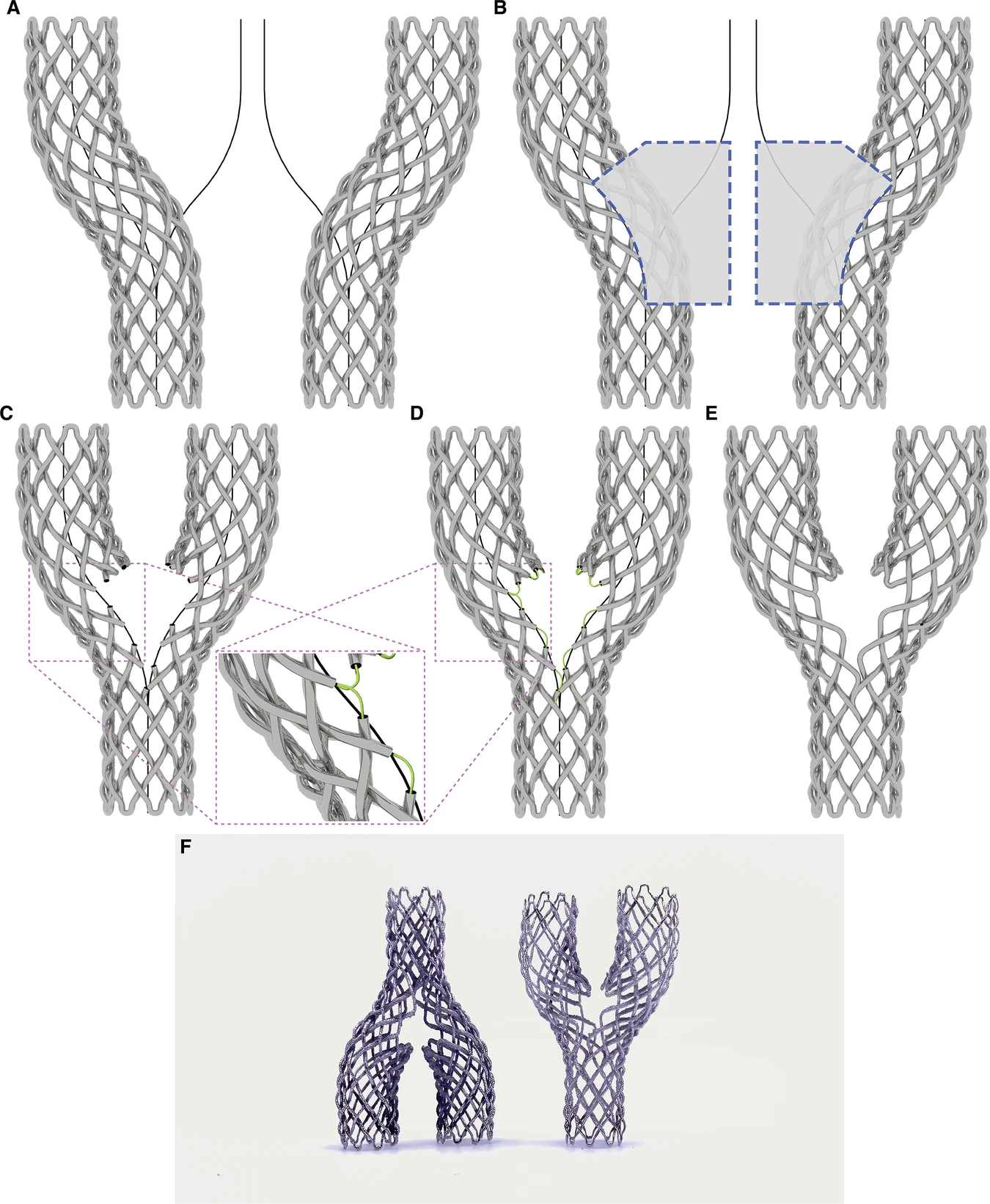
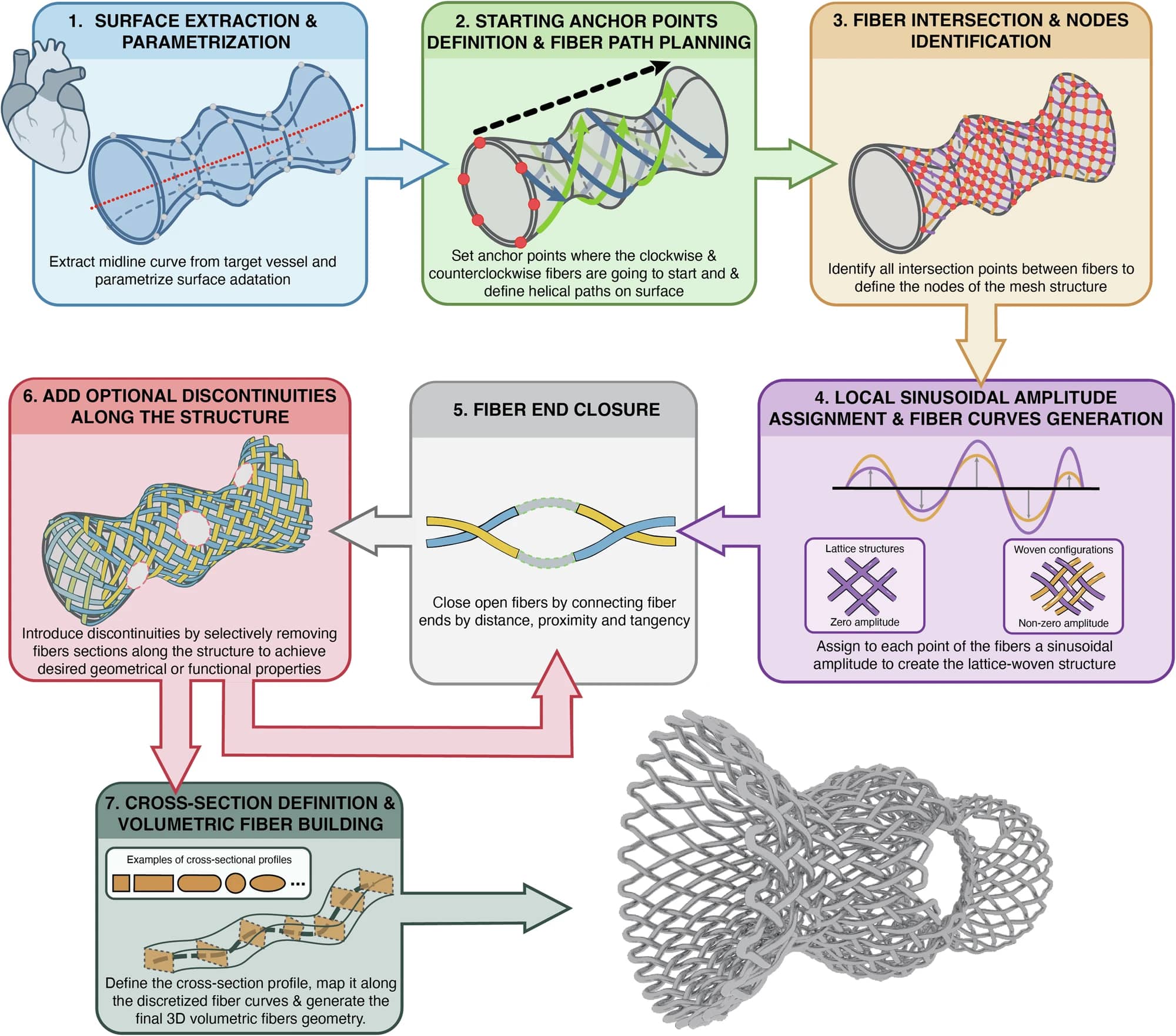
Instead of only selecting a different device diameter or overall length, engineers may be able to adjust local geometry, filament arrangement, spacing and structural response for a specific design objective.
This could open opportunities for future devices with patient-specific shapes and more carefully tailored mechanical characteristics.
Such possibilities remain research and development goals. They are not evidence that a personalized 3D-printed device is automatically safer or more effective than an established standardized alternative.
What makes this study significant is the combination ofcomplex braided geometry, superelastic nitinol, additive manufacturing and controlled post-processing.
Together, these elements demonstrate a potential manufacturing strategy for structures that would be difficult to produce through some conventional approaches.
The Larger Lesson: Manufacturing Is Only One Part of Medical Innovation
The development of 3D-printed nitinol vascular structures is an interesting example of how additive manufacturing can expand engineering design possibilities.
The research shows that changing the architecture of a metal component can substantially influence its mechanical behavior.
Yet the path from a laboratory prototype to a medical product remains long.
Mechanical testing must be followed by broader material, biological, manufacturing and application-specific evaluation.
Clinical suitability cannot be determined from a single compression-recovery result.
The important question is therefore not simply whether a vascular stent can be 3D printed.
It is whether a complete design and manufacturing process can produce a device that meets the safety and performance requirements of a specific medical application.
For now, the study represents a promising step toward more adaptable metal structures and potentially more personalized vascular device designs.
References
Aguilar Vega, C., et al. (2026).Additive manufacturing of superelastic NiTi braided metamaterials: an innovative strategy for engineering minimally invasive vascular medical devices.npj Metamaterials. Published September 30, 2026.Original research article.
IMDEA Materials Institute. (2026).Researchers Develop 3D Printing Method to Create Personalised Superelastic Minimally Invasive Nitinol Vascular Devices.Published October 13, 2026.Official research announcement.
Editorial note: This article discusses published materials research and additive manufacturing technology. It does not constitute medical advice. The 3D-printed devices described are research prototypes evaluated in mechanical tests. They should not be interpreted as clinically approved implants.