
Water Washable Resin vs Standard Resin: What Actually Changes?
The practical difference between water washable resin and standard resin is not simply whether one can be cleaned with water and the other with alcohol. The choice affects the entire post-processing system: wash-fluid compatibility, contamination control, drying, waste handling, material validation and the consistency of finished parts.
- Water washable describes a cleaning route, not permission to discharge contaminated water into a drain.
- Standard resin commonly requires a manufacturer-specified solvent or cleaning fluid, but the exact medium must come from its technical documentation.
- Print quality and mechanical performance cannot be predicted from the words “water washable” or “standard.”
- Washing, complete drying and UV post-curing should be treated as controlled process steps.
- For engineering use, compare the complete validated workflow rather than cleaning convenience alone.
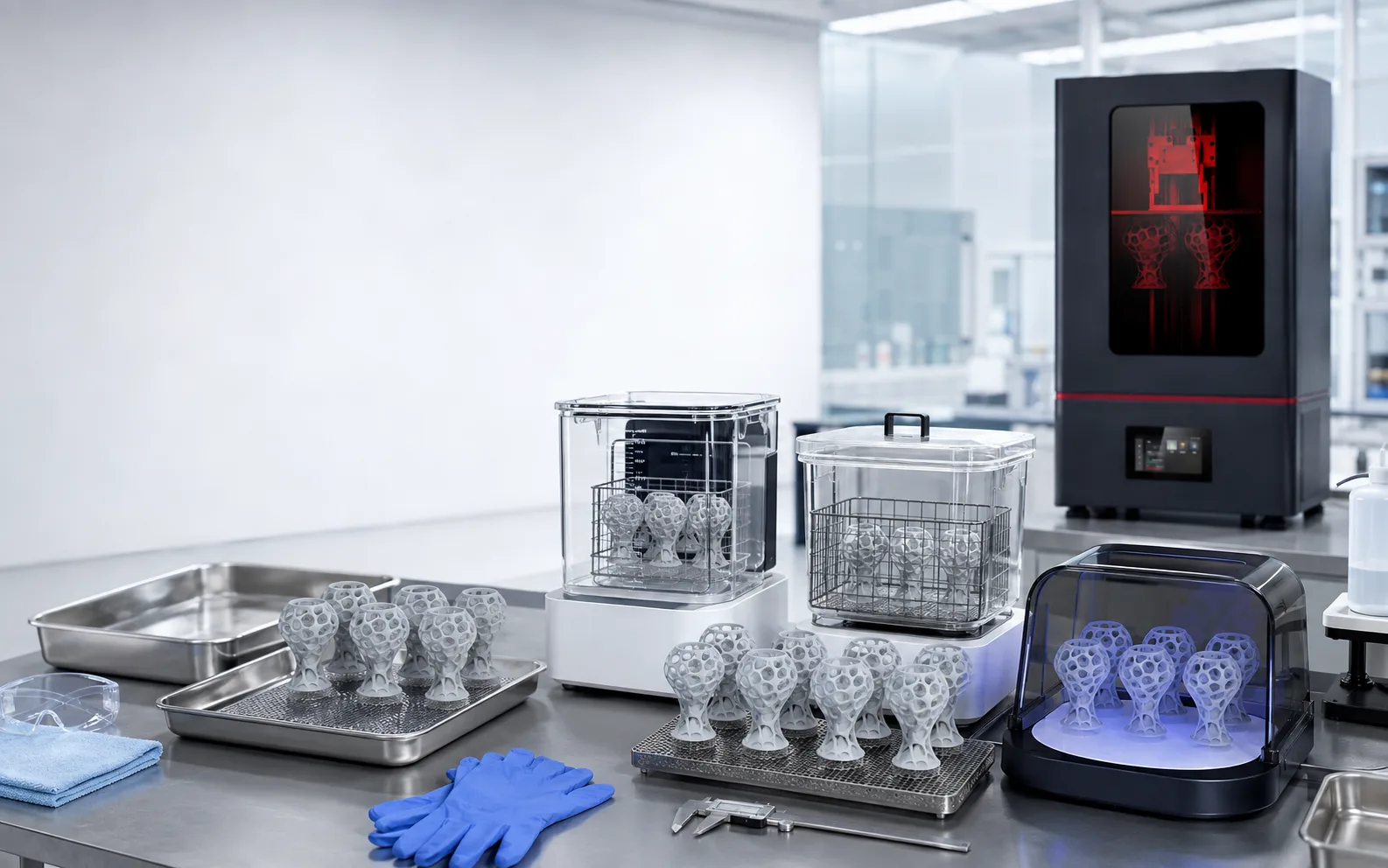
Direct Answer: Water Washable Resin vs Standard Resin
A water washable photopolymer resin is formulated so that the manufacturer permits water to be used as part of its specified cleaning process. A standard resin typically uses another approved cleaning medium, commonly an alcohol-based or dedicated resin-cleaning fluid. That distinction mainly changes post-processing logistics; it does not automatically determine accuracy, strength, surface quality, durability or suitability for a particular application.
In both cases, the washing liquid becomes contaminated with uncured photopolymer. Water washable therefore does not mean that resin-contaminated water is ordinary household wastewater. Collection, treatment and disposal must follow the resin's current SDS, technical instructions and applicable local waste requirements.
Key Takeaways
- Water washable is a workflow property. It does not describe all of the resin's mechanical or dimensional characteristics.
- Standard resin is not one universal formulation. Different grades may require different wash media, exposure profiles and cure cycles.
- Water washing still creates contaminated liquid. Do not equate water compatibility with unrestricted drain disposal.
- Complete drying matters for both systems. Residual cleaning liquid can remain in holes, cavities, lattice structures and support-contact regions.
- Post-curing remains material-specific. Do not apply one universal UV cure time or temperature to every resin.
- Representative sample testing is more useful than comparing labels. Evaluate the resin using the geometry and acceptance criteria of the real application.
Water Washable Resin vs Standard Resin: Practical Comparison
| Factor | Water Washable Resin | Standard Resin |
|---|---|---|
| Primary distinction | Formulated for a manufacturer-approved water-based cleaning workflow. | Uses the cleaning medium specified for that material, often a solvent or dedicated wash fluid. |
| Workshop requirement | Requires controlled containers, contaminated-water management and drying space. | Requires compatible wash containers plus appropriate handling and storage of the specified cleaning fluid. |
| Waste | Wash water contains resin contamination and must be managed accordingly. | Used cleaning fluid contains resin contamination and must also be managed according to applicable instructions. |
| Drying | Complete drying is required before subsequent processing unless the material instructions state otherwise. | The specified wash fluid must also be removed completely before the validated next step. |
| UV post-curing | Depends on the exact formulation. | Depends on the exact formulation. |
| Accuracy | Cannot be inferred from the water-washable label. | Cannot be inferred from the standard-resin label. |
| Mechanical properties | Grade-specific and must be checked in current technical data. | Grade-specific and must be checked in current technical data. |
| Selection priority | Application requirements, printer compatibility, validated processing conditions and representative part testing. | |
The Biggest Difference Is the Washing Workflow
Freshly printed vat-photopolymer parts normally carry uncured resin on their external surfaces and may also retain resin in holes, recesses, support interfaces and internal channels. Washing removes this contamination before final post-curing and inspection.
Water washable resin
When the exact resin documentation specifies water cleaning, water can replace or reduce reliance on the solvent normally associated with many resin workflows. This can simplify procurement and eliminate some solvent-handling tasks, but it does not eliminate process control.
Wash-fluid cleanliness, agitation, geometry, drainage and washing duration still affect the result. Dirty wash water may redeposit resin contamination, while complex cavities can remain inadequately cleaned even when the exterior looks acceptable.
Standard resin
A conventional photopolymer should be cleaned only with a compatible medium specified by its manufacturer. Isopropyl alcohol is common in resin 3D printing, but it should not be treated as a universal rule for every material.
Solvent condition also matters. As a wash bath accumulates dissolved resin, its cleaning performance changes. Production environments may therefore use controlled wash stages or separate cleaner and dirtier baths rather than repeatedly cleaning precision parts in heavily contaminated fluid.
YIDIMU's resin 3D printing workflow guide similarly treats washing, complete drying and UV post-curing as separate controlled operations rather than one combined finishing step.
Water Washable Does Not Mean Sink Washable
This is one of the most important distinctions for workshops considering water washable resin.
After cleaning a printed part, the wash water may contain uncured resin components and suspended or dissolved photopolymer contamination. Using water as the cleaning medium does not convert that contamination into ordinary wastewater.
A factory choosing water washable resin should therefore consider where used wash water will be collected, how containers will be labeled, how accidental releases will be controlled and how the waste stream will be handled. A workflow is not genuinely simpler if it merely transfers a solvent-management problem into an unmanaged wastewater problem.
Does Water Washable Resin Produce Better Prints?
Not inherently. The wash method does not by itself establish dimensional accuracy, repeatability, surface finish or mechanical performance.
Finished resin parts are influenced by the formulation, printer, exposure profile, light distribution, layer thickness, geometry, orientation, supports, resin temperature, build-platform condition, washing procedure, drying and post-curing. A different resin may therefore require a different process even when both materials print on the same nominal wavelength.
Engineers should compare measurable requirements instead of assuming that one resin category is technically superior. For a housing prototype, surface appearance may dominate. For a fixture, stiffness and dimensional stability may matter more. For a dental model, the relevant workflow, material documentation and intended use become critical.
Drying Is a Process Step, Not a Waiting Detail
A part that looks clean can still retain wash liquid inside holes, blind features, lattice structures or hollow sections. Residual liquid may interfere with inspection or the subsequent curing process.
Keep drying conditions consistent during material evaluation. Parts being compared should reach the same documented processing state before dimensions, surface condition or fit are judged. Do not compare one wet or partially dried sample with another fully processed part.
The required drying procedure varies by resin and geometry. Follow the current material instructions instead of assigning a universal drying time.
UV Post-Curing Still Matters
Changing the washing medium does not remove the need to follow the resin's validated post-curing procedure. Many printed photopolymers require additional light exposure after washing and drying to reach their intended final state.
Cure wavelength, intensity, time, temperature and part positioning may all be material-specific. These variables can affect final dimensions, hardness, color and other properties. A production team should therefore record the curing process together with printer and resin settings.
The same principle applies when comparing different resin types: inspect and test parts only after they have completed the process state relevant to the application.
How to Choose Between Water Washable and Standard Resin
1. Start with the application
Define what the part must actually do. Record critical dimensions, fit requirements, stiffness or flexibility expectations, surface finish, operating environment and downstream processing.
2. Check the exact technical documents
Do not select a resin from its marketing category alone. Review the current TDS, SDS and applicable processing instructions for printer compatibility, storage, exposure, cleaning, curing and safety information.
3. Evaluate the entire post-processing area
Water washable materials may reduce dependence on alcohol-based washing, but the facility still needs controlled washing, drying and waste management. Standard resin may require solvent storage, suitable wash equipment and ventilation appropriate to the selected material and cleaning fluid.
4. Print the same representative part
Compare the materials using geometry that resembles the intended product. Include critical holes, slots, thin sections, support-contact areas, mating features and visible surfaces rather than relying only on a calibration cube.
5. Compare finished parts, not green prints
Complete the prescribed wash, full drying and UV post-curing process before making the final dimensional, visual or functional comparison.
A Note About YIDIMU Washable Resin Documentation
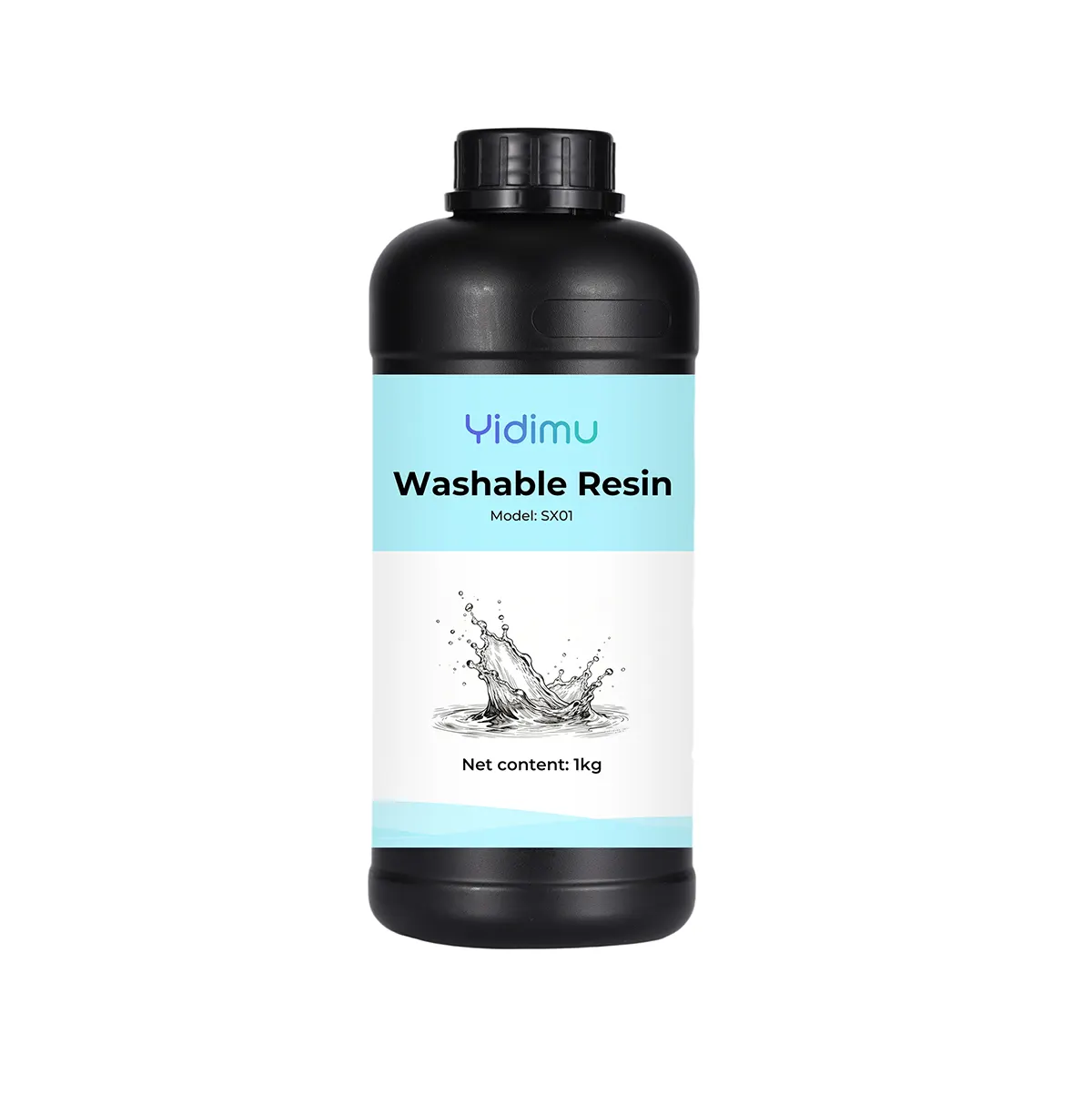
YIDIMU currently lists a washable dental resin. However, its current public product information also notes that the listed post-processing instruction specifies ethanol cleaning and that the cleaning method should be confirmed before publishing a formal water-washable claim.
That is a useful example of why the exact product document takes precedence over a generic resin category. Before production, request the latest material documentation for the specific grade and confirm the approved wash medium, exposure settings and post-curing process.
For comparison, YIDIMU also lists an 8K White Rigid Standard Resin, while the broader resin materials range covers materials intended for different printing workflows and applications.
Printer Compatibility Must Be Validated Separately
Resin type and printer compatibility are related, but they are not interchangeable questions. A material may be designed around a particular photopolymerization wavelength while still requiring its own exposure profile and process validation.
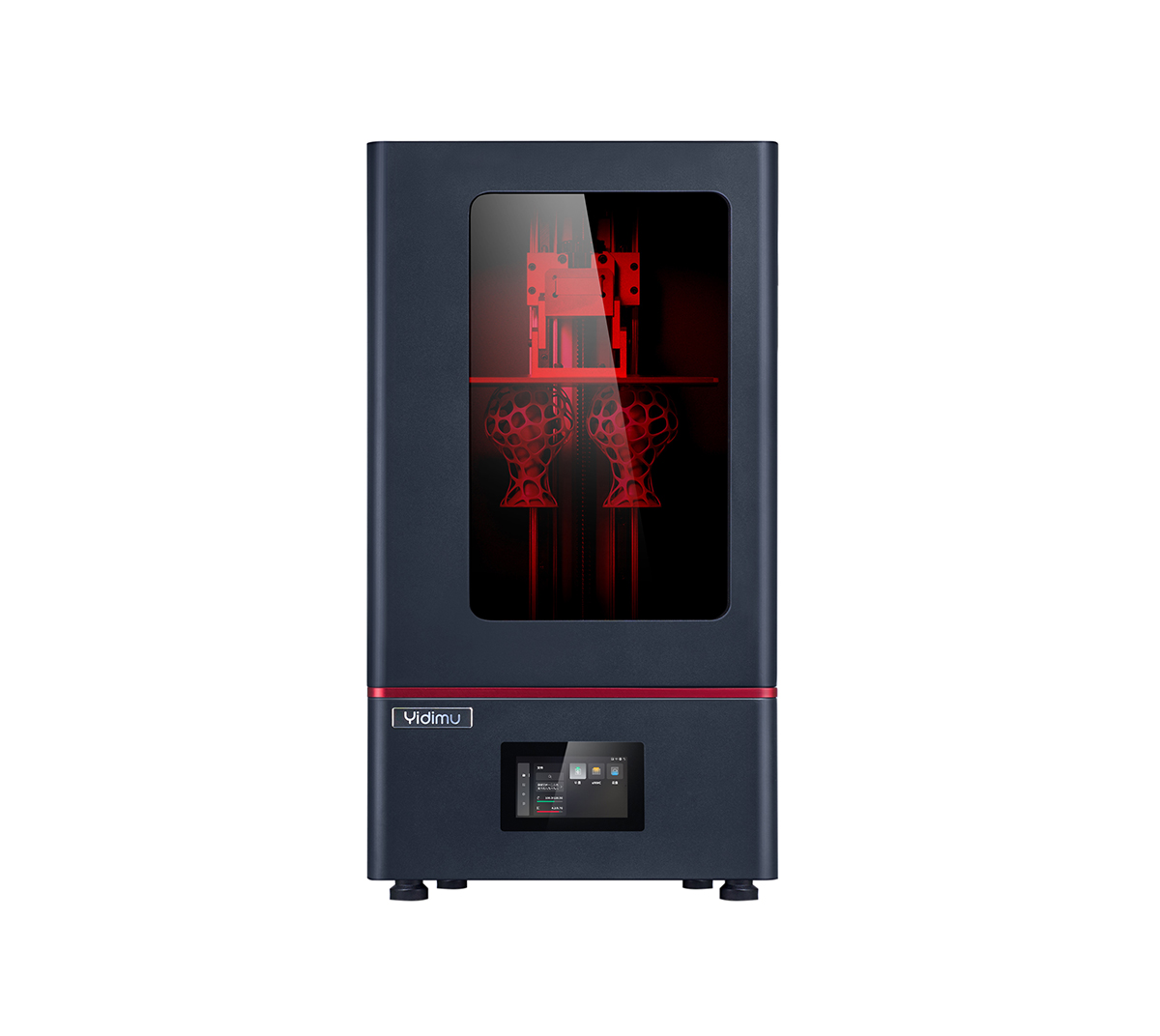
YIDIMU's Eternal M1 industrial resin 3D printer is specified for 405 nm photopolymer printing, but wavelength compatibility alone does not prove that every 405 nm resin will produce an acceptable part with the same settings. Exposure, geometry, supports and post-processing still require application-specific confirmation.
Practical Resin Evaluation Checklist
- Define the application and intended function.
- Record overall dimensions and critical features.
- Define dimensional, fit and surface acceptance criteria.
- Identify the exact resin grade and batch.
- Obtain the current TDS, SDS and processing instructions.
- Confirm printer and wavelength compatibility.
- Record orientation, supports, layer thickness and exposure profile.
- Use the manufacturer-approved washing medium.
- Control wash-fluid cleanliness and contamination.
- Ensure cavities and internal channels can drain.
- Allow parts to dry completely.
- Use the specified UV post-curing procedure.
- Measure and inspect parts at a consistent processing stage.
- Document waste handling for both wash water and solvent.
- Validate the workflow with a representative production part.
Common Mistakes When Comparing Resin Types
- Assuming water washable resin can be rinsed directly into a sink.
- Assuming every standard resin must use exactly the same solvent.
- Comparing mechanical properties using only the resin category name.
- Using one exposure profile for different formulations without validation.
- Ignoring wash-fluid contamination.
- Post-curing parts before cleaning and drying have been properly completed.
- Measuring one part before post-curing and another after post-curing.
- Choosing material only because the cleaning process appears easier.
- Testing a calibration object but never validating the real production geometry.
Frequently Asked Questions
Is water washable resin safer than standard resin?
The cleaning medium alone is not enough to make that conclusion. Review the SDS and handling requirements for the exact formulation. Uncured photopolymer should still be handled as specified by the material manufacturer.
Can water washable resin waste go down the drain?
Do not assume so. Water used to clean uncured resin becomes contaminated process liquid. Follow the resin's SDS, official disposal guidance and applicable local waste rules.
Does standard resin always need IPA?
No universal cleaning medium should be assumed. IPA is widely used in photopolymer workflows, but the approved wash liquid should come from the current instructions for the exact resin.
Is water washable resin more accurate?
Not necessarily. Dimensional results depend on the complete printer-material-process system, including exposure, geometry, orientation, supports, washing, drying, curing and measurement conditions.
Can the same print settings be used for water washable and standard resin?
They should not be assumed to be interchangeable. Different formulations can require different exposure and processing settings even when they use the same nominal curing wavelength.
Which resin should a factory test first?
Start with the material whose documented properties and workflow most closely match the real application, then print representative parts and evaluate them after the full approved post-processing sequence.
Evaluate the Resin and Printer as One Workflow
For a project-specific resin 3D printing evaluation, prepare the information that determines whether a material and process are appropriate:
- CAD or STL file
- overall dimensions
- application and operating conditions
- critical dimensions and mating features
- tolerance or fit requirements
- material requirements
- expected quantity
- surface-finish requirements
- inspection requirements
Send these details through the YIDIMU technical consultation and contact page. Final printer, resin, cleaning method and post-processing conditions should be confirmed against current product documentation and representative sample results.