
How Industrial Resin 3D Printing Helps Engineers Validate Assembly Fit Before Production
Before investing in tooling or production, engineering teams need to confirm whether housings, brackets, connectors and mechanical components can be assembled correctly. Resin 3D printing provides a practical way to create detailed prototype parts directly from CAD data for fit checks, design reviews and development validation.
- Validate clearance, alignment and assembly sequence
- Select resin based on the real application
- Control washing, drying and UV curing workflow
- Measure representative parts before production decisions
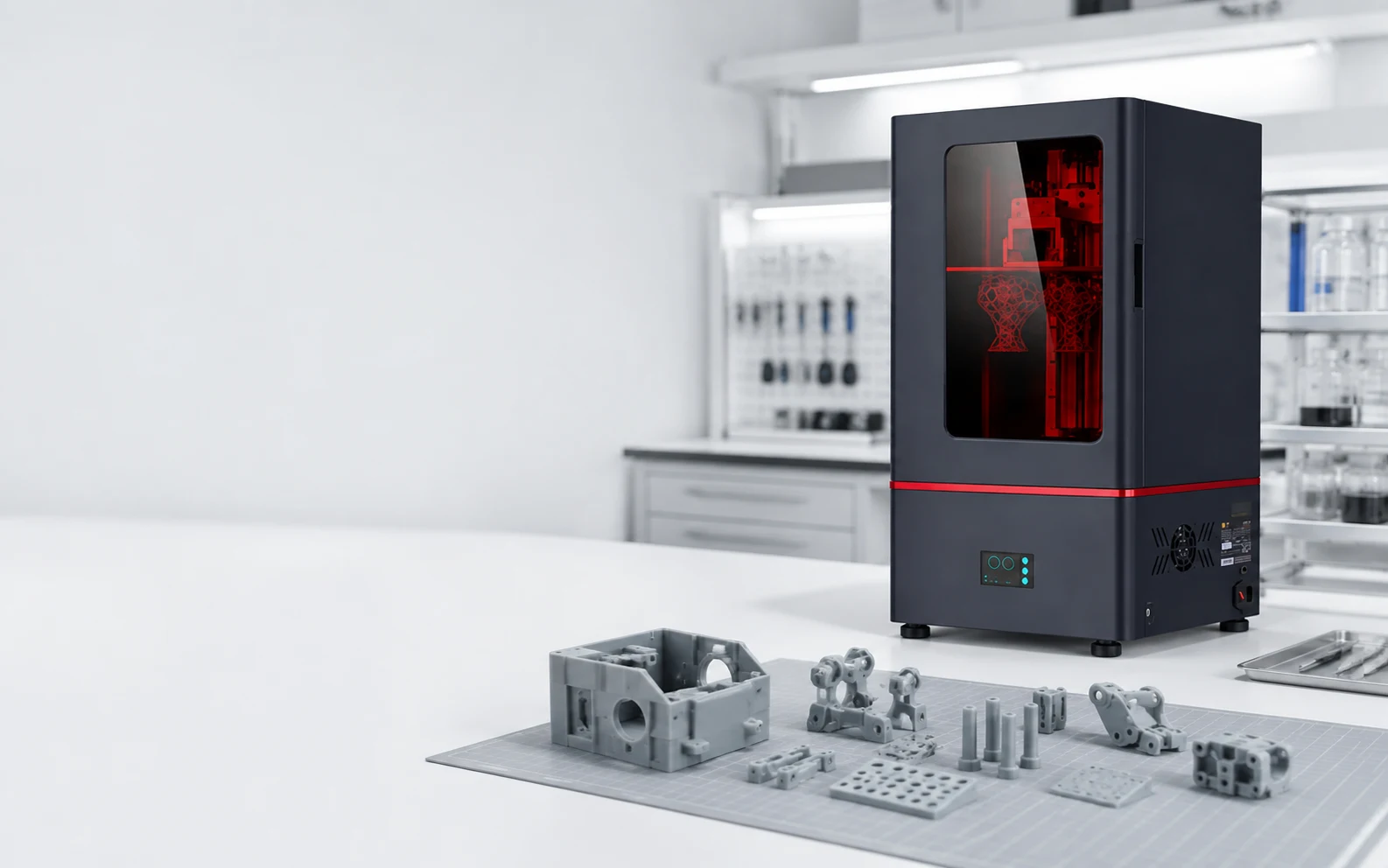
Direct answer: Industrial resin 3D printing is widely used for assembly fit testing because it can quickly produce detailed prototype parts with smooth surfaces and complex geometries. However, printed resin parts should be treated as engineering validation models rather than automatic replacements for final production materials. Accurate results depend on the selected resin, printer settings, model orientation, support strategy and complete post-processing process.
Key Takeaways
- Assembly validation is used to check whether designed components fit, align and function as expected before production.
- Rigid and ABS-like resins are commonly considered for housing parts, clips, brackets and other semi-rigid prototypes.
- Washing, complete drying and UV post-curing are essential parts of the final dimensional evaluation process.
- Critical dimensions should be verified with representative printed samples rather than relying only on CAD dimensions.
- The most reliable workflow combines printer selection, resin matching, process control and inspection.
What Engineers Actually Check During Assembly Validation
Assembly fit testing is not only a simple question of whether two parts can be connected. Engineers usually evaluate clearance between components, hole and pin alignment, snap-fit engagement, screw locations, housing interfaces and the overall assembly sequence.
In product development, these checks help identify design issues before tooling or mass production. A physical prototype can reveal interference areas, insufficient gaps, difficult assembly steps and unexpected geometry problems that are difficult to evaluate only from a digital model.
Why Use Resin 3D Printing for Engineering Prototypes?
Compared with many filament-based printing methods, photopolymer resin printing can provide smoother surfaces and finer detail reproduction. This makes it useful for prototypes containing small features such as ribs, locating structures, clips, thin walls and detailed mechanical surfaces.
For engineering teams, the main advantage is development speed. A design can move from CAD revision to physical evaluation without waiting for machining or tooling changes. Several design versions can also be printed and compared during the same development cycle.
Selecting Resin Materials for Fit Testing
The correct resin depends on the purpose of the prototype. Rigid and ABS-like resins are often suitable for evaluating hard components such as housings, brackets and assembly structures. Flexible resins are more appropriate when the prototype needs elastic deformation, soft contact or gasket-like behavior.
A printed resin prototype does not have identical mechanical behavior to injection molded plastics. Engineers should consider stiffness, durability, temperature conditions, chemical exposure and repeated assembly requirements when interpreting test results.
Recommended Workflow: From CAD Model to Assembly Test
- Define the validation target: Identify critical dimensions, fitting areas and functional requirements.
- Select printer and resin: Match build size, surface requirements and material characteristics to the application.
- Prepare the build: Optimize orientation, supports and printing parameters.
- Complete post-processing: Wash, fully dry and UV cure the parts according to the resin requirements.
- Inspect the finished parts: Measure important areas and perform the assembly check.
Choosing a YIDIMU System for Assembly Fit Testing
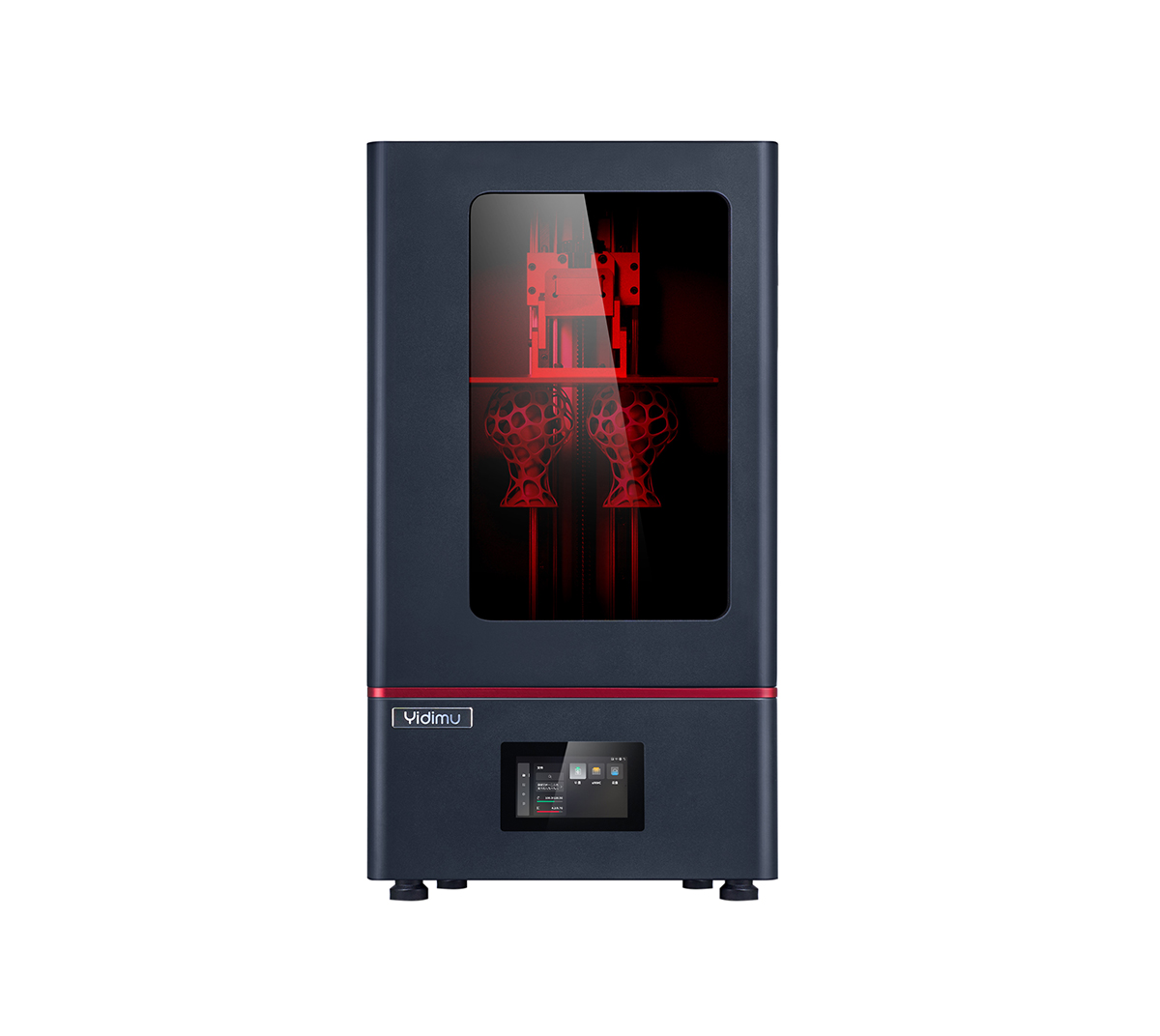
YIDIMU industrial resin 3D printing solutions are designed for engineering validation, factory prototyping, sample evaluation and small-batch development workflows. The complete process includes equipment selection, resin matching, printing preparation, post-processing and final inspection.
The Eternal M1 and Eternal M2 industrial resin printers are suitable options for rigid prototype parts, engineering models and multi-part assembly evaluations. For components requiring elastic deformation, flexible materials and elastomer structures, Flex series systems can support different application requirements.
| Application | Suitable Direction |
|---|---|
| Housing, brackets, locating pins | Rigid or ABS-like resin prototypes for assembly evaluation |
| Flexible seals or soft structures | Flexible resin systems with application-specific validation |
| Large multi-part prototypes | Industrial resin printers with suitable build capacity |
Common Mistakes During Assembly Fit Testing
Measuring before complete post-processing
Parts should be fully washed, dried and post-cured before dimensional evaluation. Measuring unfinished parts can lead to unreliable conclusions.
Treating printed resin as identical to production plastic
Prototype validation should consider differences between printed photopolymer materials and final production materials.
Ignoring the complete workflow
Printer hardware alone does not determine final results. Resin selection, support design, curing process and inspection methods all influence the final part condition.
Can resin 3D printed parts be used for final assembly validation?
Yes, they can be used for many design verification tasks such as fit checks, clearance evaluation and assembly review. However, final validation should consider the differences between prototype resin and production materials.
Which resin is commonly used for assembly prototypes?
Rigid and ABS-like resins are commonly considered for hard prototype components, while flexible resins are selected for parts requiring elastic behavior.
Why is post-curing important after resin printing?
Post-curing helps printed parts reach a more stable final condition. The curing process should follow the recommended workflow for the specific resin material.
Validate Your Part Before Choosing Equipment
Submit your model requirements and discuss printer, resin and workflow options with YIDIMU technical specialists.
Request a Sample Review