Casting & Tooling

3D Printed Master Patterns for Metal Casting

3D printed master patterns for metal casting can shorten the path from CAD to a physical casting pattern, especially when a foundry needs a new geometry, a low-volume tooling route, or several design iterations before committing to permanent tooling. The critical decision is whether the printed part will serve as a reusable master for mold making or as a sacrificial pattern that will be removed during investment casting.

  • Choose the casting route before choosing the resin.
  • Do not treat a standard model resin as a castable resin.
  • Inspect the finished master before copying it into wax.
  • Validate the entire chain from pattern to final metal part.
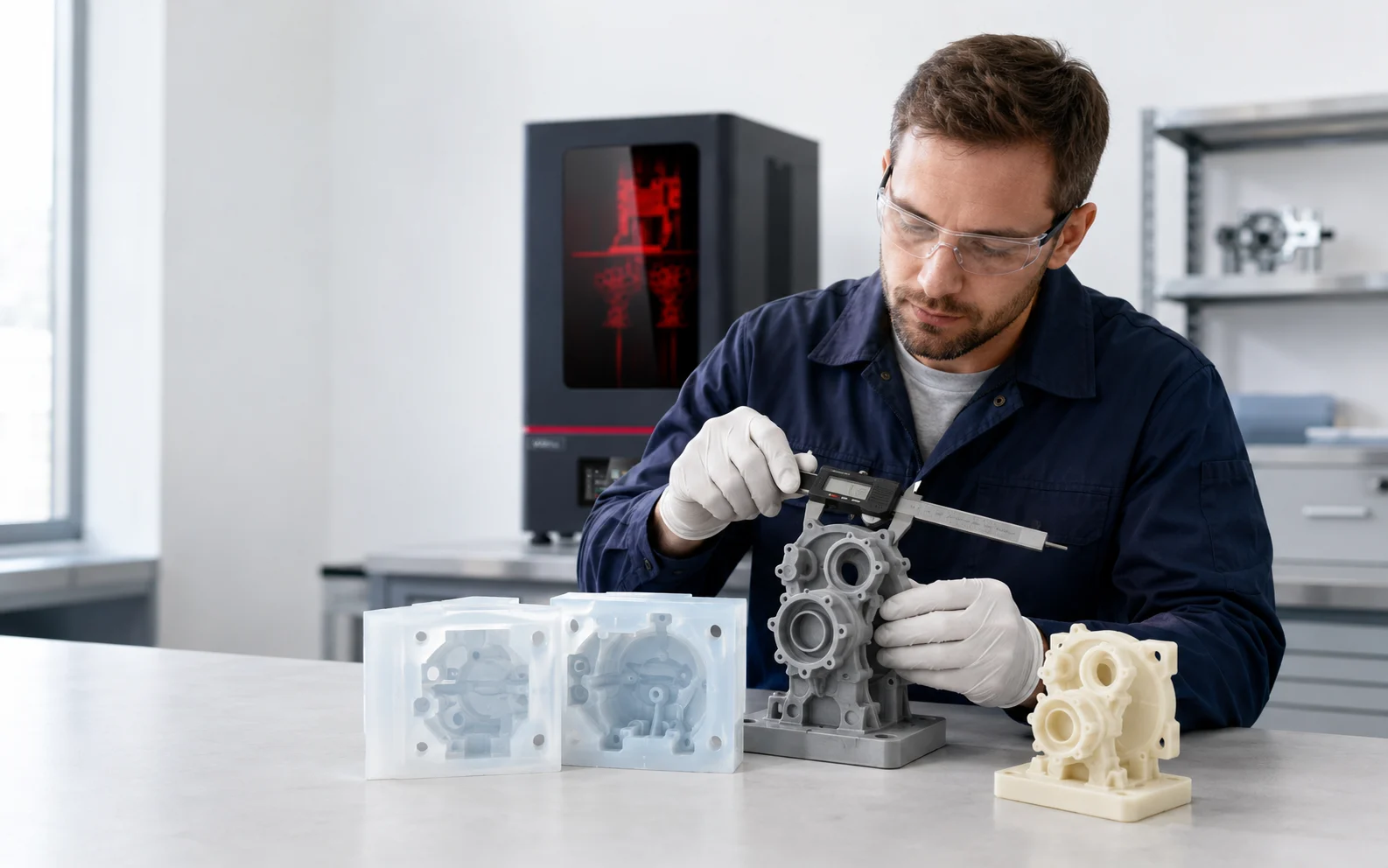
Engineer inspecting a finished resin master pattern prepared for metal casting mold validation
A finished resin master should be evaluated for geometry, surface condition and downstream mold-making requirements before casting work begins.
Direct answer

A 3D printed master pattern is a physical reference model produced from CAD and used to create a casting-related mold or pattern system. In an indirect investment-casting workflow, the printed master can be used to make an RTV or silicone mold, which then produces wax patterns for shell building and metal casting. A different route is to print a sacrificial pattern and remove it during burnout. These two routes impose different material requirements: a reusable master is judged mainly by geometry, surface finish, stability and mold-making compatibility, while a sacrificial pattern also requires verified burnout behavior, low residue, controlled expansion and compatibility with the foundry's shell and firing process.

Master is not automatically sacrificialDecide whether the print is copied into wax or removed from the ceramic shell itself.
Surface transfers downstreamLayer marks, support scars and finishing defects can be reproduced by the mold and appear on later patterns.
Compensation is process-specificAllowances must reflect the actual mold, wax, alloy and foundry process rather than a universal shrinkage percentage.
Post-processing is functionalWashing, complete drying, UV post-curing and finishing can affect the master used for dimensional inspection.
Printer specifications are not enoughAcceptance should be based on a representative pattern and a defined measurement method.
Validate the casting chainA dimensionally acceptable print can still produce an unacceptable metal casting if later stages are not controlled.

Start with the process

What does “master pattern” mean in metal casting?

In conventional investment casting, wax patterns represent the geometry that will become the metal part. Those wax patterns are commonly made by injecting wax into tooling. Additive manufacturing gives foundries and product-development teams another option: they can print a pattern directly, or print a master that is used to create an intermediate mold for making wax copies.

In the indirect route, the printed part remains a reference master. A silicone or RTV mold is made from it, then wax copies enter the normal investment-casting sequence. This route is useful when geometry may still change, permanent tooling is difficult to justify, or a complex master is easier to print than machine.

Choose the route first

Three ways a 3D printed pattern can enter a casting workflow

The same CAD geometry can be used in very different casting routes. The following comparison is more useful than asking whether “resin printing works for metal casting” as a single yes-or-no question.

Route Role of the 3D print When it can make sense Main validation points
Printed master → silicone/RTV mold → wax patterns → investment casting The print is a reusable master and normally does not enter the ceramic shell or furnace. Design iteration, complex geometry, limited production, or a need to produce multiple wax copies without machining permanent metal tooling. Master dimensions, surface finish, parting strategy, mold-release behavior, silicone compatibility, wax-copy repeatability and total dimensional compensation.
Direct printed sacrificial pattern → investment shell → burnout → metal The print replaces the wax pattern and is removed from the shell before pouring. One-off or low-volume complex parts where eliminating intermediate tooling is valuable and a validated castable material/process is available. Burnout residue, thermal expansion, shell cracking risk, drainage or hollowing strategy, firing schedule, shell compatibility and final casting quality.
Printed pattern for sand or other mold-making processes The print is used to create the mold cavity rather than becoming the final metal part. Large or complex patterns, prototypes, replacement patterns, or designs that may change before permanent tooling is justified. Draft, pattern allowances, surface, rigidity, mold handling, gating/core strategy and the foundry's normal pattern-making rules.

The correct route depends on the foundry process, alloy, geometry, quantity, tolerance and inspection plan. No universal production-volume threshold applies to every casting project.

Practical workflow

How to prepare a 3D printed master pattern for metal casting

Treat the master as tooling, not as a display model. Its surfaces and dimensions will influence downstream copies, so the workflow should be controlled and documented.

Define the casting route and acceptance criteria

Start with alloy, casting method, critical dimensions, surface requirements, quantity and inspection method. Confirm whether the print is a reusable master or a sacrificial pattern.

Build compensation with the foundry

Avoid generic shrinkage factors. An indirect route may accumulate change through the master, silicone mold, wax copy, shell and metal solidification. Define allowances and measurement points for the actual process.

Orient around critical surfaces

Keep support contacts away from datums, fine textures, mating faces and other surfaces that will transfer into the mold. Balance this against drainage, support stiffness and print stability.

Match the material to the pattern's role

A reusable master needs stable geometry, surface and mold-making compatibility. A sacrificial pattern needs a dedicated castable material with verified burnout behavior for the intended foundry process.

Wash, completely dry and post-cure

Follow the selected material's TDS, SDS, IFU or formal technical documentation. Do not copy fixed cleaning or curing times from another resin.

Measure the master before mold making

Inspect the same datums and critical features that matter on the finished casting. Record the method. An out-of-tolerance master should be corrected before it is copied.

Validate the wax copy and first casting

Measure representative wax copies, then compare the first metal casting with the drawing. Use the result to refine compensation and inspection rules.

Engineering controls

What determines whether the master pattern is actually usable?

1. Dimensional accuracy across the full process chain

The printer creates only the first physical step. Final dimensions can also change through mold making, wax replication, shell building, alloy solidification and finishing. Judge the controlled process by the representative metal result, not printer accuracy alone.

2. Surface finish and defect transfer

A silicone mold can reproduce master-surface defects as well as intentional textures. Keep support marks, stair-stepping, sanding scratches and local repairs away from critical surfaces.

3. Mold-making compatibility

Confirm that the post-cured surface works with the chosen silicone or RTV system, mold release and preparation method before creating a full mold.

4. Traceable inspection

Use named datums, critical dimensions and acceptance criteria. Compare master, wax copy and final casting with a measurement method appropriate to each feature.

Avoid the “high resolution = casting accuracy” shortcut

Pixel size, nominal layer thickness or screen resolution describes only part of the printing system. Orientation, supports, exposure, resin behavior, washing, complete drying, post-curing, finishing and measurement method all contribute to the master that the foundry actually receives.

Critical datumsIdentify the surfaces that control fit, machining setup and inspection.
Parting strategyPlan how the master will be removed from an RTV or silicone mold.
Support scarsKeep contact points away from surfaces that will transfer into the casting.
Finishing allowanceAccount for material removal where sanding or polishing is required.
Wax-copy checkMeasure representative replicas before scaling the foundry workflow.
First-article castingUse the metal result to close the compensation loop.

Relevant YIDIMU systems

Industrial resin printers to evaluate for master-pattern work

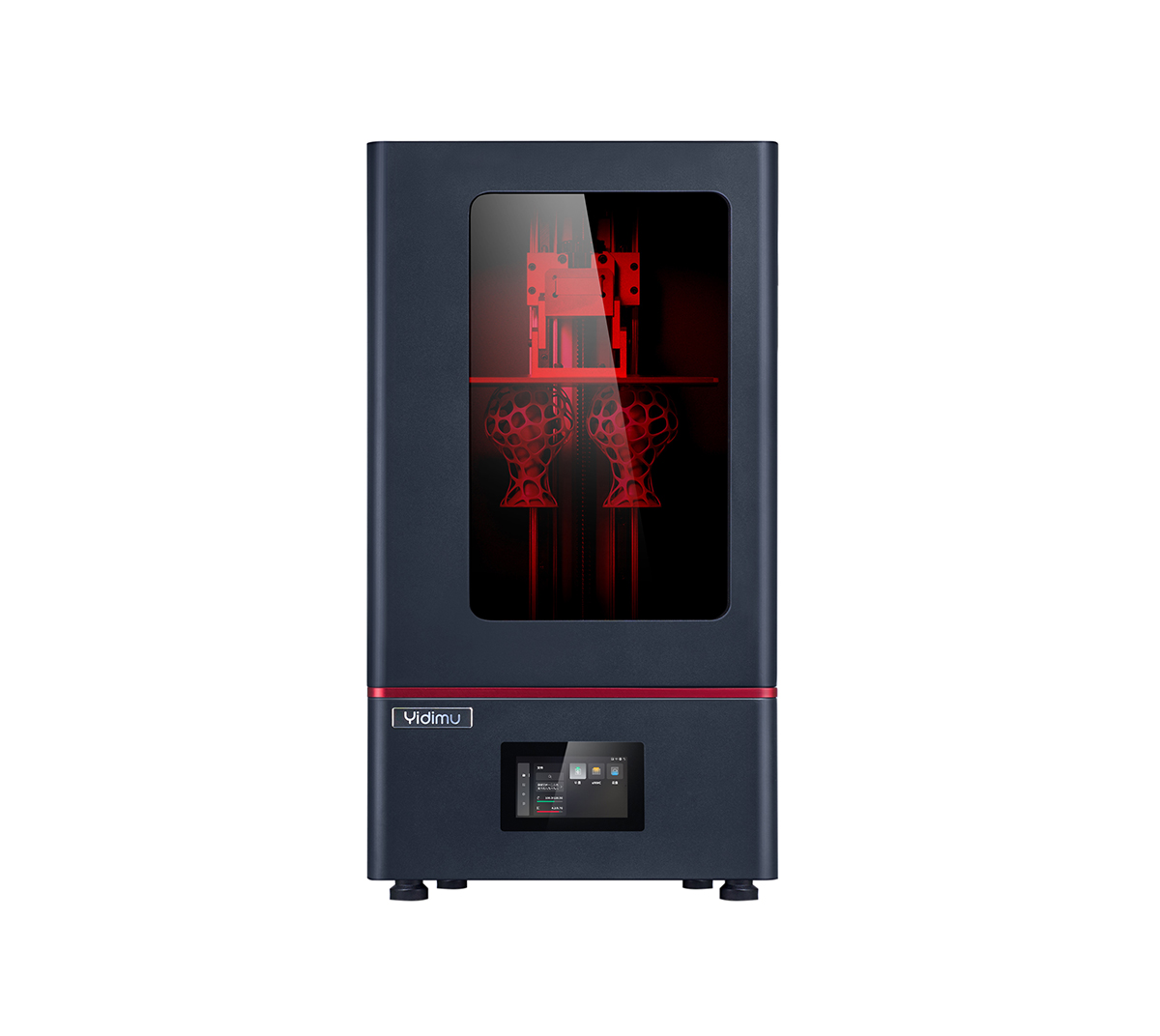
Printer selection should begin with the actual pattern dimensions, critical surfaces, support strategy and validation plan. YIDIMU's current industrial range includes Eternal M1 and Eternal M2; suitability for a casting master should be confirmed with the intended model and material workflow.

YIDIMU Eternal M1 industrial resin 3D printer
Eternal M1 — industrial resin 3D printing system.

Eternal M1

An industrial LCD resin 3D printer positioned by YIDIMU for product development, detailed models, design validation and multi-part layouts. For casting-master work, evaluate the representative pattern rather than selecting the printer from nominal resolution alone.

Review Eternal M1 →
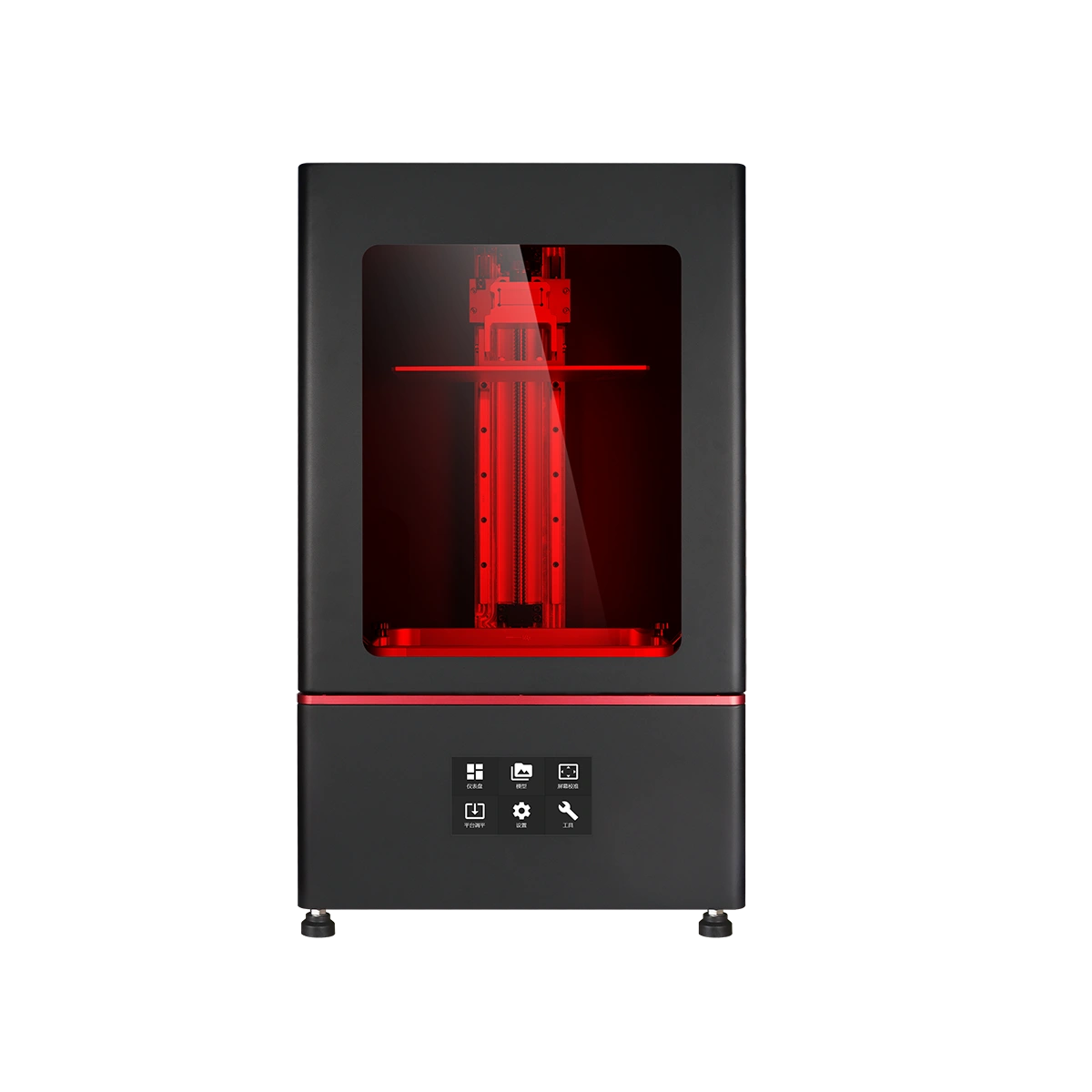
YIDIMU Eternal M2 large-format industrial resin 3D printer
Eternal M2 — larger-format industrial resin 3D printing system.

Eternal M2

A larger-format industrial resin system intended for larger prototypes, engineering models and multi-part layouts. It can be considered when a casting master is too large for a smaller build area or when several pattern components must be evaluated together.

Review Eternal M2 →

These printer descriptions do not establish direct-burnout compatibility. If the printed part itself will be burned out from an investment shell, validate the specific castable resin, printer settings and foundry cycle separately.

Project checklist

What to prepare before requesting a master-pattern evaluation

A useful sample review needs more than an STL file. Supply the information that connects the print to the casting process.

Model fileSTL or OBJ plus a drawing when dimensional requirements cannot be inferred from the mesh.
Overall dimensionsMaximum X, Y and Z dimensions and any orientation restrictions.
Casting routeReusable master for silicone/RTV, direct sacrificial pattern, sand-pattern use or another foundry process.
Metal and foundry processAlloy family, investment system or molding method, and any known shell or burnout constraints.
Critical featuresThin walls, holes, bosses, lettering, textures, undercuts, mating surfaces and machining datums.
Surface requirementWhich faces must be visually clean, polished, textured or protected from support contacts.
QuantityNumber of masters, expected wax copies or anticipated casting volume.
Tolerance and fitCritical dimensions, mating parts and features that determine acceptance.
Post-processingAny sanding, coating, polishing, sealing or dimensional correction allowed on the master.
Inspection methodCalipers, gauges, 3D scan, CMM or another method used to approve the pattern and final casting.

Limitations & validation

A good master pattern does not guarantee a good casting

Resin printing can reduce conventional pattern tooling in selected workflows, but it does not remove foundry process control. Final results still depend on the intermediate mold or shell, wax behavior where applicable, gating, firing, alloy handling, shrinkage, finishing and inspection.

Approve production only after representative samples have passed through the same downstream process intended for the real part.

FAQ

Common questions about 3D printed master patterns for metal casting

Is a 3D printed master pattern the same as a wax pattern?

Not necessarily. A printed master may be a reusable reference used to create a silicone or RTV mold, after which wax patterns are produced from that mold. A printed sacrificial pattern is different because it enters the investment shell and must be removed before metal is poured.

Can standard rigid resin be burned out for investment casting?

Do not assume so. A rigid model resin may be suitable for a reusable master but direct burnout requires a dedicated castable material and a foundry-validated removal cycle. Residue, thermal expansion and shell compatibility must be checked.

How much shrinkage compensation should be added to the CAD model?

There is no universal percentage for every project. The required compensation depends on the printing process, intermediate mold, wax, shell, alloy, casting conditions and any finishing or heat treatment. Define allowances with the foundry and verify them using a measured first article.

Should a resin master pattern be hollow?

Only when the geometry and downstream process justify it. Hollowing can reduce material use, but it can also introduce drainage, cleaning, stiffness and dimensional-stability issues. For a direct sacrificial pattern, internal structure can also affect burnout behavior. Validate the actual design rather than applying a universal hollowing rule.

When is 3D printing more useful than permanent pattern tooling?

It is often useful when geometry changes frequently, the pattern is complex, only a limited number of parts are needed, or tooling lead time is difficult to justify. Permanent tooling may become more attractive when a stable design is repeated at higher volumes, but the economic crossover depends on the part and foundry process.

Can one 3D printed master be used to make multiple castings?

Yes, in an indirect workflow the master can be used to create a silicone or RTV mold, and that mold can produce multiple wax patterns. The number of acceptable copies depends on the mold material, geometry, wax process and quality requirements, so verify repeatability rather than assuming a fixed mold life.

Related resources

Continue evaluating the printing workflow

Industrial 3D PrintersCompare YIDIMU systems for engineering models, prototypes and larger resin parts. Photopolymer Resin MaterialsReview current resin categories and confirm material documentation for the intended application. UV Curing EquipmentPlan controlled post-curing as part of the finished resin-master workflow. Resin 3D Printing Process Step by StepReview file preparation, printing, washing, drying, post-curing and inspection. Jewelry Design & CastingSee YIDIMU's casting-related application area for detailed patterns and design validation. Sample & Project ReviewSubmit model dimensions, application, material requirements and acceptance criteria for evaluation.

Project evaluation

Have a casting master you need to print and validate?

Send the model file, overall dimensions, casting route, material requirements, expected quantity, critical surfaces, fit or tolerance requirements, and the inspection method you plan to use. YIDIMU can review the printing side of the project and discuss a representative sample workflow without assuming a fixed casting result.

Submit Project Requirements